Tokyo Coin Locker Sizes: What Fits And What Does Not
Tokyo coin lockers come in fixed size tiers, and the depth of roughly 34 cm is the dimension that decides whether a suitcase fits, not the width. Here are the published internal dimensions from the operators themselves.
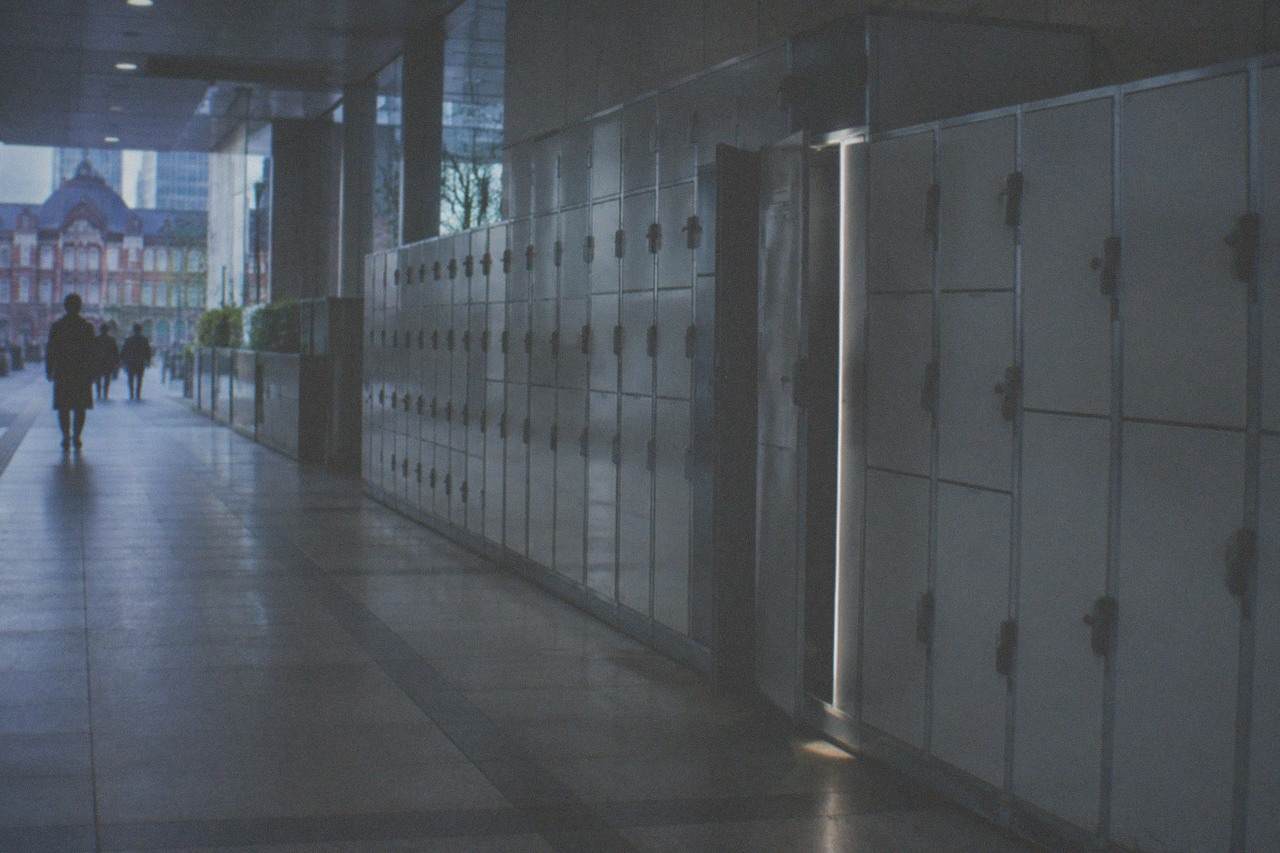
Short answer
Tokyo coin lockers come in fixed size tiers. Toei large lockers measure 856 x 342 x 663 mm inside, and JR East's largest Multi Ecube tier is 86 x 34 x 65 cm, with a wider LW tier at 86 x 56 x 65 cm. A depth of about 34 cm is the binding constraint, so a large spinner fits only the top tiers.
What Are The Actual Coin Locker Sizes In Tokyo?
Tokyo coin lockers come in fixed size tiers, and the operators publish the internal dimensions. Toei Subway's large tier measures 856 x 342 x 663 mm inside, its medium tier 502 x 342 x 663 mm, standard 325 x 342 x 663 mm, and half 325 x 127 x 663 mm. Tokyo Metro publishes prices and door counts but no centimetre figure for its tiers, so Toei's dimensions are the best published subway reference.
The number that decides everything is the depth. Every Toei tier is 342 mm deep, about 34 cm, and that is the dimension a hard-shell suitcase meets first. A 26-inch spinner is typically around 30 cm deep including the wheels, so it clears the depth but then has to fit the height and width of whichever tier it lands in. On the standard tiers, at 325 mm wide and 663 mm tall, a 26-inch case fails. On the large tier, at 856 mm wide, it goes in lying on its side.
| Tier (Toei Subway) | Internal dimensions | What realistically fits |
|---|---|---|
| Large | 856 x 342 x 663 mm | A large checked suitcase lying flat, two cabin bags |
| Medium | 502 x 342 x 663 mm | One carry-on-sized suitcase upright |
| Standard | 325 x 342 x 663 mm | A backpack, a duffel, a shopping bag |
| Half | 325 x 127 x 663 mm | A slim bag, folded umbrella, documents |
These figures come from the Toei Subway operator's own page for its Asakusa locker banks, which states the internal dimensions, in millimetres, per tier: the Toei Asakusa locker page. That page also records 72 doors across four banks at Asakusa, all outside the ticket gates.
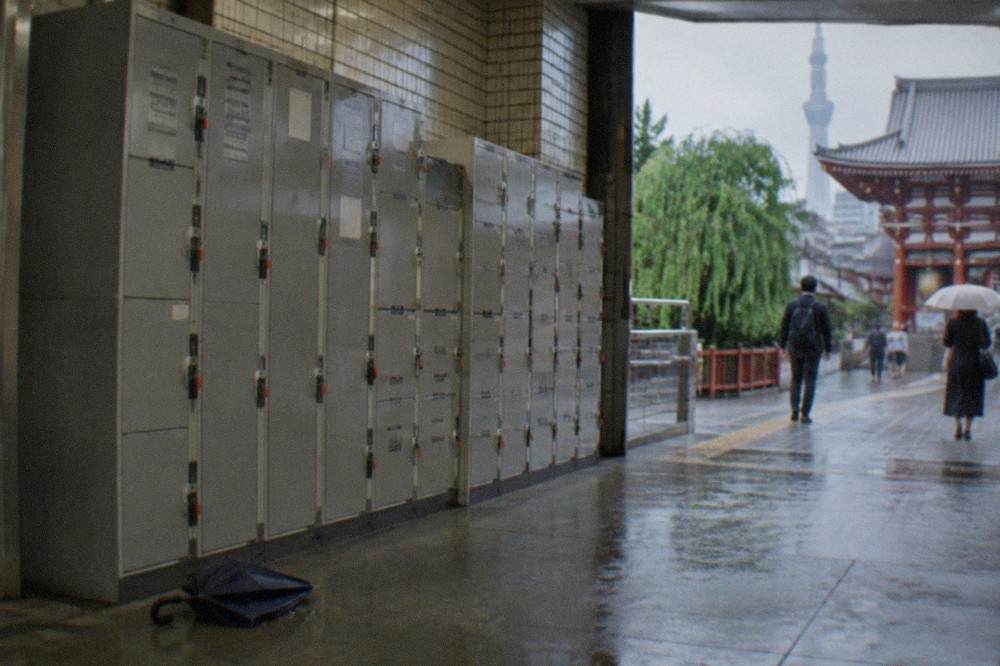
One point of confusion worth clearing up immediately: Tokyo Metro, the bigger subway operator, publishes a price ladder and door counts for its 4,830 lockers but no centimetre dimensions for any tier. If a source quotes exact Metro locker sizes in centimetres, the number did not come from the operator. Toei's dimensions, JR East's dimensions and the Metro price ladder are the three published building blocks for any size judgement in Tokyo.
Do JR East Lockers Use Different Sizes?
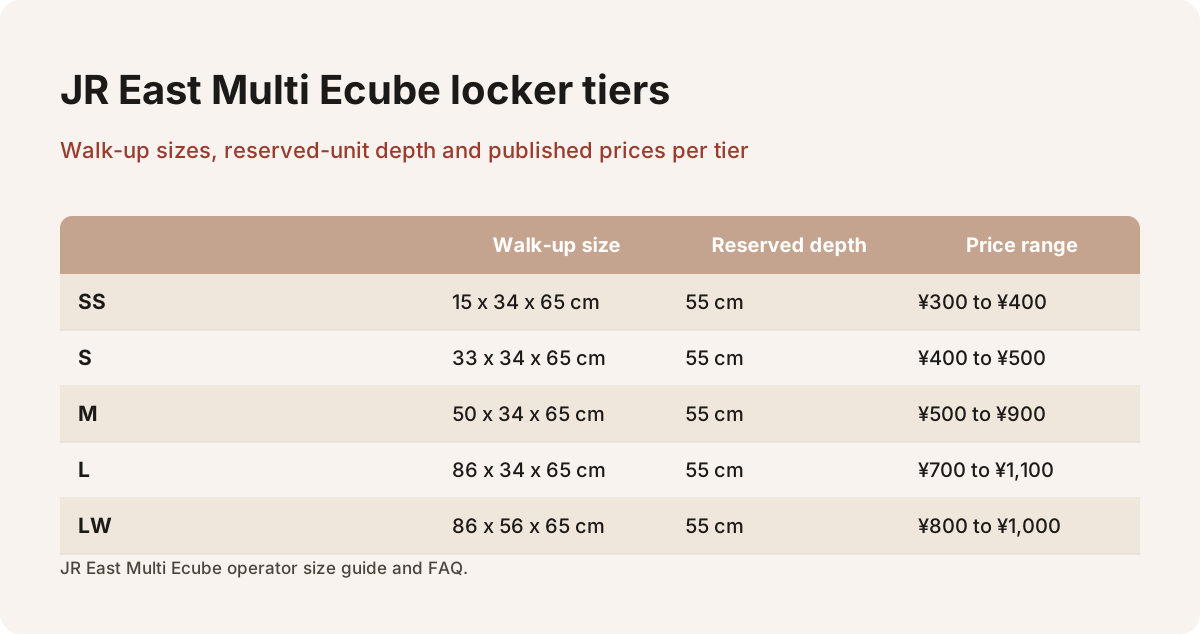
Yes. JR East's Multi Ecube lockers have five published tiers in centimetres: SS at 15 x 34 x 65, S at 33 x 34 x 65, M at 50 x 34 x 65, L at 86 x 34 x 65, and LW at 86 x 56 x 65. The LW tier is the one English-language coverage does not mention, and at 56 cm deep it is the only common tier that swallows a wide checked suitcase lying flat.
The source is the operator's own FAQ: the Multi Ecube size guide. The same page carries a second set of numbers that matters if you reserve rather than walk up: reservation-capable Multi Ecube units are 55 cm deep, not 65 cm. Same tier names, shallower box. A suitcase that squeezes into a walk-up L locker can fail in a reserved L locker for no visible reason.
| Tier (JR East Multi Ecube) | Walk-up dimensions | Reserved-unit depth | Published price range |
|---|---|---|---|
| SS | 15 x 34 x 65 cm | 55 cm | ¥300 to ¥400 |
| S | 33 x 34 x 65 cm | 55 cm | ¥400 to ¥500 |
| M | 50 x 34 x 65 cm | 55 cm | ¥500 to ¥900 |
| L | 86 x 34 x 65 cm | 55 cm | ¥700 to ¥1,100 |
| LW | 86 x 56 x 65 cm | 55 cm | ¥800 to ¥1,000 |
The depth figure, 34 cm, appears in both operators' lockers, which is why it deserves to drive your planning. Width varies enormously between tiers, from 15 cm to 86 cm. Depth barely varies at all. So the practical sorting question for a suitcase is never "how wide is my bag" but "how deep is my bag, wheels included".
If the size tiers at your station are all too small, staffed storage is the alternative that sidesteps the measuring entirely. Radical Storage's Tokyo points charge 850 yen per bag per day for a regular bag plus a 355 yen per-bag fee charged once at checkout, so one bag for one day is 850 plus 355, which is 1,205 yen, arithmetic on the network's own published figures. The points near the big interchange stations are below.
Will A Suitcase Actually Fit A Tokyo Coin Locker?
A carry-on suitcase fits the M tier and up at most large stations. A medium checked case needs an L or LW tier. A large checked case fits only the Toei large tier or the JR East LW tier, both of which are scarce and fill first. The depth limit of about 34 cm rules out some thick hard-shell cases regardless of height.
Work through the arithmetic with a real bag. A typical carry-on is 55 cm tall, 36 cm wide and 23 cm deep. Depth is fine. Standing upright, 55 cm of height clears the 65 cm ceiling, and 36 cm of width needs an M tier at 50 cm wide, not an S tier at 33 cm. So a carry-on goes into an M locker standing on its wheels, door facing out, with room to spare.
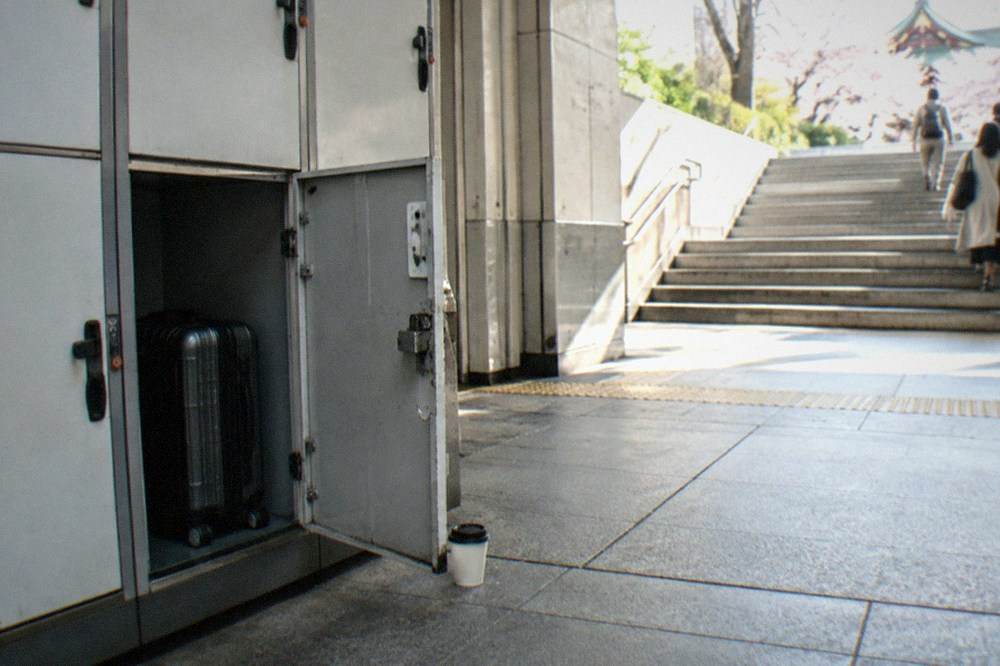
A medium checked suitcase, the size class above a carry-on, is the case where tier choice starts to bite. It fails an M tier on width, and it fits an L tier only lying down, since its height exceeds the 65 cm ceiling upright, and the flat orientation consumes most of the 86 cm width. A large checked case, the biggest common spinner, fits nothing except the Toei large tier or the LW tier. At the busiest stations those tiers are the first to go, a pattern covered in detail in why Tokyo coin lockers are full.
The honest summary: if you travel with a full-size checked suitcase in Tokyo, locker sizes are working against you at every station, and a staffed option is the more reliable plan. A Radical Storage point takes a bag by hand at drop-off rather than posting a centimetre limit, and the network's per-claim protection cap is EUR 3,000, a figure the terms state in euros and this site does not convert. It is a guarantee, not insurance, and their own terms say so.
What Do Coin Lockers Cost By Size?
Tokyo Metro lockers use one price ladder network-wide: ¥300, ¥500, ¥600, ¥900 and ¥1,000 per day, with the same prices at every Metro station. JR East lockers vary by station, with M tiers from ¥500 to ¥900 and L tiers from ¥700 to ¥1,100, plus a ¥500 per-box surcharge to reserve a Multi Ecube unit in advance.
The Metro ladder comes from Metro Commerce, the operator, on its locker page: the Metro Commerce locker index. The finding that contradicts most English travel writing is that Tokyo Metro locker prices do not vary by station. Only the mix of door sizes at each station varies. Shibuya's Metro lockers and a small residential station's Metro lockers charge identical tier prices.
| Operator | Small tier | Medium tier | Large tier | Varies by station? |
|---|---|---|---|---|
| Tokyo Metro | ¥300 | ¥600 | ¥1,000 | No, one ladder network-wide |
| JR East Multi Ecube | ¥300 to ¥400 | ¥500 to ¥900 | ¥700 to ¥1,100 | Yes |
| Toei reservation service | +¥100 small | +¥200 medium | +¥300 large | 7 stations only |
| Narita Airport lockers | ¥400 | ¥600 | ¥800 | No |
| Haneda T1 and T2 | ¥400 / ¥500 | ¥600 | ¥1,000 / ¥1,500 | No |
JR East's station variance is proven from the operator's own live data: Tokyo and Shinjuku charge ¥700 for an M locker and ¥900 for an L, while Omiya and Hodogaya charge ¥600 and ¥800 for the same tiers. JR East's media property also documents a peak-season surcharge of ¥100 to ¥200 on M and L lockers, so the price you paid in spring is not guaranteed in August.
Payment ties into size more than it first appears, because the biggest lockers are the ones most likely to be cash-preference or IC-card-only. That whole subject, including the IC cards and QR options and what to do when the machine rejects your coins, is covered separately in Tokyo coin locker payment.
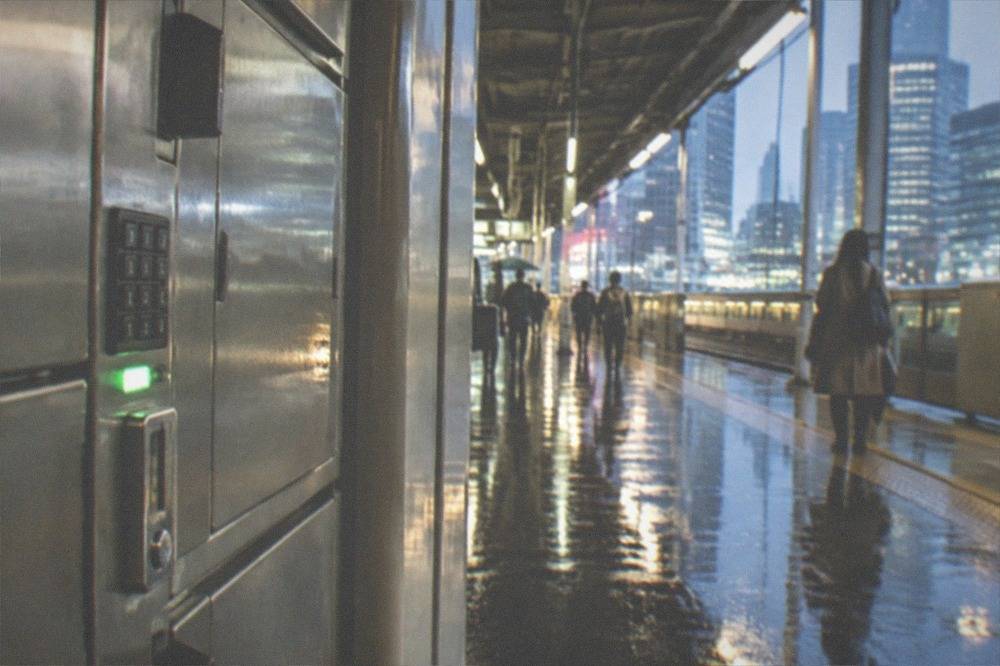
The price gap between a big locker and staffed storage is real but narrower than it looks. An L locker at Tokyo Station costs ¥900 to ¥1,000 for the day. Staffed storage at 850 yen plus the 355 yen once-per-bag fee works out to 1,205 yen for one bag for one day. The locker is slightly cheaper, when you can find an L tier open, and the staffed point takes a case no locker tier will hold.
How Long Can You Leave A Bag, And Does Size Change That?
No, the size of the locker does not change the duration rule, but the operator does. Tokyo Metro lockers allow 4 days including the day you start. JR East Multi Ecube lockers allow 3 days, and paying more does not extend the period, so the bag must be out by the fourth day regardless. The day rolls at 2 a.m., not midnight.
Metro Commerce's terms state the four-day rule outright, and JR East Smart Logistics' terms add that even if you insert more money, the bag is pulled on day four. The 2 a.m. rollover comes from the same Metro terms: the locker runs from first train to last train, a day is added at 2 a.m., and the first and last days each count as a whole day however briefly you used the locker.
What happens after expiry is the part most travellers never read. The operator unlocks the locker, inspects the contents and moves them to a designated place, where the same daily rate keeps running. The bag is held for 30 days counted from the start of the original rental, after which ownership is deemed abandoned and the operator may dispose of the contents and bill you for the cost. Collecting it requires the receipt, photo ID and the same IC card you paid with, and the separate storage fee is cash only. The full duration landscape, including the 30-day station baggage rooms at Tokyo Station, is in how long you can leave luggage in Tokyo.
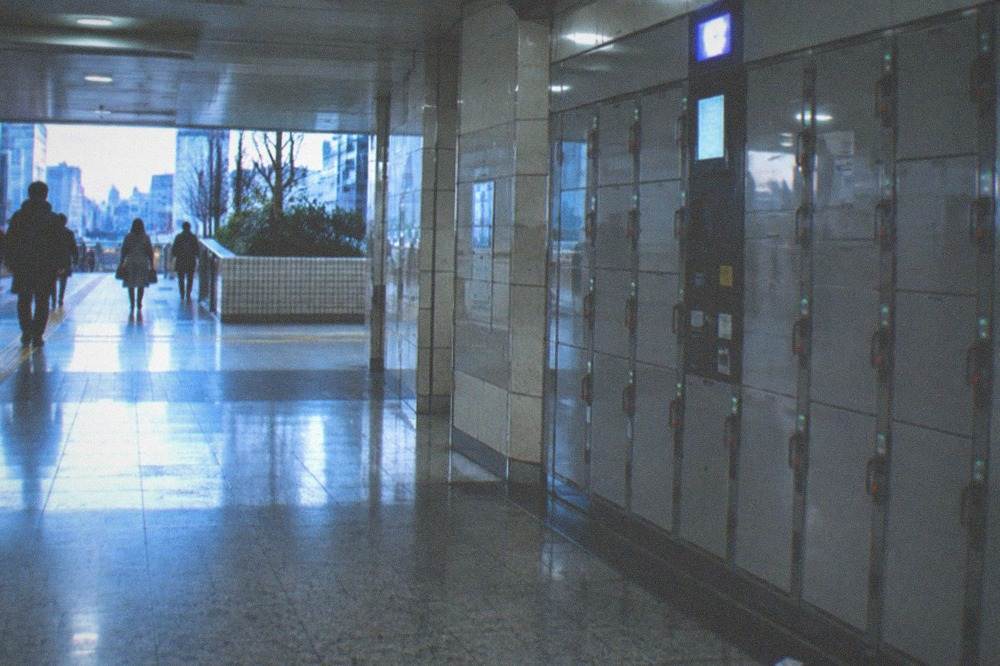
One Multi Ecube mechanic interacts with size choices directly: one open ends the rental. Retrieve your bag and you cannot put it back, and a multi-day reservation is forfeited with no refund. The only grace is a reopen button giving you 15 minutes. So if your plan involves swapping a smaller bag into the locker after taking things out, that plan fails on JR East lockers.
Which Tokyo Stations Have The Most Lockers?
By published door counts from the operators themselves: Shibuya has 146 Metro locker doors, Ueno 127, Tokyo 100, Asakusa 57 and Shinjuku 52. Those are counts of individual doors, not of locker locations, and the distinction matters, because JR East's own figure of 19 at Ueno counts 19 locations, meaning nineteen banks of lockers, each holding many doors.
The door counts come from Tokyo Metro's own station pages, and they cover Metro lockers only. No operator publishes a combined all-operator locker count for any Tokyo station, so no honest page can tell you the total at Shibuya across Metro, JR, Tokyu and Keio together.
| Station | Published door count | Counts | Operator |
|---|---|---|---|
| Shibuya | 146 | doors | Tokyo Metro |
| Ueno | 127 | doors | Tokyo Metro |
| Tokyo | 100 | doors | Tokyo Metro |
| Asakusa | 57 | doors | Tokyo Metro |
| Shinjuku | 52 | doors | Tokyo Metro |
| Toei Asakusa | 72 | doors, 4 banks, all outside the gates | Toei Subway |
Locker counts published in English almost always count locations or units, not individual lockers. presented to an English reader as a count of lockers. The "Ueno has 19 lockers" claim that circulates widely is JR East's nineteen 箇所, nineteen locker banks. Tokyo Metro alone publishes 127 doors at Ueno. When a page tells you a station has N lockers, the first question to ask is what N counts.
Ueno is also where the tier-to-bag mapping is published most usefully, in JR East's own station guide: the SS tier is for hand baggage, the S tier takes a carry-on-sized suitcase, and the M tier is meant for a carry-on plus souvenirs, at ¥300, ¥500 and ¥700 respectively. That per-station size language from the operator itself is rare, and Ueno's locker banks, its 127 Metro doors and its JR East Logistics baggage room on the 3F concourse inside the Park Gate make it one of the most forgiving stations in the city for a bag of any size.
What If Your Bag Is Too Big For Every Locker Tier?
Your options are a station baggage room, a staffed storage point, or luggage forwarding. Tokyo Station has seven attended baggage rooms with ¥500 to ¥2,000 daily tiers by bag size and a 30-day maximum. Most other giant stations have none of their own: Shibuya, Ikebukuro and Shinjuku appear on no operator's baggage-room list, and JR East states its Travel Service Center storage is available at Tokyo Station only.
The baggage-room map is lopsided in a way that surprises people. Tokyo Station's seven counters include JR East Logistics desks outside and inside the gates, a same-day-only Gransta cloak in the B1, and a Sagawa Express counter in Ichibangai. Ueno has one, inside the Park Gate, 10:00 to 20:00 daily at ¥500 to ¥2,000. Shinagawa has one inside the Central Gate with weekday and weekend pricing, and Shinjuku's staffed options are an Odakyu desk and a Sagawa counter at Busta, not a JR baggage room.
Ikebukuro sits in the same gap: no attended baggage room on any operator's list, but ten Radical Storage points around the station, the nearest 227 m from the exit, with lockers and staffed points mixed among them. That mix is why Ikebukuro works as a fallback when the locker banks are picked over.
For a genuinely oversized case, the locker-versus-staffed comparison stops being close. The LW tier is the deepest common locker at 56 cm, and it exists at a fraction of Multi Ecube's 848 units across 267 stations. A staffed point takes the bag across a counter. The wider set of options, including takuhaibin forwarding, the 200 cm and 30 kg caps that decide whether a case can be forwarded at all, and the Yamato and Sagawa fares, is laid out in oversized luggage storage in Tokyo.
Forwarding has hard limits of its own: Yamato TA-Q-BIN caps at 200 cm total and 30 kg, Japan Post Yu-Pack at 170 cm and 25 kg, and Sagawa's large-size service at 260 cm and 50 kg, which makes Sagawa the only one of the three that will take a genuinely heavy case. Delivery times for forwarding could not be sourced for any lane, and no honest page can promise them, so plan storage on the assumption you cannot know the transit time in advance.
How To Match Your Bag To A Tier Before You Fly
Measure the three dimensions of your packed suitcase at home, wheels and handles included, and sort by depth first. If the depth exceeds about 34 cm, no standard locker tier in Tokyo will hold it upright. If the height exceeds 65 cm, only the Toei large tier, the JR East L tier lying flat, or the LW tier apply. Anything over 86 cm in any dimension does not fit any published tier.
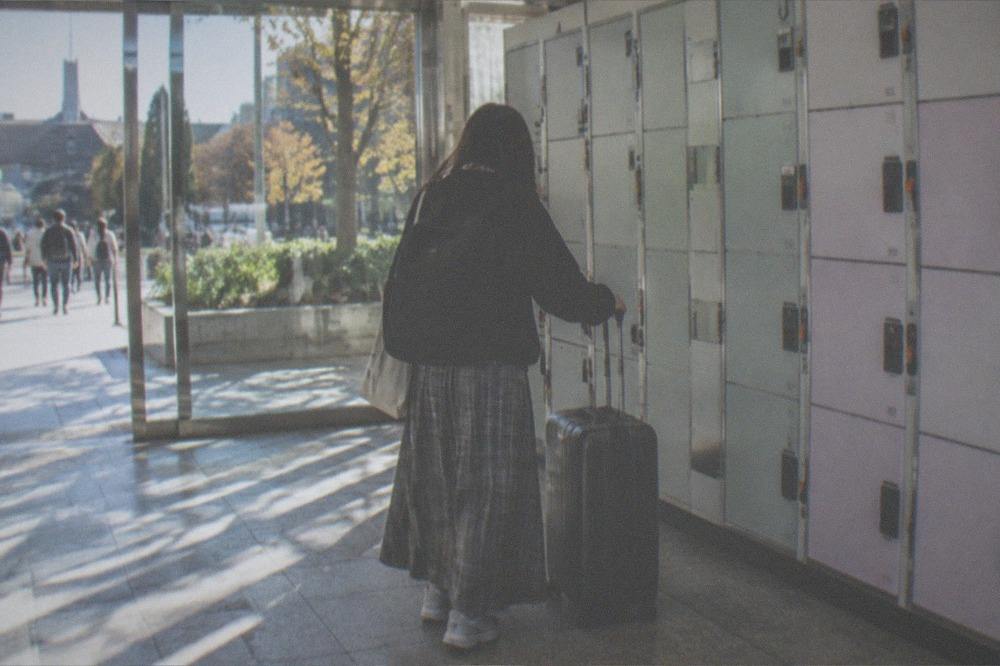
A few practical readings of the numbers. A 55 cm carry-on: fits M and up, plan ¥600 at a Metro locker. A medium checked case: needs L or LW, plan ¥900 to ¥1,100 at JR East stations and ¥1,000 at Metro. A large checked case: Toei large or LW only, expect these to be occupied at Shibuya, Shinjuku and Ueno by mid-morning, and have a staffed point as the plan rather than the backup. Two carry-ons: a large tier holds both, which is often cheaper than two M tiers.
The live availability services are worth knowing before you rely on a size tier being open. Tokyo Metro's Locker Concierge shows real-time availability at Metro lockers, and JR East's Multi Ecube site shows and reserves its own units, with the ¥500 per-box reservation surcharge and the shallower 55 cm reserved boxes noted earlier. Neither service covers the other operator's lockers, and neither covers Toei's banks.
The final tie-breaker is usually the first train to last train window. Most station lockers are only reachable while the station is open, and 146 of the 249 Radical Storage points in Tokyo are not open 24 hours either, so hours, not just size, belong in the plan. A bag accepted by a hotel desk on your last day, or a point that lists no closing time, can be the difference between a calm evening and a dash across the city, which is a decision this site's own Luggage Storage in Tokyo directory exists to make quick.
If none of the locker tiers at your station will take your case, the three staffed clusters below take a regular bag at 850 yen per bag per day plus the 355 yen once-per-bag checkout fee, with the drop-off handled by a person rather than a centimetre rule.
Common Questions About Coin Locker Sizes In Tokyo
What size coin locker fits a suitcase in Tokyo?
A carry-on suitcase of about 55 cm fits a medium tier, 50 to 56 cm wide, at most large stations. A medium checked case needs an L tier lying flat, and a large checked case fits only the Toei large tier at 856 x 342 x 663 mm or the JR East LW tier at 86 x 56 x 65 cm, the only common tier deep enough for a wide checked suitcase lying flat.
Are Tokyo coin locker sizes the same at every station?
The tier names and dimensions are standard within each operator, but the mix of tiers differs by station, and Tokyo Metro publishes no centimetre dimensions for its tiers at all. JR East prices also vary by station while Metro's do not. Expect the same tier ladder everywhere but a different proportion of large doors at each station.
How big are JR East Multi Ecube lockers?
The published tiers are SS at 15 x 34 x 65 cm, S at 33 x 34 x 65 cm, M at 50 x 34 x 65 cm, L at 86 x 34 x 65 cm and LW at 86 x 56 x 65 cm. Reservation-capable units of the same tier names are 55 cm deep rather than 65 cm, which is the fact most likely to surprise someone who reserved a locker that their bag then does not fit.
What happens if my bag is too big for the locker I paid for?
The door will not close and the machine returns your payment on most units, but you have lost the box. Sort by depth before height: a case deeper than about 34 cm fails every standard tier upright. If no tier at the station fits, a staffed Radical Storage point takes a regular bag at 850 yen per day plus a 355 yen once-per-bag checkout fee, and a station baggage room at Tokyo or Ueno takes cases by size tier up to a 30-day maximum.
Do Tokyo lockers have a weight limit?
The locker terms ban anything 30 kg or heavier, alongside valuables, perishables and living creatures. The limit is contractual, from the operator's terms, and it matches the 30 kg ceiling that Yamato applies to luggage forwarding. A normal packed suitcase stays well under it, but a case of books or equipment can cross the line while still fitting the dimensions.
Is a big locker cheaper than staffed luggage storage in Tokyo?
Slightly, at the top tiers. An L locker runs ¥700 to ¥1,100 per day depending on the station, against 850 yen per bag per day plus a 355 yen once-per-bag fee at a Radical Storage point, which is 1,205 yen for one bag for one day on the network's own published figures. The locker wins by a small margin when a top-tier door is free, and loses whenever the big tiers are full, which at the busiest stations is most of the day.