Paying For Tokyo Coin Lockers With Suica And PASMO
Most travellers in Tokyo carry a charged IC card and no coins, so the first question at a locker bank is whether the door will open for Suica. The answer depends on the operator, and the operators do not agree.
Short answer
Yes, many coin lockers take Suica. JR East lockers at Ueno accept transit IC cards on most banks, with some banks taking IC only and two taking PayPay and Alipay. Tokyo Metro lockers accept only the methods printed on the locker body, and Haneda Terminal 3 rows list no card payment at all. Cash still works almost everywhere.
Do Coin Lockers In Tokyo Take Suica?
Many Tokyo coin lockers take Suica, but not all of them. JR East's Multi Ecube lockers at Ueno accept transit IC cards on most banks, and two banks there also take PayPay, Alipay and WeChat Pay. Tokyo Metro lockers accept only the payment methods displayed on the locker body itself, and some banks are transit-IC-only while others are cash-only.
Suica and PASMO are the two transit IC cards a visitor will actually hold in Tokyo. JR East issues Suica; Tokyo Metro, Toei and most private railways accept both, and the same card works on buses, vending machines and convenience store tills across the city. That universality is exactly why travellers assume a locker door will open for a tap. Usually it will. The catch is that a locker bank belongs to one operator, and each operator writes its own payment rules into its own terms of use.
The practical picture is friendlier than the fine print suggests. At Ueno Station, JR East's own guide lists three different payment situations within one station: most locker banks take cash and transit IC cards together, some banks are transit-IC-only with no coin slot at all, and two banks take a long menu of methods including Rakuten Edy, iD, QUICPay, Alipay, WeChat Pay and PayPay alongside cash and IC (JR East's Ueno station guide). A traveller holding only coins can still find a bank that wants them, and a traveller holding only a phone can too, provided they walk to the right bank.
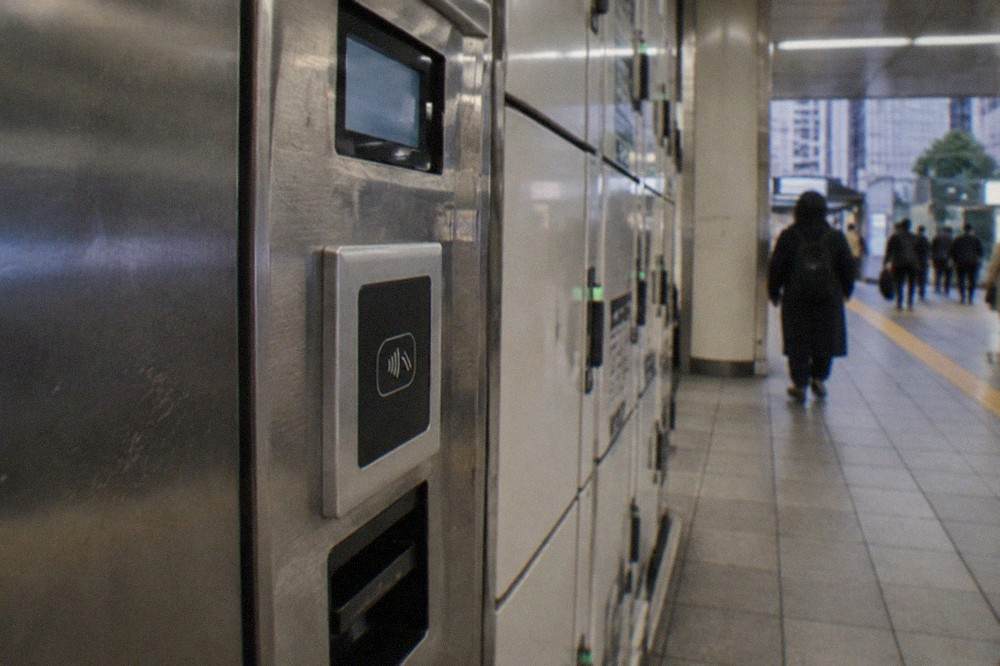
Tokyo Metro takes a different line. Metro Commerce, the subsidiary that runs the network's 4,830 locker doors, declines to enumerate payment methods in its published terms and simply instructs users to pay by whatever means is displayed on the locker body itself. In other words, the machine in front of you is the tariff, the price list and the payment policy, all at once. If the door has an IC reader, tap. If it has a coin slot and nothing else, coins are the only way in.
Which Locker Banks Take IC Cards, And Which Want Cash?
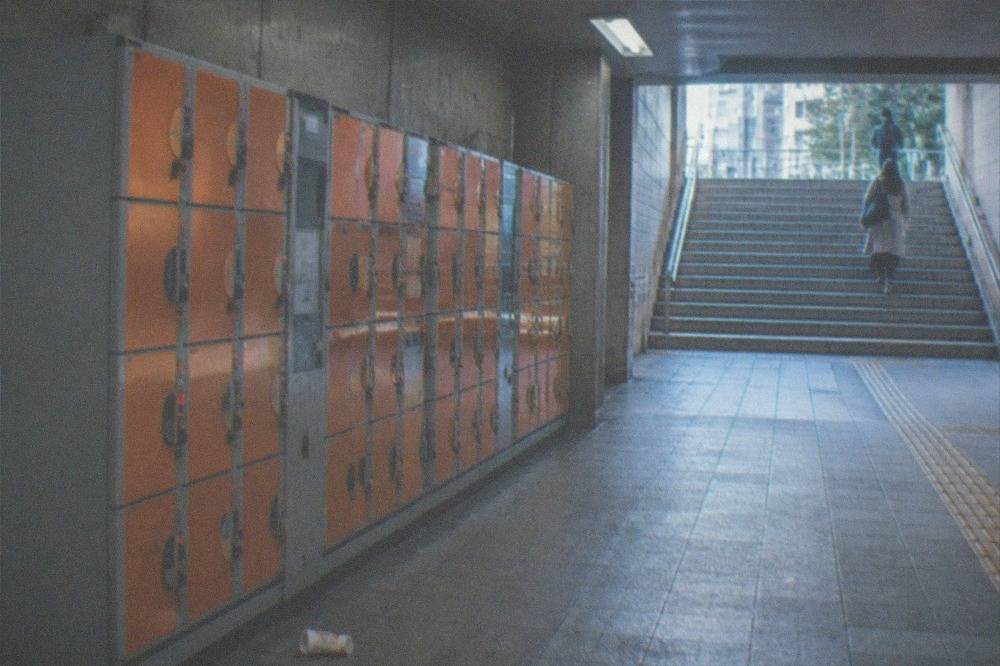
Tokyo's locker operators split into four camps on payment. JR East banks mostly take cash and IC together, with IC-only and smartphone-payment banks mixed in. Tokyo Metro defers to the display on each locker. Toei publishes no walk-up payment rule at all. Airport lockers range from full cashless at Haneda T1 and T2 to rows at Haneda T3 that list no card payment.
The table below gathers the published position of each operator. Note what is missing: Toei publishes no yen figure for its walk-up lockers and no payment rule, and Narita's airport page does not fully state payment methods for its lockers. Gaps stay gaps; nothing here is guesswork.
| Operator or station | Published payment position | Notes |
|---|---|---|
| JR East, Ueno, most banks | Cash and transit IC cards (Suica, PASMO and others) | Source: JR East's own station guide |
| JR East, Ueno, some banks | Transit IC only, no cash | Marked on the bank itself |
| JR East, Ueno, two banks | Cash, transit IC, Rakuten Edy, iD, QUICPay, Alipay, WeChat Pay, PayPay | The broadest menu found anywhere |
| Tokyo Metro network | Whatever is displayed on the locker body | Metro Commerce terms decline to enumerate |
| Toei Subway | No published walk-up payment rule | Reservation product does publish surcharges |
| Haneda Terminal 1 and 2 | Cash, card, IC and QR code | 7-day maximum |
| Haneda Terminal 3 | No card payment listed on the operator's rows | Priced per 24 hours, not per day |
| Narita Airport | Not fully stated by the airport | Coin, IC and Multi Ecube rows all exist |
One warning about IC-only banks, because it catches people who planned around cash: a bank that takes no coins also gives no change, and a bank that takes no IC gives no tap. Checking the panel before choosing a door saves the experience of dragging a suitcase along a corridor to the next bank. The dimensions that decide whether a bag fits at all are covered in the Tokyo coin locker sizes guide, which sets out the Toei and JR East tier measurements in full.
The stations differ sharply in how many doors they offer, and the counts measure different things. Tokyo Metro publishes door counts per station: 146 doors at Shibuya, 127 at Ueno, 100 at Tokyo Station, 57 at Asakusa and 52 at Shinjuku for Metro's own banks alone. JR East's Multi Ecube network runs to 267 stations and 848 units. These are counts of doors and units from each operator, never a combined all-operator figure, because no operator publishes one.
At Ueno specifically, the JR East payment picture is the most useful in the city to understand, since it shows the whole spread inside one station. A short walk from the Park Gate side also brings a Radical Storage cluster into range: Ueno lists 8 storage points with a 4.87 rating across 285 reviews, the nearest 171 m from the station. For a bag that will not fit a locker door, that cluster is the nearest staffed fallback.
The same station is where an IC card earns its keep twice over, because JR East's baggage room on the 3F concourse inside the Park Gate takes bags at 500, 1,000 or 2,000 yen per day by size, up to 30 days. That is a counter, not a locker, and the payment happens with a person rather than a panel.
How Paying A Locker With Suica Actually Works
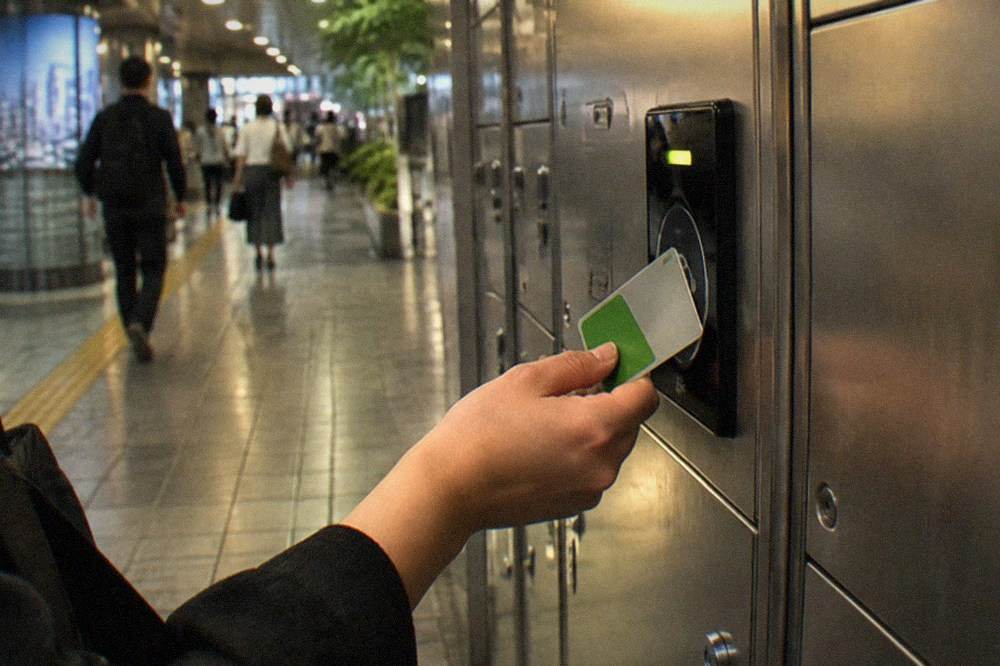
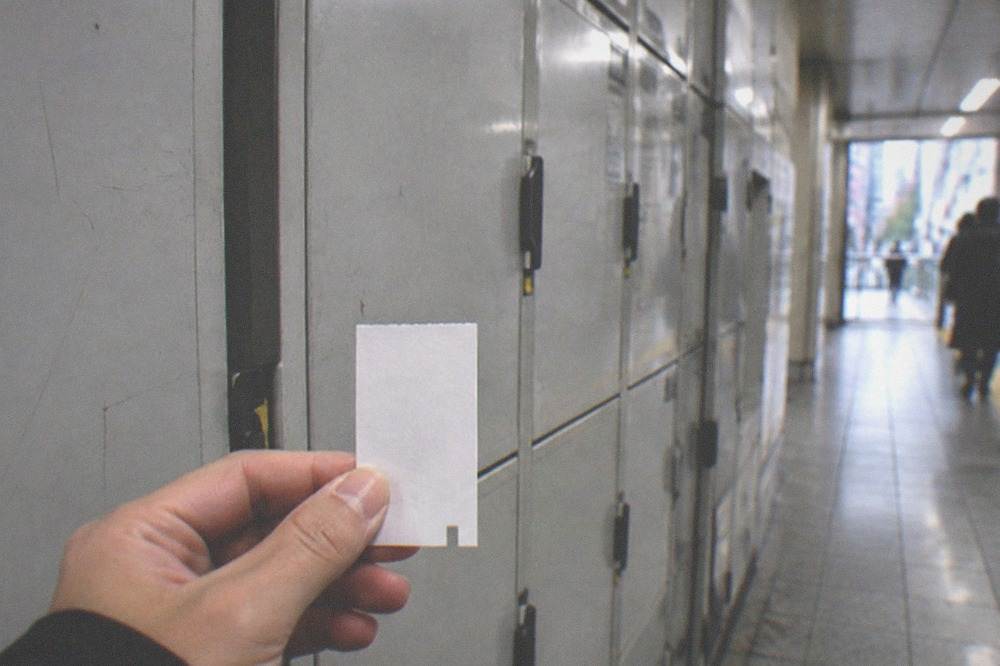
Tap the IC card on the reader, the door unlocks, you load the bag and shut the door. On return, tap the same card again or use the printed ticket to reopen. JR East's terms say the IC card used at payment is required at retrieval; its FAQ says the paper ticket works regardless of payment method. Keep the paper ticket and both stay true.
The conflict between those two JR East pages is real, current and worth knowing about rather than papering over. The Multi Ecube terms, dated 2024-11-10, state that the IC card used for payment is needed to get the bag back. The Multi Ecube FAQ states the opposite in spirit: the printed retrieval ticket unlocks the door by QR code or its six-digit number, regardless of how the fee was paid (the operator's locker FAQ). Both pages are official JR East group pages. The safe habit, and the one this guide recommends plainly, is to take the paper ticket every time and never rely on the card alone.
There is a subtler trap for anyone planning a multi-day locker stay on a reserved unit. One open ends the rental. Retrieve the bag and the reservation is forfeited with no refund; the only grace is a yellow reopen button on the panel that gives 15 minutes to change your mind. An unlimited-access product exists in the operator's network only at Gala-Yuzawa, which is a ski resort in Niigata, not a Tokyo option.
For Metro lockers the mechanics are simpler and the terms stricter. The locker runs from first train to last train, a day is added at 2 a.m. rather than midnight, and the first and last days each count as a full day however briefly the locker was used. A card that opened the door in the morning has, by the small hours, a second day of fees attached to it.
What Suica Payment Costs, By Operator
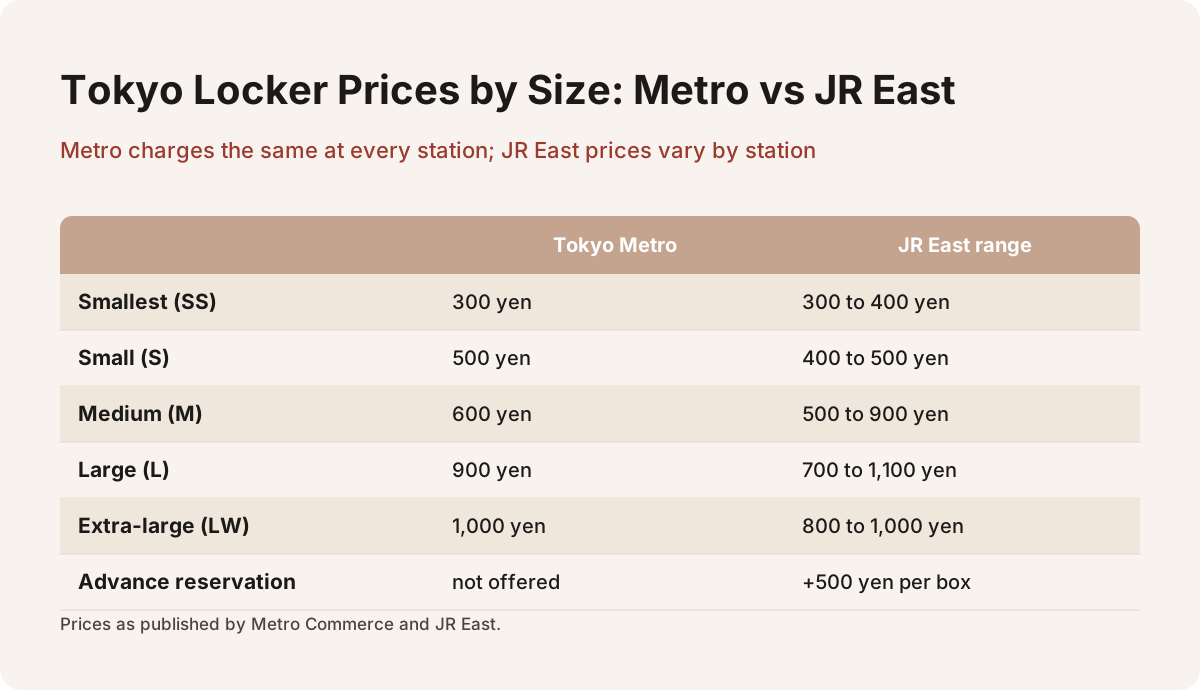
Tokyo Metro charges the same prices at every station: 300, 500, 600, 900 and 1,000 yen by tier. JR East prices vary by station, with M lockers from 500 to 900 yen and L from 700 to 1,100, plus a 500 yen reservation surcharge per box. Peak season adds 100 to 200 yen on JR East's M and L tiers.
The Metro sentence surprises people who have read that Tokyo locker pricing is station-dependent across the board. It is not, for Metro. Metro Commerce publishes one ladder across all 141 station-line rows on a single page, and only the mix of door sizes differs from station to station (Metro Commerce's locker page). What Metro never publishes is which size each tier corresponds to; the prices and the door counts appear, the centimetre figures do not.
| Tier | Tokyo Metro, every station | JR East published range |
|---|---|---|
| Smallest | 300 yen | 300 to 400 yen (SS) |
| Small | 500 yen | 400 to 500 yen (S) |
| Medium | 600 yen | 500 to 900 yen (M) |
| Large | 900 yen | 700 to 1,100 yen (L) |
| Extra-large | 1,000 yen | 800 to 1,000 yen (LW) |
| Advance reservation | not offered | +500 yen per box |
The JR East ranges are genuinely ranges. Proven live variance from the operator's own reservation site: Tokyo and Shinjuku charge 700 yen for M and 900 for L, while Omiya and Hodogaya charge 600 and 800 for the same tiers. At Shinjuku the ordinary lockers run 100 yen dearer than the Multi Ecube lockers in the same station. Paying by Suica does not change any of these numbers; the card is a payment method, not a discount.
How Long The Payment Lasts, And When The Day Rolls Over
Tokyo Metro allows 4 days including the start day. JR East Smart Logistics allows 3, and paying more does not extend the period; the terms say the bag must be collected by day four. The locker day rolls at 2 a.m., not midnight, and the first and last days each count as one full day.
This is where IC payment has its sharpest edge over cash. A cash locker silently stops being paid and starts being overdue; an IC locker can sometimes be topped up, which delays collection but never extends the maximum period. JR East's terms state it in so many words: even if money is added, the bag comes out on the fourth day.
| Rule | Tokyo Metro / Metro Commerce | JR East Smart Logistics |
|---|---|---|
| Maximum period | 4 days including the start day | 3 days |
| Extending by paying | not offered beyond the period | refused; the bag is pulled regardless |
| Day boundary | 2 a.m., between last and first train | 2 a.m. |
| After expiry | contents moved, held 30 days from start, same rate runs on | materially identical; food disposed of immediately |
| Collecting after expiry | receipt, photo ID and the IC card used; fee in cash only | keep the paper ticket; hotline 0120-829-532, 08:00 to 21:00 |
The expiry rules are the least-known part of locker use in Tokyo and the most expensive to learn by accident. Once the period ends, the operator unlocks the door, inspects the contents and moves them to a designated place. The daily rate keeps running during that separate storage, your travel costs to collect are your own, and the separate storage fee is cash only, even at a locker you originally paid for with Suica. After 30 days from the original start date, ownership is deemed abandoned and the operator may bill for disposal. How long you can leave a bag before that clock starts is covered in full in how long you can leave luggage in Tokyo.
The station comparison matters here too. The Toei Subway locker bank at Asakusa runs to 72 doors across 4 banks, all outside the ticket gates, and Toei's reservation service covers 7 stations with surcharges of 300 yen for a large box, 200 for medium and 100 for small. Asakusa also holds a dense staffed cluster: 13 Radical Storage points with a 4.85 rating across 268 reviews, the nearest 193 m out. Note one recent change with real weight: the Asakusa Culture Tourist Information Center ended its own bag storage service on 31 March 2026, with Taito City citing suitcase congestion on the streets, so older English guides pointing there are out of date.
What Happens If The IC Card Or The Ticket Is Lost
Losing the card or the receipt is expressly the user's loss under every operator's terms. To collect from a Multi Ecube locker you can call 0120-829-532 between 08:00 and 21:00 with the four-digit door number. Keio publishes the only cost figures: 2,000 yen for a lost key, 1,000 yen for a lost IC card or receipt.
The liability cap behind all of this is 30,000 yen, and it is contractual, not statutory. Metro Commerce, JR East Smart Logistics, Tokyu and Keio all publish the same figure. Metro Commerce's wording is direct: where the operator's responsibility for loss or damage is confirmed, compensation is limited to 30,000 yen. There is a deliberate symmetry inside the terms that every user should see stated plainly: valuables, including anything worth 30,000 yen or more, are banned from the lockers in the first place, so the cap and the ban share one number, and a prohibited item pays out nothing even where the operator was at fault.
Japanese consumer law does place a floor under all this. The Consumer Contract Act voids a clause that totally exempts a business from liability, and the Commercial Code means a posted no-responsibility notice does not exempt a business that accommodates customers on its premises, with a duty of care applying even to free storage. The honest reading for a traveller is that the law stops an outright wipeout of liability but will not turn a 30,000 yen cap into a new laptop, and a laptop was never an allowed locker item to begin with.
A tap-to-pay habit also collides with the 2 a.m. rule in one specific way. A Suica payment made late at night counts the day of use as a full day, so a bag dropped at 23:00 and collected at 09:00 the next morning has consumed two days of fees. There is no part-day tariff anywhere in the system, and a few hours is billed as a full day at every operator covered here.
Reserving A Locker With A Phone Instead Of Coins
JR East's Multi Ecube site reserves lockers for 500 yen per box on top of the locker price. Toei's Smartphone Locker service covers 7 stations, reserves from 2 hours ahead, and adds 300 yen for large, 200 for medium and 100 for small. Both are operator-run, not third-party apps.
The Multi Ecube reservation site is the operator's own live availability service, and the Toei product, Smartphone Locker, is linked from Toei's own news release. Tokyo Metro runs its Locker Concierge availability service at metro.akilocker.biz, again linked from Metro Commerce's own header; it shows which doors are open before you walk to the station. None of these is an independent startup guessing at locker data, which is a distinction worth knowing when choosing what to trust with a morning itinerary.
Reservation changes the arithmetic in a way that shows up immediately at the panel. A reserved Multi Ecube locker is also 55 cm deep rather than the 65 cm of the walk-up tiers of the same name, so the door that was booked and the door that was tapped may not take the same suitcase. The LW walk-up tier, at 86 x 56 x 65 cm, is the only common tier that swallows a wide checked case lying flat, and it is a walk-up tier, not a reservable one. Why banks sit empty while others are full has its own explanation in why Tokyo coin lockers are full.
When A Staffed Drop-Off Beats A Locker Panel
Radical Storage's Tokyo rate is 850 yen per bag per day for a regular bag plus a 355 yen fee per bag charged once at checkout, so one bag for one day is 850 plus 355, which is 1,205 yen. Staffed points take bags of any size the staffed counter can hold, with a person, a receipt and no day boundary at 2 a.m.
That arithmetic is on Radical Storage's own published figures, and the checkout fee does not scale with the number of days, so a three-day stay pays it once. Radical Storage advertises a from-490-yen day rate, but that is a small-bag rate found at 11 Tokyo points, not the regular-bag figure, and this site does not present it as what storage in Tokyo costs. Staffed points display the small-bag rate on their cards while automated lockers display the regular rate, so a 750 yen card is not cheaper than an 850 one, it is a smaller bag.
The staffed alternative earns its place at the moments a locker panel cannot help: a case too deep for the 342 mm interior of a Toei locker, a day that runs past last train, a bag that should not be left unattended overnight. Radical Storage's guarantee is not insurance, its own terms say so in clause 9.2.2, and payouts are capped at EUR 3,000 per claim in clause 9.4; the terms also let the company withdraw the guarantee at any time. Say the cap and the terms together or say nothing.
Near Tokyo Skytree the cluster is small but close: 3 Radical Storage points with a 4.77 rating across 132 reviews, the nearest 85 m away. Skytree's own rule forces the storage question harder than most venues, since any bag with a side over 60 cm is refused entry and the check happens at the door. The venue's own page names its two paid answers: the Skytree Town coin lockers and the Sagawa counter in Solamachi, which charges 800 yen for a bag up to 100 cm, 1,000 up to 160 cm and 1,300 beyond that. The wider storage picture around the tower, including Solamachi's own locker tariff, is laid out in the Tokyo luggage storage prices guide.
For airport days the split is starker. Radical Storage has no point inside any terminal at either airport; the nearest to Narita is about 6.0 km away in Tomisato, Chiba, and the nearest to Haneda about 3.4 km away in Kawasaki, Kanagawa, across a prefecture boundary. The airports' own counters are the terminal-side answer: Haneda's T3 desks are open 24 hours at 800, 1,000 or 2,000 yen per 24 hours, while T1 and T2 run 08:00 to 19:30 priced per day. Narita's cheapest attended desk, the Promotion Foundation counter in Terminal 2, charges 500, 700 or 1,100 yen by size.
The honest position, stated once and plainly: coin lockers are the cheaper one-day choice for a bag that fits the door, and the staffed networks win on size, hours and the 2 a.m. problem. Neither side of that comparison needs flattering. The directory at Luggage Storage in Tokyo maps the staffed side street by street; the locker side is what this page has set out.
Common Questions About Paying For Coin Lockers With Suica
Do coin lockers take Suica?
Many do. JR East's lockers at Ueno accept transit IC cards on most banks, some banks there take IC only, and two banks also take PayPay, Alipay and WeChat Pay. Tokyo Metro lockers accept only the payment methods displayed on the locker body itself. Cash still works at nearly every walk-up bank, so carrying a few coins is the fallback.
Can I reopen a coin locker I paid for with Suica?
Tap the same card at the same door. On Multi Ecube lockers the printed ticket also reopens the door by QR code or its six-digit number, regardless of how the fee was paid, and one open ends the rental with only a 15-minute reopen grace. Keep the paper ticket, since the terms and the FAQ of the same operator describe retrieval slightly differently.
What happens if I lose the Suica card I used to pay?
Losing the card or the receipt is the user's loss under every operator's terms. For a Multi Ecube locker, call 0120-829-532 between 08:00 and 21:00 with the four-digit door number. Keio publishes the only fixed costs, 2,000 yen for a lost key and 1,000 yen for a lost card or receipt; other operators charge a prescribed amount they do not publish.
Are locker prices higher when paying by IC card?
No. The card is a payment method, not a tariff. Tokyo Metro charges 300, 500, 600, 900 or 1,000 yen by tier at every station, and JR East tiers range from 300 to 1,100 yen depending on the station and tier, with a 500 yen surcharge for advance reservation and 100 to 200 yen added in peak season on JR East's M and L lockers.
Do airport coin lockers take IC cards?
Haneda Terminal 1 and 2 lockers take cash, card, IC and QR codes. Haneda Terminal 3 lists no card payment on its rows, so coins or preparation are needed there. Narita's airport page does not fully state payment methods for its lockers, which run 400, 600 or 800 yen per day with an 8-day maximum counted from midnight.
Is there an hourly rate if I only need a locker for a few hours?
No. A few hours is billed as a full day at every operator covered here. The locker day runs from first train to last train, a day is added at 2 a.m., and the first and last days each count as a whole day however briefly the locker was used. Narita has an hourly tariff at only two locations, Terminal 2 B1F and Terminal 3 2F, which is an airport exception rather than a rule.