Luggage Lockers In Tokyo: A Station-By-Station Map
Tokyo stations have thousands of coin lockers, but they're not spread evenly and they're not always where you expect. This map breaks down locker locations, real capacities, and the nearest Radical Storage drop-off when every door is taken.
Short answer
Coin lockers sit inside every Tokyo Metro and JR East station, with major terminals offering over 100 doors apiece. Prices range from ¥300 to ¥1,100 a day depending on size, and most enforce a 3- or 4-day maximum stay before contents are removed. For oversize bags, longer stays or a guaranteed spot, attended station baggage rooms and Radical Storage points sit a short walk from the exits.
Finding a free coin locker in Tokyo can feel like a lottery. This Luggage Storage in Tokyo map shows where the lockers really are, how many doors each station hides, and exactly what to do when the last XL locker is taken. The numbers are taken from each operator's own published figures, not from a third-party estimate that confuses a bank of lockers with a single door.
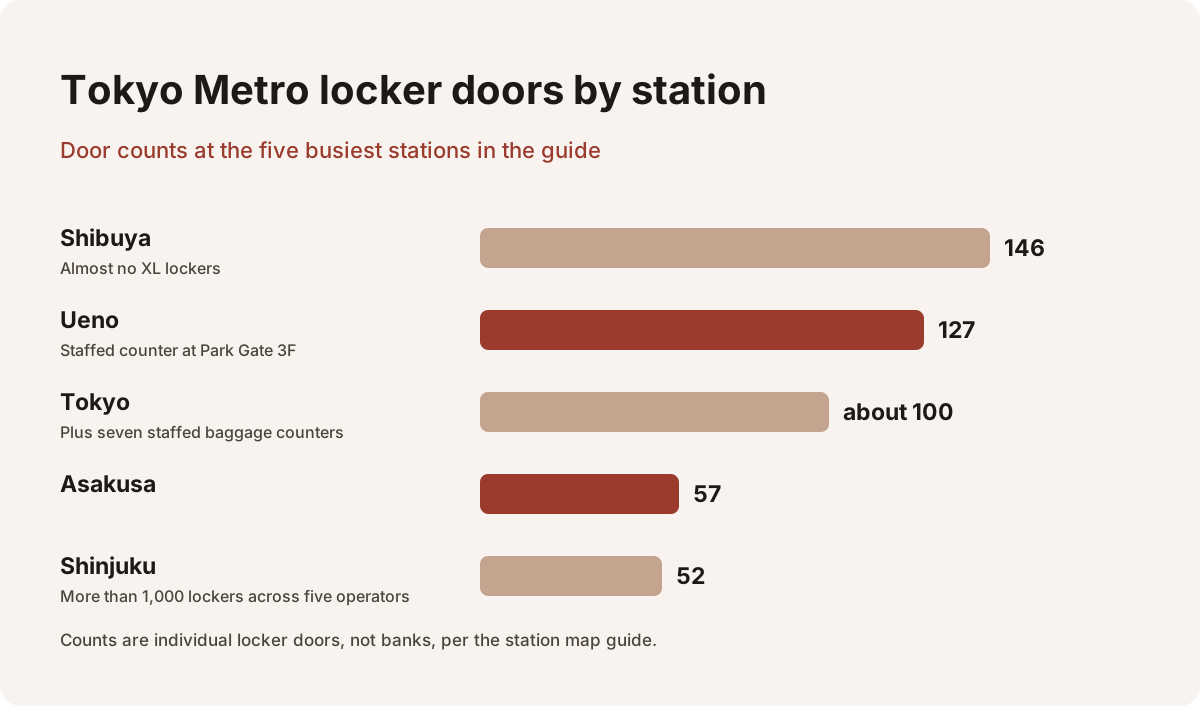
A Tokyo Metro station can hold 57 doors at Asakusa, 127 at Ueno, or 146 at Shibuya. JR East adds further banks, often behind ticket gates. Add the private railways and the lockers multiply again. The result is that at a large interchange such as Shinjuku, each rail operator publishes its own locker door count, and no combined station total exists, while a smaller local station may have none. Every count in this guide says what it counts: doors, not banks, because that is the number a traveller actually needs.
How To Find A Luggage Locker In Any Tokyo Station
Tokyo's station lockers are clustered near ticket gates, exits and concourse entrances. Look for blue "Locker Concierge" signs inside Tokyo Metro stations or the JR East Multi-Ecube reservation screen. Most banks accept transit IC cards, and a growing number allow you to reserve a specific door up to two hours ahead.
Inside major terminals the lockers often spread across several floors and both sides of the fare gates. At Tokyo Station, the best concentration is in the B1 Gransta area, the Yaesu underground passages, and along the passage to the Marunouchi Central Gate. At Ueno, a big cluster sits beside the Park Gate exit on the 3F concourse. Shibuya's largest bank is on the B1 floor, roughly halfway between the Hanzomon Line and the JR Yamanote Line gates. Shinjuku scatters its 52 Tokyo Metro doors across the underground mall, with further JR East and Odakyu banks on the west side.
Two official live-availability services now remove most of the guesswork. Tokyo Metro's Locker Concierge (metro.akilocker.biz) shows real-time occupancy for every door on the network, colour-coded by block. JR East's Multi-Ecube reservation site (multiecube.com) lets you book an L-size door before you even reach the station, for a flat ¥500 reservation fee on top of the daily rate. Both services display the same locker map a station attendant would consult, so they are worth bookmarking on a phone.
Luggage Lockers At Tokyo's Busiest Stations
The stations a traveller uses most often carry the biggest locker totals, but the mix of sizes varies sharply. Shibuya has 146 Tokyo Metro doors yet almost no XL lockers; Tokyo Station holds about 100 doors and adds seven staffed baggage counters; Ueno has 127 doors plus a staffed counter inside the Park Gate. Locker counts alone do not tell the full story.
Every figure in the table below is an operator-published count of individual locker doors, not of banks. Where an operator uses the word 箇所 it counts a cluster, and those figures have been excluded. The "nearest Radical Storage point" column shows the straight-line distance from the station centre to the nearest Radical Storage partner location, a staffed drop-off that accepts bags of any size with no time limit. For stations where an attended station baggage room exists, that is noted.
| Station | Tokyo Metro doors | JR East Multi-Ecube (units) | Nearest Radical Storage (m) | Attended baggage room |
|---|---|---|---|---|
| Shibuya | 146 | present but network-wide only | 306 | No |
| Ueno | 127 | present | 171 | Yes, Park Gate 3F |
| Tokyo | 100 | present | 558 | Yes, 7 counters |
| Asakusa | 57 | absent | 193 | No (Taito City closed Mar 2026) |
| Shinjuku | 52 | present | 187 | No JR counter (Odakyu West Exit & Sagawa Busta available) |
Counts for Ikebukuro, Akihabara, Shinagawa and other locations are published on the Tokyo Metro locker-concierge page and the JR East Multi-Ecube site, but per-station totals are not always given as a single figure. A complete live availability map for Tokyo Metro is at metro.akilocker.biz and for JR East at multiecube.com.
The distances to nearby Radical Storage points are short: 187 metres from Shinjuku Station is a three-minute walk, and 171 metres from Ueno Station puts the drop-off within sight of the Park Gate. Every one of those points is a staffed shop or hotel counter that holds bags of any size for as many days as needed. The daily rate is 850 yen for a regular bag, with a single 355 yen checkout fee added per bag. That comes to 1,205 yen for one bag for one day, no coin needed and no 3-day time limit clock ticking.
When the lockers are full, these three areas cover the stations where the shortage is most acute.
Attended Storage: Station Baggage Rooms And The Radical Storage Network
Seven attended baggage counters operate inside Tokyo Station alone, with trained staff, published size bands and a 30-day maximum stay. Ueno's JR counter sits inside the Park Gate and charges ¥500 to ¥2,000 a day by bag size. Shinjuku has no JR-run counter, but the Odakyu Travel Center and the Sagawa Express counter at the Busta terminal fill the gap.
Tokyo Station's baggage rooms are the largest concentration of staffed left luggage in the city. The JR East Logistics counters at Yaesu South, Gransta B1, the Shinkansen South Transfer Gate and Marunouchi Central all open daily until 20:00 or 21:00 and price bags at S (under 100 cm) ¥500, M (under 200 cm) ¥1,000 and L (over 200 cm) ¥2,000 per day. The Gransta cloak service and the JR EAST Travel Service Center both run a same-day-only rule, so they are not an option for a multi-day trip. A Sagawa Express counter inside Ichibangai also accepts baggage at ¥1,000 to ¥2,000 per day.
At Ueno, the JR East Logistics baggage room on the 3F concourse is the only staffed option inside the station. It uses the same three price tiers as Tokyo Station, opens 10:00 to 20:00 daily, and holds bags for up to 30 days.
Shinjuku has no JR-run baggage room. The Odakyu Travel Center at the West Exit holds bags for up to 3 days but does not publish a price, asking travellers to check at the counter. The Sagawa Express counter on the 3rd floor of the Busta Shinjuku terminal is the clearest alternative: ¥800 for bags up to 100 cm, ¥1,000 up to 160 cm, and ¥1,500 for larger items, open 06:30 to 21:00.
When every attended counter is full or closed, and a traveller needs a guaranteed spot near the platform, the Radical Storage point at Tokyo Station is the closest staffed option that can be reserved in advance.
How Long Can You Keep A Coin Locker, And What Happens When The Time Runs Out
Tokyo Metro lockers allow a maximum of 4 days including the day you start. JR East Multi-Ecube lockers cap the period at 3 days, with no extension possible by adding money. When either limit expires the operator removes your bag, stores it separately for 30 days, and continues charging the daily rate. You must present the receipt and the same IC card you paid with to collect it.
The day boundary adds a trap. Tokyo Metro's terms roll the day at 02:00, not midnight. A bag dropped at 20:00 on Monday counts Monday as the first day even though only four hours were used, and Tuesday begins at 02:00. JR East Smart Logistics also uses the 02:00 rollover for Multi-Ecube lockers. A complete breakdown of maximum stays and the separate-storage process is covered in the guide on how long you can leave luggage in Tokyo.
| Operator | Maximum stay | Day rollover | Separate storage period | Extension possible |
|---|---|---|---|---|
| Tokyo Metro / Metro Commerce | 4 days (including start day) | 02:00 | 30 days from original rental start | No |
| JR East Smart Logistics (Multi-Ecube) | 3 days | 02:00 | 30 days | No, adding money does not extend |
| Haneda airport lockers | 7 days | per 24h or per calendar day | 30 days after removal | No |
| Narita airport lockers | 8 days | midnight | Not published separately | No |
After the maximum stay, the operator is entitled to open the locker, inspect the contents, and move them to a side room. The same daily rate continues, and you must travel back to the station to retrieve the bag. At Tokyo Metro and JR East the separate storage lasts 30 days from the start of the original rental, after which the contents are deemed abandoned and may be disposed of. Food items are removed immediately on JR East lockers, with no grace period.
This is the most practical reason to choose a staffed storage point for any stay longer than a weekend. Radical Storage imposes no time limit, and the partner shop or hotel counter holds the bag until the reserved pick-up day with no extra daily-limit fee. The 850-yen-per-day rate plus the one-time 355 yen checkout charge stays the same whether the bag sits for one afternoon or a full week. For a three-day stop, coin lockers may reach the legal limit, while a Radical Storage point near Shinjuku Station adds no surcharge for the third day.
What Fits, And What Doesn't: Locker Sizes Across The Network
JR East's common L locker measures 86 cm high, 34 cm wide and 65 cm deep internally, fitting a medium checked case but not a 28-inch spinner. The rare LW tier at 86 by 56 by 65 cm is the only standard locker that takes a full-size suitcase lying flat. Toei Subway's large locker is 856 mm tall and 342 mm deep, catching a 26-inch case on height rather than width.
The lockers a traveller actually sees at Shibuya, Ueno or Shinjuku are mostly S, M and L tiers. S lockers hold a handbag or a shopping bag, M lockers take a cabin-size roller, and L lockers fit a small checked suitcase of roughly 23 to 24 inches. A full guide to every tier and its real internal dimensions is at the Tokyo coin locker sizes reference.
JR East's LW tier is the real solution for a full-size suitcase. At 56 cm deep it swallows a wide case lying flat, unlike the 34 cm-deep standard lockers that force the bag in on its side. LW doors are far fewer in number and must be reserved in advance on multiecube.com. Without a reservation a traveller can spend an hour walking a station looking for an LW light.
| Operator | Tier | Internal dimensions | Typical bag that fits |
|---|---|---|---|
| JR East Multi-Ecube | L | 86 × 34 × 65 cm | 24-inch checked suitcase |
| JR East Multi-Ecube | LW | 86 × 56 × 65 cm | 28-inch spinner, lying flat |
| JR East Multi-Ecube | M | 50 × 34 × 65 cm | cabin roller |
| Toei Subway | 大型 (large) | 856 × 342 × 663 mm | 24 to 26-inch case, tight on height |
| Toei Subway | 中型 (medium) | 502 × 342 × 663 mm | cabin bag |
This is the point where attended storage and the Radical Storage network remove the size gamble. No size restriction applies at a staffed counter or a Radical Storage partner shop. A 32-inch suitcase, a pram, a set of golf clubs, or two bags tied together all carry the same 850 yen daily rate. The checkout fee of 355 yen is per bag, not per item, so two separate backpacks are billed as two bags.
Storing Bags Near Narita And Haneda Airports
No coin locker or attended counter sits inside the terminal that accepts a full-size suitcase for more than 8 days. Narita has 11 staffed baggage counters in Terminals 1 and 2 and none in Terminal 3. Haneda's Terminal 3 counters are open 24 hours and charge ¥800 to ¥2,000 per 24-hour period. Both airports also run extensive coin-locker banks, with the largest doors priced at ¥800 to ¥1,500 a day.
A traveller arriving at Narita will find seven JAL ABC counters, three Sagawa Express counters, and one counter run by the Narita International Airport Promotion Foundation. The Foundation's desk on the T2 3F north concourse is the cheapest attended storage at the airport: ¥500 for a bag up to 115 cm, ¥700 up to 160 cm, and ¥1,100 for a large suitcase, open 06:30 to 22:00. JAL ABC prices its bags at ¥800, ¥1,000 and ¥2,000 and charges by calendar day, so a bag dropped at 18:00 and collected at 08:00 the next morning counts as two full days.
| Airport | Operator | Small bag | Medium bag | Large bag | Size rule |
|---|---|---|---|---|---|
| Narita T2 | Narita Airport Promotion Foundation | ¥500 | ¥700 | ¥1,100 | ≤115 cm / ≤160 cm / 161 cm+ |
| Narita T1/T2 | JAL ABC (7 counters) | ¥800 | ¥1,000 | ¥2,000 | envelope / suitcase / ski |
| Narita T1/T2 | Sagawa Express (3 counters) | ¥500 | ¥700 | ¥1,150 | ≤100 cm / ≤160 cm / ≤200 cm |
| Haneda T3 | Airport operator | ¥800 | ¥1,000 | ¥2,000 | <120 cm / <200 cm / <300 cm |
At Haneda, the T3 counters on 2F and 3F run 24 hours and apply the same ¥800, ¥1,000 and ¥2,000 tiers but price per 24 hours, not per calendar day. That distinction matters: a 22-hour stay costs one day at T3, but two days at Narita's JAL ABC counters.
The nearest Radical Storage point to Narita Airport sits about 6.0 km away in Tomisato, Chiba, which makes it impractical for a short transit. The nearest point to Haneda is roughly 3.4 km away in Kawasaki, across the prefecture boundary. For same-day airport storage the in-terminal attended counters and coin lockers are the only real choices, but travellers arriving on an early morning flight who then head straight into Tokyo should consider dropping their bags at a Radical Storage point near the city station they will use, rather than lugging a case from the airport and back. The comparison between luggage forwarding and storage for airport days covers the door-to-door alternatives.
Tokyo Lockers For A Few Hours: What You Pay And Where To Go
A short stop of two to four hours still costs a full day's coin-locker fee. No part-day tariff exists in any Tokyo locker system. For a midday bag drop, the cheapest network-wide price is the Tokyo Metro ¥300 small-size locker, which fits a handbag or a folded jacket but not a cabin case. The L tier at ¥900 to ¥1,100 is the realistic floor for a suitcase.
The four-hour use case sharply favours a staffed drop-off with a same-day flat fee. Tokyo Station's Gransta cloak charges ¥500 for a small bag and ¥1,000 for a medium bag, and at ¥1,000 it is price-identical to an L-size locker, but with a staff member watching the bag and no risk of the 02:00 day-rollover adding a charge. The Sagawa Express counter at the Shinjuku Busta terminal also charges ¥800 to ¥1,500 per day, with a drop any time between 06:30 and 21:00 and no size limit.
For a short afternoon in Asakusa, the nearest Radical Storage point is 193 metres from the station, and a same-day booking costs exactly the same 1,205 yen as an overnight stay, free to cancel until shortly before drop-off. That simplicity often beats the coin-locker hunt on a busy festival day, when every Senso-ji-adjacent locker is taken by mid-morning. The guide on where to store luggage for a few hours walks through the hourly alternatives in more detail.
When The Map Shows No Lockers At All: Backup Plans
At least two central Tokyo venues now refuse suitcases outright. Tokyo Skytree bans any item with a side over 60 cm, teamLab Borderless forbids luggage over 50 cm, and the Tokyo National Museum turns away suitcases at the main gate. The Budokan has no lockers and no cloakroom. Visiting any of these with a bag means parking it somewhere else first.
The verified refusal list is longer than most visitors expect. Tokyo Dome inspects bags at entry and refuses anything exceeding the space of a seat. Tokyo Disney Resort allows no roller cases or suitcases inside the parks, and the Super-Extra Large lockers are all outside the entrance gates. Mori Art Museum runs 210 standard lockers and 28 tall lockers on the 52F but explicitly states it has no cloakroom and asks visitors with large luggage to leave. Ariake Arena publishes only 14 large lockers in the entire 145-locker fleet, and directs heavy-luggage visitors to off-site lockers before they arrive.
| Venue | Lockers on site | Attended cloakroom | Suitcase policy |
|---|---|---|---|
| Tokyo Skytree | Coin lockers, paid | No venue-side (Sagawa counter in Solamachi) | Any side over 60 cm refused |
| teamLab Borderless (Azabudai) | Free lockers, size unpublished | Not established | Items over 50 cm prohibited |
| teamLab Planets (Toyosu) | Free lockers, 23 × 34 × 37 cm | No, oversize bags wire-locked in stroller area | Nothing carried into artwork spaces |
| Tokyo National Museum | Lockers, fee unpublished | Info counter accepts oversize bags | Suitcases refused at main gate |
| Mori Art Museum | 238 lockers, free | No cloakroom | Large luggage prohibited |
| Nippon Budokan | None | No cloakroom | Not stated on site |
| Tokyo Disney Resort | XXL to S, ¥400 to ¥1,500 | Temporary carry-case storage on busy days | No roller cases or suitcases inside parks |
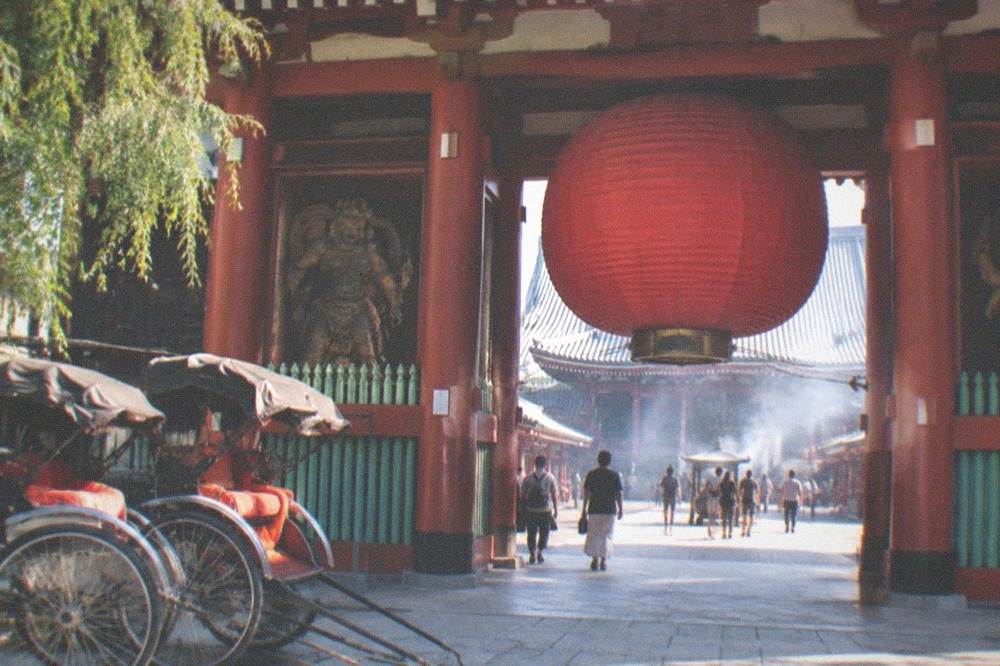
The common thread is that a locker inside the venue is no longer guaranteed, and at several big attractions the published rule is a flat ban. Dropping a bag at a Radical Storage point near the station before walking to the venue is the only way to be sure of entry. The point at Tokyo Skytree is 85 metres from the tower, open daily, and will hold a suitcase of any size. At Asakusa, the nearest Radical Storage point to Senso-ji is 193 metres from the station, a walk of under three minutes past the Kaminarimon gate.
A Station-By-Station Reference: Shinjuku, Shibuya, Ueno, Tokyo
Shinjuku, Shibuya, Ueno and Tokyo stations together handle most visitor luggage, and each rewards a different strategy. Shinjuku spreads lockers across five operators but lacks a JR baggage counter. Shibuya holds the single largest Tokyo Metro locker bank but fills early on weekends. Ueno pairs 127 doors with the only JR East baggage room outside Tokyo Station. Tokyo Station runs seven staffed counters alongside its coin-locker network.
These four stations together handle the bulk of visitor luggage, and each behaves differently.
Shinjuku Station holds at least 52 Tokyo Metro locker doors, plus JR East Multi-Ecube units and multiple private-railway banks. The nearest Radical Storage point is 187 metres from the centre of the station and several points are clustered around the West Exit, close to the Odakyu department store. Peak-season surcharges of ¥100 to ¥200 on L lockers are documented by JR East's own media pages, so a locker that costs ¥900 in February may cost ¥1,100 in August. For long stays, the Sagawa counter at the Busta terminal charges ¥800 to ¥1,500 a day regardless of season and opens at 06:30.
Shibuya Station has the largest single-operator locker count on the Tokyo Metro network at 146 doors. These are concentrated in the B1 area near the Hanzomon Line gates. The station has no attended JR baggage room. The nearest Radical Storage point is 306 metres away, a five-minute walk from the Hachiko exit. On weekends and event days the locker-fill rate is near 100% by 10:00, so a reserved Radical Storage drop-off or the Shinjuku Busta counter become the real alternatives.
Ueno Station balances 127 Tokyo Metro doors with the only JR East baggage room north of Tokyo Station, located on the 3F concourse inside the Park Gate. The baggage room charges ¥500 to ¥2,000 a day and holds bags for 30 days. The nearest Radical Storage point is 171 metres from the station. That means a traveller can start the day by leaving a bag at the Radical Storage counter near the Park Gate exit, secure a spot for the whole trip, and avoid both the 3-day locker limit and the coin-only payment risk.
Tokyo Station exceeds the other three on attended storage, with seven counters spread across the Yaesu, Gransta, Marunouchi and Shinkansen zones. The nearest Radical Storage point is 558 metres away, which is a longer walk than at Shinjuku or Ueno, but still within 10 minutes on foot. Because the station's coin lockers are split across multiple buildings, a first-time visitor can easily walk past a full bank without realising an empty one sits one underground passage away; the station's live locker map on multiecube.com is the quickest way to find it.
Common Questions About Luggage Lockers In Tokyo
Are there lockers at Shibuya Sky?
The Shibuya Scramble Square building housing Shibuya Sky does provide coin lockers, but the venue recommends using the station lockers or a luggage storage service for large suitcases. The nearest Radical Storage point is 306 metres from the station, a five-minute walk, and accepts bags of any size.
Can I leave luggage at a train station in Japan?
Yes, most major stations have coin lockers that accept bags for 3 to 4 days maximum, and larger terminals add staffed baggage counters. Tokyo Metro lockers cost ¥300 to ¥1,000 a day, and JR East lockers range from ¥300 to ¥1,100 plus a possible peak-season surcharge. For stays longer than the maximum, a staffed Radical Storage point or a station baggage room with a 30-day policy is required.
How much do Tokyo lockers cost?
Tokyo Metro locker prices are flat across the network: ¥300, ¥500, ¥600, ¥900 and ¥1,000 a day depending on door size. JR East locker prices vary by station, typically ¥300 to ¥500 for S, ¥400 to ¥900 for M, and ¥700 to ¥1,100 for L and LW. A ¥500 reservation surcharge applies on Multi-Ecube lockers booked in advance.
What happens if I overstay a coin locker?
After the maximum stay (3 days for JR East Multi-Ecube, 4 days for Tokyo Metro) the operator removes the contents, stores them separately for 30 days, and continues to charge the daily rate. Collection requires the original receipt and the same IC card used for payment. After 30 days the items are deemed abandoned and may be disposed of.
Where can I store luggage overnight in Tokyo?
Coin lockers are available overnight, but the day rolls at 02:00, so a bag left past 02:00 incurs a second day's charge. Staffed Radical Storage points and station baggage rooms hold bags overnight with no extra time-based fee beyond the daily rate, and the Radical Storage network has no maximum stay.
How do I find an empty locker in real time?
Tokyo Metro runs a live availability map at metro.akilocker.biz, colour-coded by occupancy. JR East Multi-Ecube lockers and reserved doors are shown on multiecube.com, where a door can be booked up to two hours before arrival.