Tokyo On Your Last Day Before A Night Flight: Where Your Bag Goes
Checkout is usually 10:00 or 11:00 and night flights leave hours of empty time in between. Here is what each storage option in Tokyo actually costs, when it closes, and which one fits a late departure.
Short answer
A regular bag at a staffed Radical Storage point costs 850 yen per bag per day plus a 355 yen per-bag checkout fee, so one bag for one day is 1,205 yen. Haneda Terminal 3's attended storage desk is open 24 hours at 800 yen and up per 24 hours. Narita has 11 attended counters, none of them in Terminal 3.
Your hotel's checkout time depends on the hotel, so confirm at the front desk, and a night flight out of Narita or Haneda often boards after 21:00. That gap is the whole problem this page solves. Twelve hours, one suitcase, and a city you would rather not waste sitting in an airport food court.
The good news is that Tokyo has more ways to park a bag than almost any city on earth: hotel front desks, staffed storage points in shops and hotels, coin lockers by the thousand, attended baggage rooms inside major stations, airport counters, and luggage forwarding that skips the carry entirely. The bad news is that their prices, closing hours and duration rules differ wildly, and the cheapest option is not always the one that fits a late flight. This guide works through them in the order a traveller actually meets them on a final day.
What Should You Do With Your Luggage On Your Last Day In Tokyo?
Most hotels hold bags at the front desk after checkout, but that ties your last day to one neighbourhood and one closing hour. A staffed Radical Storage point at 850 yen per bag per day, plus a 355 yen per-bag checkout fee, frees you to spend the afternoon anywhere in the city, then collect the suitcase and ride straight to the airport line.
Start with the hotel itself. Many Japanese hotels hold a checked bag behind the desk on the day of departure, often free. Confirm hours and any fee with the front desk, and most will hold it into the evening. It is the cheapest option that exists and often the most convenient, since the bag is already there. The limits are real though. You have to come back to the same neighbourhood to collect it, the desk closes at a set hour, and on a night flight that hour can land awkwardly: a hotel that stops holding bags at 20:00 leaves you collecting at 19:30 and killing two more hours at the airport anyway.
The research behind Luggage Storage in Tokyo covers 249 Radical Storage points across the city, and the pattern in the data is consistent: every one of them is a real partner location, a shop, a hotel lobby or a similar staffed business, and none of them is owned or run by this site. A staffed point solves the neighbourhood problem, because you choose the point, not the hotel. Drop the bag near the station you will actually leave from, spend the day wherever you like, and collect on the way to the train.
That is the shape of a good final day: one decision in the morning about where the bag sleeps during the afternoon, and one collection in the evening that feeds directly into the airport run. The rest of this page prices each branch of that decision, including the ones a hotel cannot cover, and ends with the late-night case where most facilities have already closed.
Should You Store The Bag Near Your Hotel Or Near The Station You Leave From?
Store the bag where your day ends, not where it starts. A point near a station on your airport line beats one near the hotel, because you collect the suitcase and board without transferring. Ueno sits on the Keisei Skyliner route to Narita, Shinagawa on the Keikyu line to Haneda, and Tokyo Station on the Narita Express plus the airport runs to both.
The classic mistake is storing the bag near the hotel because the hotel is familiar. On a normal day that costs you nothing. On a final day it can cost an hour, because after collection you still have to cross the city to the station your airport train leaves from, dragging the suitcase through whatever transfer that requires. Tokyo's interchange stations are enormous, and changing lines with a checked bag at Shinjuku or Shibuya at rush hour is nobody's idea of a last afternoon.
Working backwards from the flight fixes it. Flying from Narita, the two comfortable departure points are Tokyo Station for the Narita Express and Ueno for the Keisei Skyliner. Flying from Haneda, Shinagawa is the natural base, since the Keikyu line runs direct to the terminal in about half an hour. A bag stored within a few hundred metres of any of those three stations turns the airport leg into a single walk, a single ride, done.
The trio above shows the three station clusters this site publishes that match those departure points. All three are staffed Radical Storage areas, all charge the same 850 yen per bag per day for a regular bag, and all add the same 355 yen once-per-bag fee at checkout, so the choice between them is about location and opening hours rather than price.
There is a second reason to prefer the station over the hotel: the station also has the fallback. If the storage point near Ueno is full or closing, Ueno has an attended JR East Logistics baggage room inside the Park Gate, open daily 10:00 to 20:00, at 500 yen for a small bag, 1,000 for medium and 2,000 for large. Tokyo Station has seven attended facilities of its own. A hotel front desk has no fallback at all; either they take the bag or they do not.
How Much Does It Cost To Store A Bag On Your Final Day?
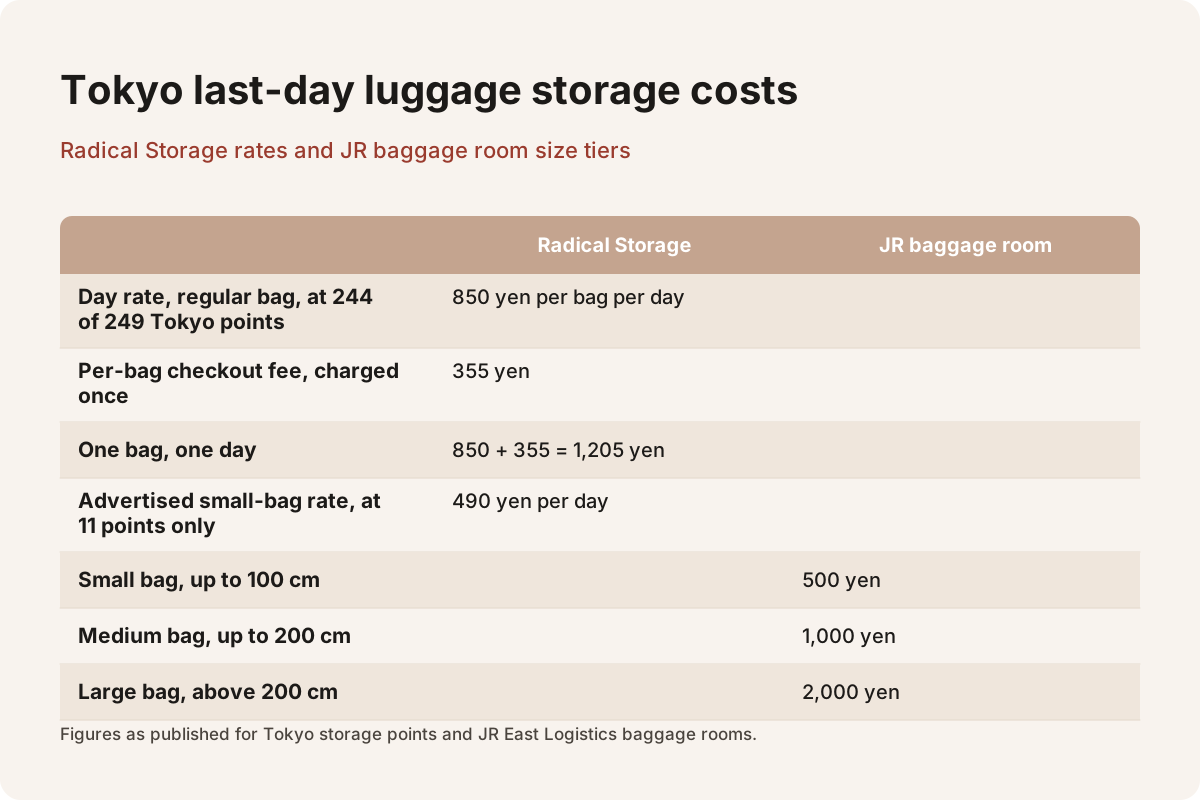
A regular bag costs 850 yen per bag per day at 244 of the 249 Tokyo points on file, plus a 355 yen per-bag fee charged once at checkout. One bag for one day is 850 plus 355, which is 1,205 yen. Radical Storage advertises from 490 yen per day, but that is a small-bag rate found at 11 points only.
Two numbers matter and only two. The day rate is 850 yen per bag for a regular suitcase, and it does not vary by area or by point: Asakusa, Shinjuku and Ueno all charge the same, because it is one network with one price. The second number is the 355 yen per-bag fee added once at checkout. It does not scale with the number of days, so a multi-day hold pays it once, and a one-day hold does not escape it either, which means quoting the day rate alone understates a single-day booking by about a third.
The published figures, and the one piece of arithmetic they support:
| Component | Figure |
|---|---|
| Day rate, regular bag, at 244 of 249 Tokyo points | 850 yen per bag per day |
| Per-bag checkout fee, charged once | 355 yen |
| One bag, one day, as arithmetic on Radical Storage's own published figures | 850 + 355 = 1,205 yen |
| Advertised small-bag rate, published at 11 points only | 490 yen per day |
There is no hourly tariff. A bag dropped at 11:00 and collected at 19:00 is billed as one full day, exactly like a bag that sat for 22 hours. A final afternoon is therefore one of the cleanest uses of the network: the day boundary never has a chance to bite.
The 490 yen advertised figure deserves one honest sentence. It is real, but it is the small-bag rate, published by 11 of the 249 points, and it is not what a traveller with a normal suitcase pays. A reader comparing options should compare 850, not 490, against the alternatives below.
Reserving a spot online in advance is the one thing that removes the last-day gamble, since walk-up availability at a staffed point depends on how much room the shop has that morning. Details, opening hours and the exact address for each point are on Radical Storage's own pages.
Which Stations Work Best As A Last-Day Base In Tokyo?
Ueno, Tokyo Station and Shinagawa are the three bases that work hardest on a final day. Each has staffed Radical Storage points, an attended JR baggage room or counter, and a direct line to one or both airports. Ueno's 8 points average 4.87 across 285 reviews, Tokyo Station's 3 average 4.89 across 213, and Shinagawa's 3 average 4.45 across 12.
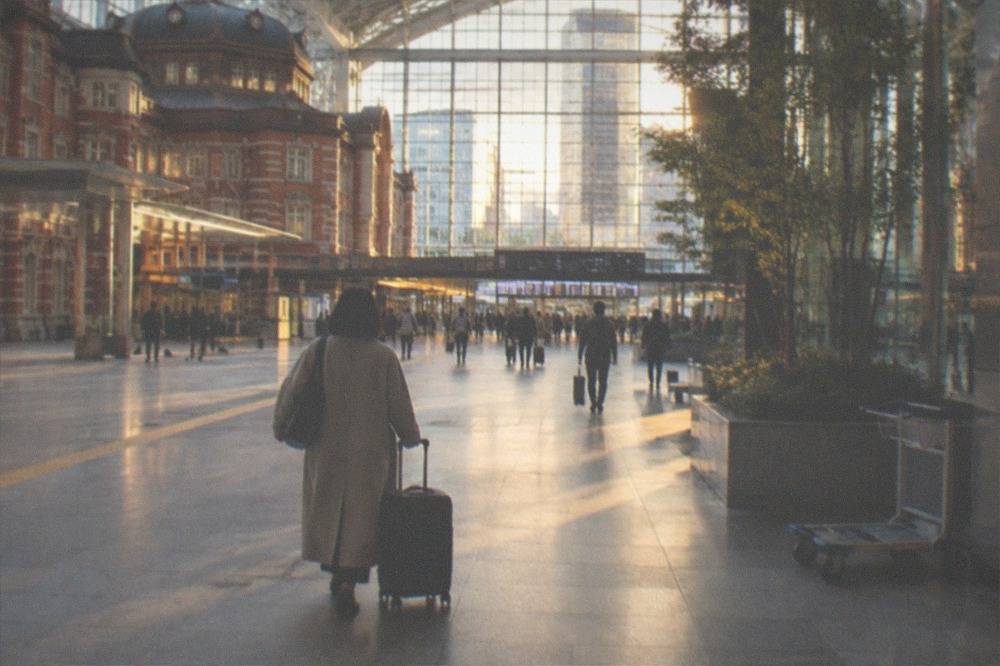
The numbers behind those three clusters, from this site's own area data:
| Area | Points | Rating | Reviews | Nearest point | Points listing 24-hour opening |
|---|---|---|---|---|---|
| Ueno | 8 | 4.87 | 285 | 171 m | 0 |
| Tokyo Station | 3 | 4.89 | 213 | 558 m | 0 |
| Shinagawa | 3 | 4.45 | 12 | 1,205 m | 1 |
| Shibuya | 7 | 4.75 | 163 | 306 m | 3 |
| Asakusa | 13 | 4.85 | 268 | 193 m | 0 |
Ueno is the strongest all-round final-day base for a Narita flight. Thirteen points if you widen the net to nearby Asakusa, eight in the station cluster itself, and the Skyliner leaves from Keisei Ueno, one floor up from the JR concourse. The JR East Logistics baggage room on the 3F concourse inside the Park Gate is the backup: 500, 1,000 or 2,000 yen by size, open 10:00 to 20:00, and it accepts bags for up to 30 days, which no coin locker in the city does. For a reader with a night flight, the one weakness is closing time; plan collection before 20:00.
Tokyo Station is the most flexible of the three, because both airports are reachable from it and the station itself has seven attended facilities. The JR East Logistics counters at Yaesu South, Gransta B1, the Shinkansen South Transfer Gate and Marunouchi Central all use the same size tiers, 500 yen for a bag up to 100 cm, 1,000 yen up to 200 cm, 2,000 yen above that, with holds up to 30 days. The station's own guide pages note that some of these desks stop taking bags earlier than they stop returning them, so an evening drop is easier than an evening pickup. JR East's Travel Service Center also takes luggage, but its own page scopes that service to Tokyo Station only, not the other big JR hubs.
Shinagawa is the Haneda answer. The Keikyu line to the airport starts there, and the station's JR East Logistics baggage room, inside the Central Gate in Event Space YK, is open daily 10:00 to 19:00 with a midweek discount: 800 yen for a medium bag on a weekday, 1,000 at weekends, 1,600 and 2,000 for large. Note the forced-peak dates, when weekday prices rise to weekend levels: 27 April to 6 May, 10 to 19 August, and 28 December to 6 January. Radical Storage points near Shinagawa sit farther out, the nearest 1,205 m away, so the JR room is often the more convenient of the two on a final evening.
Coin Lockers Or A Staffed Storage Point On Your Final Day?
Coin lockers win on price for one day: the top Tokyo Metro tiers cost 900 and 1,000 yen with no checkout fee, and Metro prices are the same at every station. But JR East's Multi Ecube lockers cap storage at 3 days, the operator empties expired lockers, and a wide suitcase only fits the LW tier. A staffed point takes any size bag at 850 yen plus the 355 yen fee.
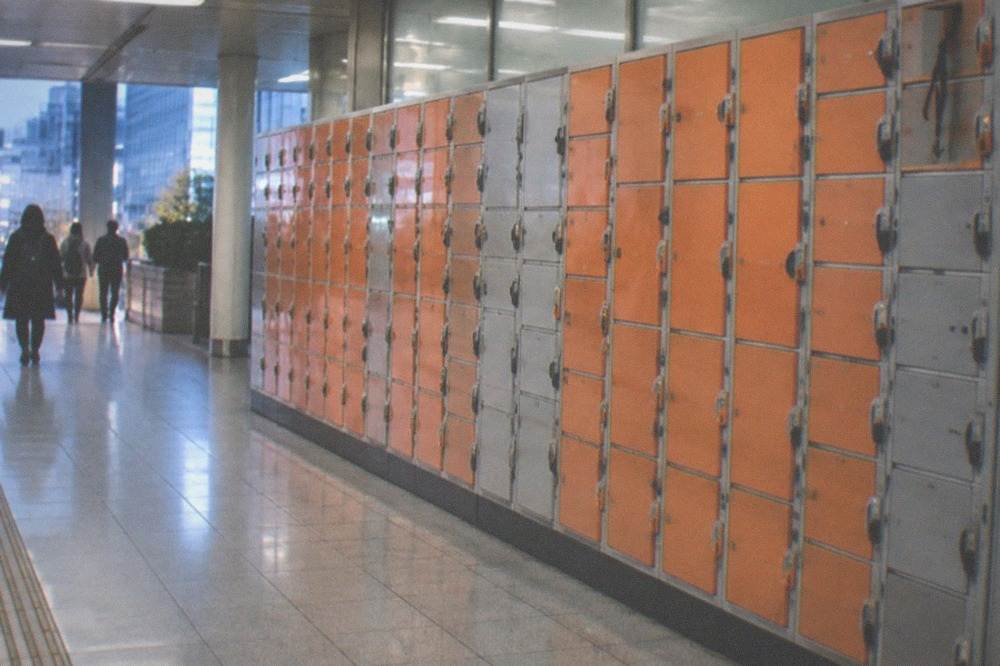
Tokyo Metro publishes one price ladder network-wide, 300, 500, 600, 900 and 1,000 yen, and only the mix of door sizes varies by station. JR East's prices do vary by station, roughly 300 to 400 yen for the smallest tier up to 700 to 1,100 for a large box, with a 500 yen surcharge to reserve a Multi Ecube unit in advance, and its own media notes a 100 to 200 yen peak-season surcharge on the medium and large sizes.
| Option | Day price | Size limit | Max duration | Notes |
|---|---|---|---|---|
| Tokyo Metro locker (largest tiers) | 600 to 1,000 yen | Toei large: 856 x 342 x 663 mm internal | 4 days including start day | Same prices at every Metro station |
| JR East Multi Ecube (L tier) | 700 to 1,100 yen | 86 x 34 x 65 cm | 3 days, no extension | LW tier 86 x 56 x 65 cm for wide cases |
| Staffed Radical Storage point | 850 yen plus 355 yen once | No fixed tier | Per network terms | Any staffed point, bag handed to a person |
The depth number is the one that decides whether a suitcase fits, and it is smaller than people expect. A Toei large locker is 342 mm deep inside; a JR East L box is 34 cm. A typical 26-inch spinner is about 30 cm deep with the wheels, so it clears the depth and fights the height. The genuinely wide case, the one that lies flat, needs the JR East LW tier, 86 x 56 x 65 cm, which English-language coverage of Tokyo lockers almost never mentions.
For a final day specifically, the duration rules barely matter, since a same-evening pickup beats every cap in the city. What matters is availability and the clock. Lockers fill early at the tourist stations, and the last-train boundary is real: Metro's own terms state the usage period runs from first train to last train, with a day added at 02:00. A bag collected at 20:00 is fine. A bag still sitting at midnight, when you are already at Haneda, is a different problem: the operator unlocks expired lockers, moves the contents to a separate holding area where the same daily rate keeps running, holds them 30 days from the original start date, and returning to collect is at your own cost, in cash, with the receipt and the IC card you paid with.
One more locker fact worth carrying: the counts you read online usually count locations, not doors. Tokyo Metro alone publishes 127 locker doors at Ueno and 52 at Shinjuku, and a widely repeated "19 lockers at Ueno" figure counts nineteen banks of lockers, not nineteen boxes.
Getting To Narita Or Haneda With Your Bag That Evening
Neither airport has a Radical Storage point in a terminal: the nearest to Narita is about 6.0 km away in Tomisato, Chiba, and the nearest to Haneda about 3.4 km away in Kawasaki, Kanagawa, across a prefecture line. Inside the terminals the answer is the airports' own attended counters: Narita has 11, and Haneda Terminal 3's desk is open 24 hours.
The airport counters, per piece per day, tax included:
| Facility | Small | Medium | Large | Hours |
|---|---|---|---|---|
| Narita Promotion Foundation, T2 3F | 500 yen | 700 yen | 1,100 yen | 06:30 to 22:00 |
| Sagawa Express, Narita T1 and T2 | 500 yen | 700 yen | 1,150 yen | Varies by counter |
| JAL ABC, Narita T1 and T2 | 800 yen | 1,000 yen | 2,000 yen | Varies by counter |
| Haneda T1 and T2, B1F | 800 yen | 1,000 yen | 2,000 yen | 08:00 to 19:30, per day |
| Haneda T3, 2F and 3F | 800 yen | 1,000 yen | 2,000 yen | Open 24 hours, per 24h |
Two details in that table do real work. First, Narita has no attended baggage counter in Terminal 3 at all, despite the filter on the airport's own page suggesting otherwise; Terminal 3's only baggage desk is a Yamato delivery counter. A budget-carrier passenger flying from T3 should store in the city, not plan on a terminal counter. Second, Haneda T1 and T2 price storage per calendar day while T3 prices it per 24 hours, so a long evening before a midnight departure costs differently depending on which terminal the flight leaves from. Haneda's own facility page publishes the full tariff and the 2-week maximum.
Shinagawa's cluster is the natural pickup point for a Haneda evening, sitting one Keikyu ride from the terminal. For readers planning the reverse run, the Narita to Tokyo transfer with luggage and Haneda to Tokyo transfer with luggage guides cover the airport lines in detail, and the question of leaving a bag at the airport and going out has its own answer.
If the plan is to skip the airport counter entirely, forwarding is the alternative. Sagawa delivers from Narita to Tokyo hotels with a 14:00 airport cut-off for same-day service, and from Haneda with a 13:00 cut-off. In the useful direction for this page, city to airport, Sagawa's counters take bags by 11:00 for delivery to either airport, while Yamato publishes no same-day city-to-Narita service at all. A fuller comparison of forwarding against storage, including what each carrier does with an oversized case, is in the forwarding versus storage decision guide.
What If Your Flight Leaves Late At Night?
Late flights are the hardest case, because most storage points and station facilities close between 19:00 and 21:00. Haneda Terminal 3's attended desk, open 24 hours at 800 yen and up per 24 hours, is the one facility that never closes on you. Three of Shibuya's seven Radical Storage points list 24-hour opening, and Tokyo Station's JR baggage rooms hold bags for up to 30 days.
Work the closing hours backwards from boarding. Most hotel front desks will keep a bag until late evening but not past the desk closing. Staffed storage points post their own hours, and 146 of the 249 Tokyo points are not open 24 hours, so the hours on the individual point's page are the ones that matter, not a network-wide assumption. The stations are no better after 20:00: Tokyo Station's earliest baggage rooms close at 19:30 or 20:00, and Shinagawa's at 19:00.
That leaves a short list of genuinely late options. For Haneda, Terminal 3's storage desk never closes, and its price clock runs per 24 hours rather than per calendar day, which suits a 23:30 collection better than the T1 and T2 desks that shut at 19:30. Narita's longest counter hours run to 22:00 at the Promotion Foundation desk in Terminal 2. For a midnight Narita flight the practical pattern is to collect the bag in the city by early evening, take the Skyliner or Narita Express at a sensible hour, and use the terminal's time rather than fighting it.
For a reader whose flight is late but whose day is long, one structure covers everything: checkout, bag to a point near the departure station, afternoon anywhere, collect by 19:00 at the latest, airport train, terminal. The round-the-city 24-hour storage options page covers the never-closing points in more detail, and Tokyo Station's own 30-day baggage rooms are the escape hatch for a bag that misses its pickup entirely.
Tokyo Station's cluster is the one to fall back on when everything else has closed its doors, with more attended facilities than any other station in the city and a Shinkansen run to fall asleep on.
Common Questions About Your Last Day In Tokyo Before A Night Flight
Can I leave my luggage at my hotel on my last day in Tokyo?
Almost always, and usually free. Japanese front desks routinely hold checked bags after checkout until the evening. The limits are the desk's closing hour and the need to return to the same neighbourhood to collect, which is why a bag stored near your departure station often fits a night flight better.
How much does last-day luggage storage in Tokyo cost?
A regular bag at a staffed Radical Storage point is 850 yen per bag per day plus a 355 yen per-bag fee charged once at checkout, so one bag for one day is 1,205 yen. Coin lockers run 600 to 1,100 yen for the largest tiers, and airport counters charge 800 to 2,000 yen per piece per day.
Is there luggage storage at Narita and Haneda airports?
Yes. Narita has 11 attended counters in Terminals 1 and 2, from 500 yen at the Promotion Foundation desk, with none in Terminal 3. Haneda has attended desks in all three terminals; Terminal 3's is open 24 hours and prices storage per 24 hours, while Terminal 1 and 2 desks charge per day and close at 19:30.
Where can I store my luggage late at night in Tokyo?
Haneda Terminal 3's attended desk, open 24 hours, is the main late-night facility. In the city, three of Shibuya's seven Radical Storage points list 24-hour opening, and the hours of every individual point are published on its own page. Most station baggage rooms close by 19:00 or 20:00.
Can I send my luggage to the airport instead of carrying it?
Yes, city to airport. Sagawa's Tokyo counters take bags by 11:00 for delivery to either Haneda or Narita. Yamato publishes no same-day city-to-Narita service. Timings for delivery to hotels and addresses are a separate matter and should be confirmed with the carrier when booking.
What happens if I miss my storage pickup time?
At a coin locker the operator empties the box after the maximum period, holds the contents for 30 days from the original start date, keeps charging the daily rate, and you pay collection travel costs yourself, in cash, with the receipt and the IC card you paid with. A staffed point or a station baggage room should be contacted directly; Tokyo Station's JR rooms accept holds up to 30 days.