Oversized Bag Storage In Tokyo: Where Big Bags Actually Fit
A big suitcase hits walls a cabin bag never meets: lockers with 34 cm of depth, venues that refuse anything over 60 cm, and a Shinkansen rule that kicks in at 160 cm. This guide maps every place in Tokyo that will genuinely take an oversized bag, with each operator's real prices and size limits.
Short answer
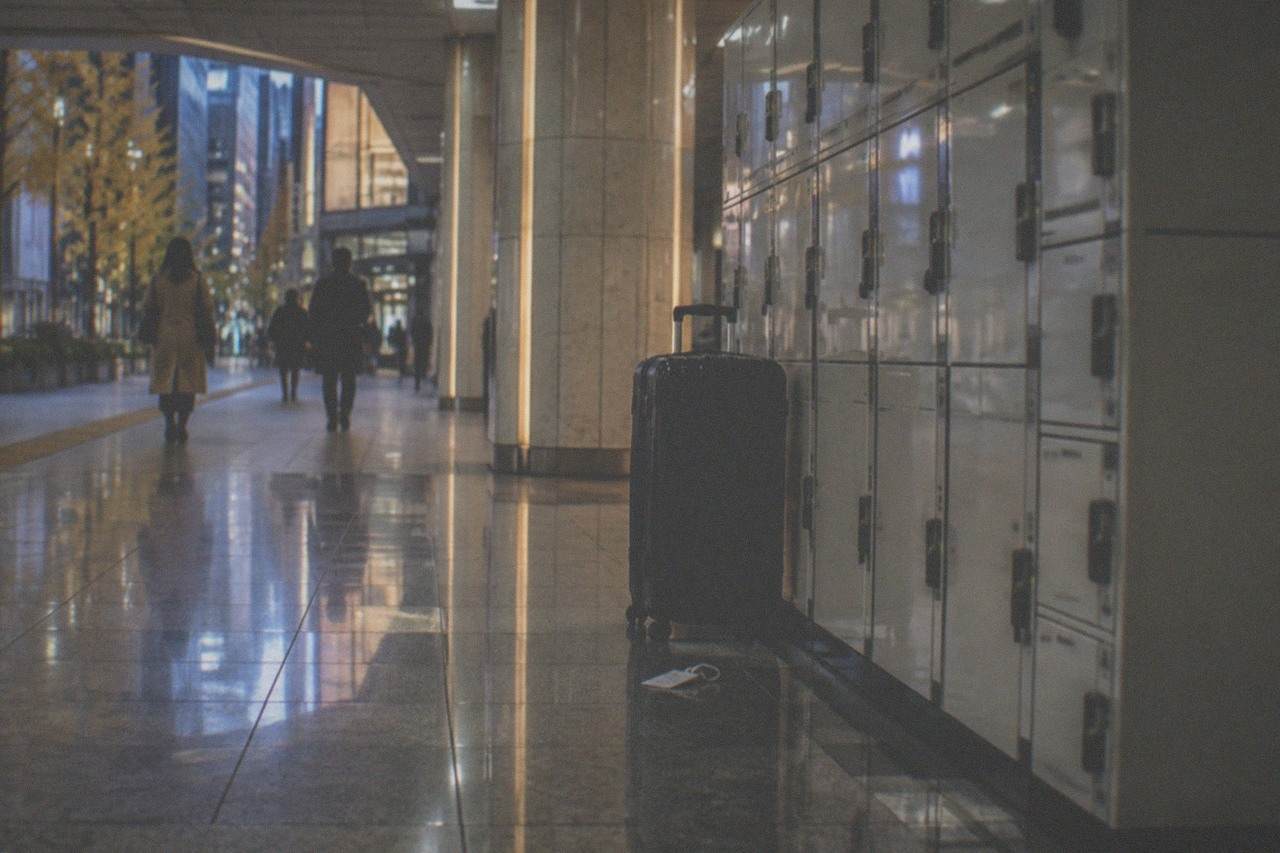
Oversized bags over about 60 cm get refused at Tokyo venues, and lockers top out at the LW tier of 86 x 56 x 65 cm. Station baggage rooms take bags over 200 cm for about 2,000 yen per day, airport counters store ski bags for 2,000 yen, and Sagawa forwards cases up to 260 cm and 50 kg.
What Counts As Oversized Luggage In Tokyo?
Tokyo has no single oversized threshold: venues refuse bags with any side over 60 cm, teamLab Borderless draws its line at 50 cm, and the Shinkansen rule starts at a three-side total over 160 cm. Haneda's storage desks accept anything up to 300 cm combined and 30 kg. The number that governs your day depends on which door you are walking through.
That is the first thing to understand, because a bag can be oversized in one building and ordinary in the next. Tokyo Skytree enforces its rule with a bag inspection at entry: any item with any side over 60 cm is prohibited, and the venue's own page names its two paid alternatives, the Skytree Town coin lockers and the Sagawa counter in Solamachi. A cabin bag at about 55 cm gets in. A checked suitcase does not.
The teamLab venues are stricter still, and in a way English coverage tends to miss. teamLab Borderless prohibits items over 50 cm, and the Japanese wording, 全長50cm以上, catches a bag of exactly 50 cm where the English page does not. teamLab Planets is different again: nothing may be carried into the artwork spaces at all, the free lockers measure 23 x 34 x 37 cm, and suitcases too big for them are wire-locked in the open stroller area. That is materially weaker custody than a locker, and worth knowing before you arrive with a hard-shell case.
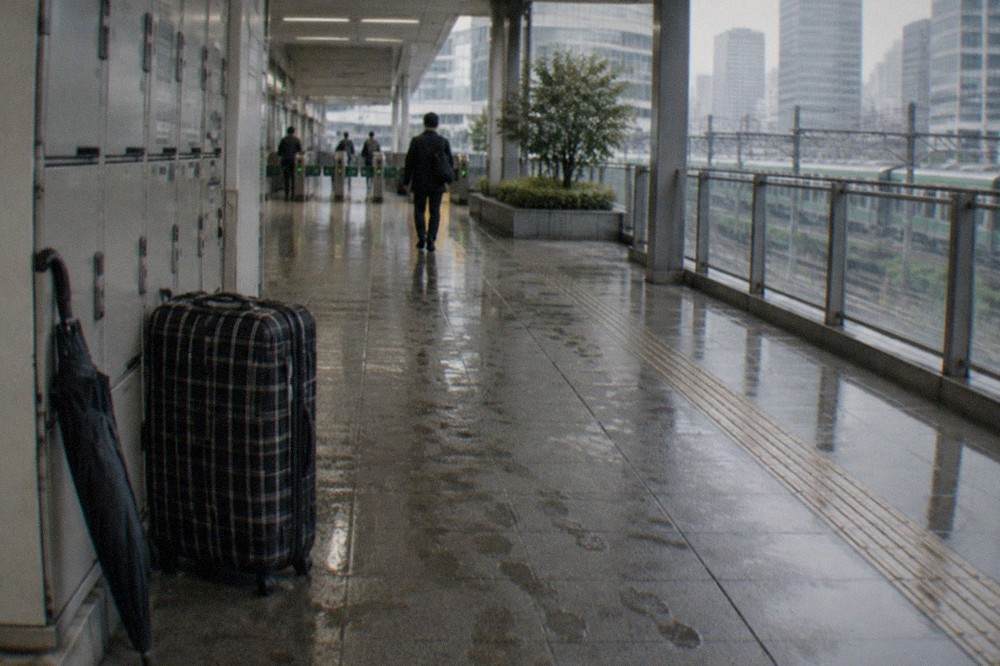
Museums add their own layer. The Tokyo National Museum's Japanese page refuses suitcases from the grounds entirely, not just from the galleries, while its English page implies you could check one inside. The Mori Art Museum has no cloakroom at all, states that offenders carrying large suitcases will be asked to leave, and offers free lockers on 52F whose largest tier is 370 mm wide, 430 mm deep and 810 mm high. The National Museum of Nature and Science lists large suitcases on its prohibited items. The pattern is consistent: past 60 cm, a venue will not hold your bag, so the storage decision has to be made before you leave the station.
| Threshold | What it governs | Source of the rule |
|---|---|---|
| Any side over 50 cm | Entry to teamLab Borderless, Azabudai | teamLab visitor rules |
| Any side over 60 cm | Entry to Tokyo Skytree, enforced by inspection | Tokyo Skytree guest page |
| Three-side total over 160 cm | Shinkansen oversized-baggage reservation rule | JR Central oversized baggage page |
| 250 cm total, 2 m on any side, 30 kg | Absolute maximum on any Shinkansen | JR Central and JR East tariff |
| 300 cm total, 30 kg | Maximum at Haneda storage desks | Haneda Airport facilities page |
| 260 cm total, 50 kg | Sagawa Express forwarding, the widest in the research | Sagawa fare table |
For the train itself, the rule that surprises most travellers is that the reservation is free. A seat in the oversized baggage space costs the same as an ordinary reserved seat on the Tokaido, Sanyo, Kyushu and Nishi-Kyushu lines, and boarding without one carries a 1,000 yen charge per journey. The JR East Shinkansen lines out of Tokyo, Tohoku, Hokkaido, Joetsu, Hokuriku, Yamagata and Akita, have no oversized reservation at all; the trade-off is that storage areas on those trains exist only on some services, are first come, and cannot be reserved. The full mechanics, including the free deck corners added in 2025 that still do not exempt a bag over 160 cm, are covered in the companion guide to Shinkansen oversized baggage rules.
Where Can You Store A Large Suitcase At Tokyo's Stations?
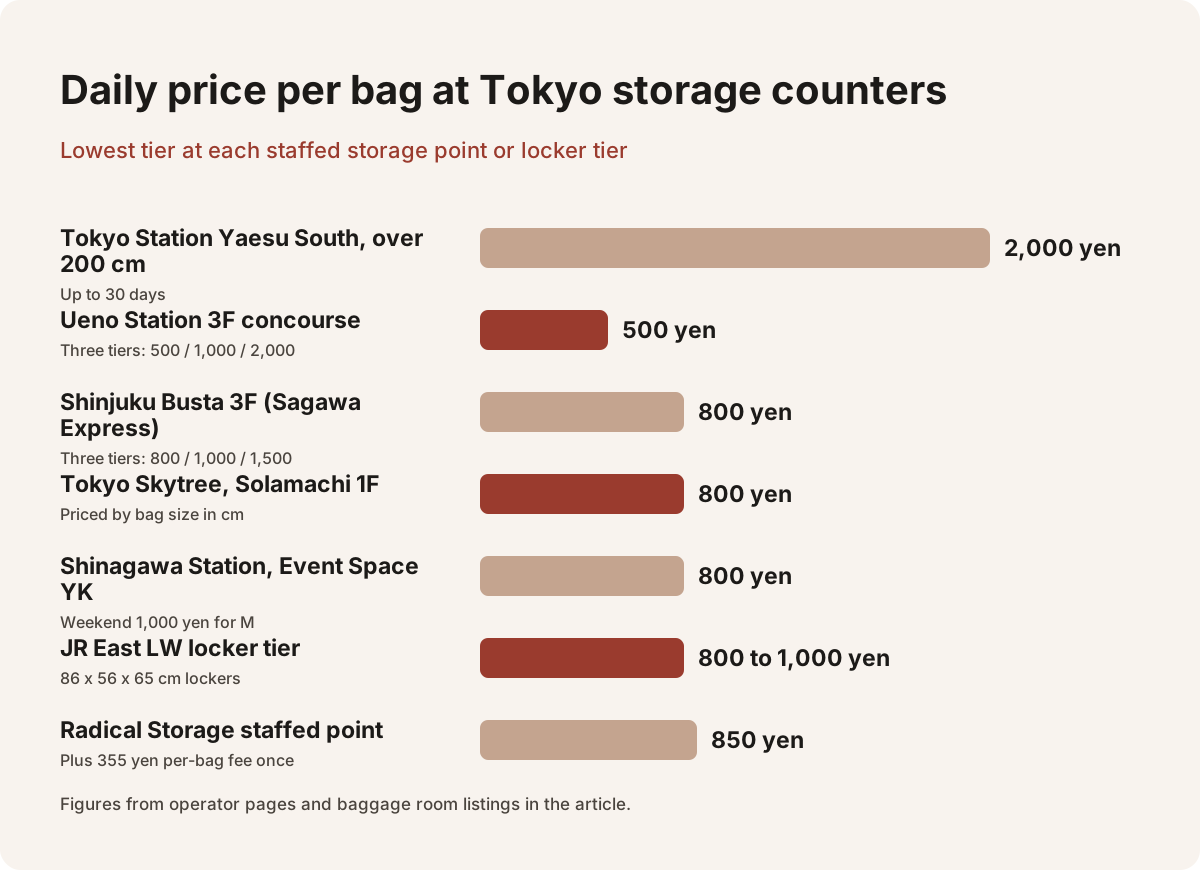
Station coin lockers top out at the JR East LW tier, 86 x 56 x 65 cm, priced 800 to 1,000 yen per day, and it is the only common tier deep enough for a wide checked case. Attended baggage rooms go further: Tokyo Station's Yaesu South desk takes bags over 200 cm at 2,000 yen per day for up to 30 days. Most big stations have neither option in practice.
The trap inside every locker bank is depth, not width. A standard Toei locker offers 342 mm of depth and a JR East Multi Ecube locker 34 cm, which is the binding dimension for a hard-shell spinner. A 26-inch case is typically around 30 cm deep with its wheels, so it clears the depth and then fails the height on standard tiers. The tier that actually solves the problem is LW, at 86 cm wide, 56 cm deep and 65 cm high: the only common tier that swallows a wide checked suitcase lying flat, and one that almost no English-language coverage of Tokyo lockers mentions. Reservation-capable Multi Ecube units are a shallower 55 cm, so the reservable box is not the same box as the walk-up one.
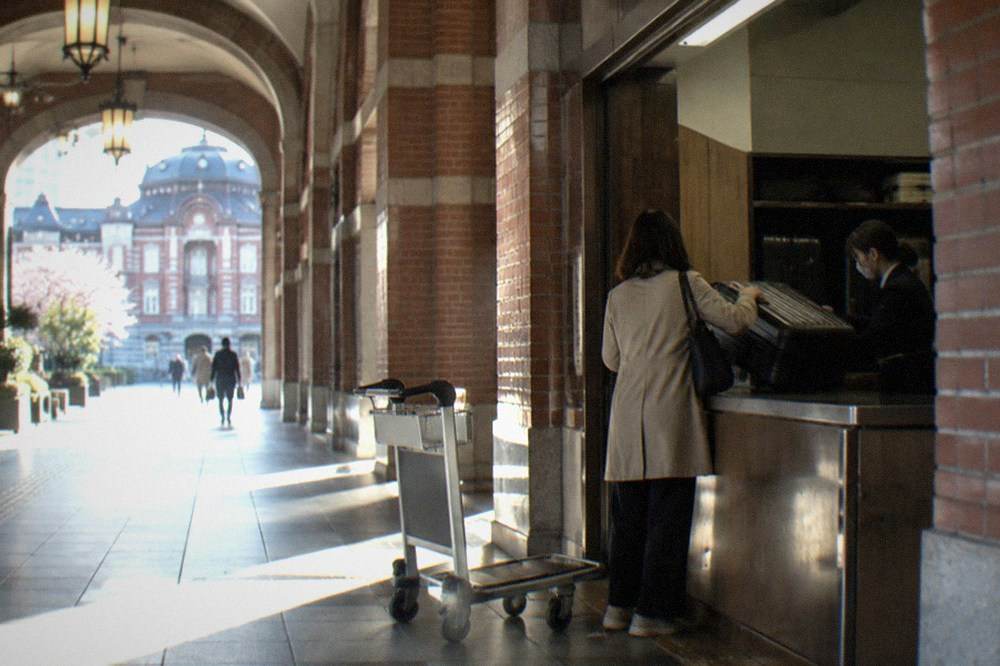
Tokyo Metro locker prices do not vary by station: one ladder, 300, 500, 600, 900 and 1,000 yen, at all 141 station rows on the operator's own price page. JR East prices do vary, and the operator's own data shows Tokyo and Shinjuku at 700 yen for M and 900 for L against 600 and 800 at Omiya. Reserving a Multi Ecube box in advance adds a flat 500 yen per box. Maximum duration differs by operator and the difference matters: Metro Commerce allows 4 days including the start day, JR East Smart Logistics allows 3, and paying more does not extend the period on either.
| Baggage room | Location | Hours | Price per bag per day | Maximum |
|---|---|---|---|---|
| Tokyo Station, Yaesu South (JR East Logistics) | Outside the gates | 09:30 to 20:00 | 500 yen up to 100 cm, 1,000 yen up to 200 cm, 2,000 yen over 200 cm | 30 days |
| Tokyo Station, Gransta B1 BAGGAGE STORAGE+ | Inside the North gate | 09:30 to 20:00 | Same three tiers | 30 days |
| Ueno Station, 3F concourse (JR East Logistics) | Inside the Park Gate | 10:00 to 20:00 | 500 / 1,000 / 2,000 yen | 30 days |
| Shinagawa Station, Event Space YK | Inside the Central Gate | 10:00 to 19:00, closed 1 January | 800 yen weekday, 1,000 yen weekend for M; 1,600 / 2,000 yen for L | Not published |
| Shinjuku Busta 3F (Sagawa Express) | Inside the Tokyo Tourist Information Center | 06:30 to 21:00 | 800 / 1,000 / 1,500 yen | Not published |
| Tokyo Skytree, Solamachi 1F (Sagawa Express) | Tower 1F | 10:00 to 21:00 | 800 yen to 100 cm, 1,000 yen to 160 cm, 1,300 yen from 161 cm | Not published |
Here is the part most coverage gets wrong: the attended rooms are concentrated at Tokyo Station, which has seven of them, while the other giant stations have none of their own. No operator lists a baggage room at Shibuya or Ikebukuro, JR East itself runs none at Shinjuku, and JR East's own Travel Service Center page states its luggage storage is available at Tokyo Station only. So a traveller standing at Shibuya with a 180 cm duffel has no attended JR option in that station, and the honest answer is a short train ride, a Sagawa counter, or a staffed partner point elsewhere in the neighbourhood.
That is where the staffed Radical Storage points earn their place in an oversized-bag itinerary. Unlike a locker, a staffed point is a person at a shop counter with no fixed internal dimensions, so the size conversation happens at drop-off rather than at a steel door. Radical Storage's Tokyo rate is 850 yen per bag per day for a regular bag, plus a 355 yen per-bag fee charged once at checkout, so one bag for one day is 850 plus 355, or 1,205 yen on the operator's own published figures. In Ginza, the single point on file carries a 4.84 rating from 118 reviews, with the nearest 1,131 m from the station; the district's staffed shops are the realistic fallback when the station's own desks are closed or full. A full citywide picture, including which neighbourhoods have clusters and which have almost nothing, is in the guide to where to store luggage across Tokyo.
Can You Store Oversized Bags At Narita And Haneda Airports?
Narita has 11 attended baggage-storage counters across Terminals 1 and 2, and not one in Terminal 3; JAL ABC charges 800 / 1,000 / 2,000 yen by size, per piece, counting part-days as full calendar days. Haneda's own desks publish 800 / 1,000 / 2,000 yen, take bags up to 300 cm and 30 kg, and Terminal 3's desks are open 24 hours.
Narita's airport page publishes no prices at all; it says charges vary by company and asks you to enquire. The operators' own sites fill the gap. The Narita Airport Promotion Foundation desk in Terminal 2, at 500 yen small, 700 yen medium and 1,100 yen large, is the cheapest attended storage at the airport. Sagawa Express runs three counters at 500 / 700 / 1,150 yen. JAL ABC, with seven counters, charges 800 yen for an A4-envelope-sized item, 1,000 yen for a suitcase and 2,000 yen for ski and snowboard bags, with payment on collection in yen cash or credit card. JAL ABC counts storage by calendar day, not by the hour, so a part-day is a full day, and its acceptance may be suspended when the store room is full.
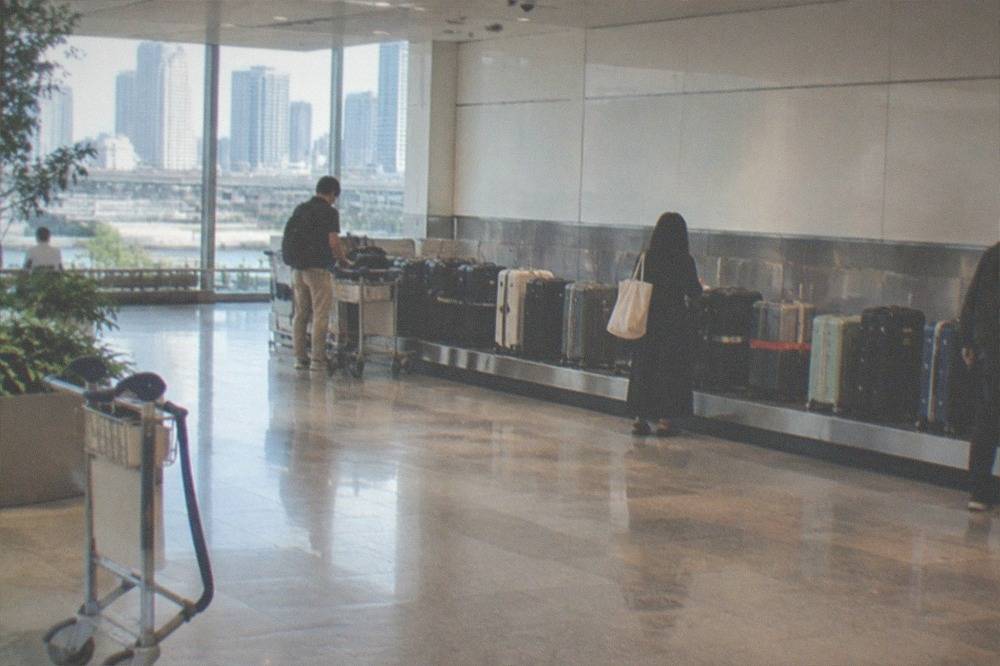
Every Narita counter is government-certified under the hands-free travel scheme, a fact stated on the airport's Japanese page and dropped from the English one. Sagawa's Narita presence is also actively growing: it opened a Terminal 2 1F counter in July 2026 and two Terminal 1 counters in July and September 2026, so the airport picture is changing faster than most published guides. One thing that has not changed: Radical Storage has no point inside any terminal at either airport, so a bag cannot be dropped airside or at a terminal doorstep through this site. The nearest partner point to Narita is about 6.0 km away in Tomisato, Chiba, where a single staffed point carries a rating of 5 from 1 review; the realistic move for a Narita overnight is the airport's own counters, and the partner point only if your route passes it. Haneda is the more generous airport for a genuinely big case. The airport's own sitewide rule allows storage up to two weeks, with fees by three-side total and a maximum of 300 cm combined and 30 kg. Terminal 1 and Terminal 2 desks, both on B1F, run 08:00 to 19:30 at 800 yen for a bag under 120 cm, 1,000 yen for 120 to under 200 cm and 2,000 yen for 200 to 300 cm. Terminal 3 has desks on both 2F Arrival and 3F Departure, open 24 hours, at the same three prices. The clock differs and the difference is real: Terminal 1 and 2 charge per day, Terminal 3 charges per 24 hours, so an early-evening drop at T3 costs less than the same drop at T1. Yamato Transport's Terminal 2 international counter charges 800 / 1,000 / 2,000 yen with handover to 22:45 and, in its own words, no limit on the storage period, which contradicts the airport's two-week rule; both are the operators' published positions and neither overrides the other. Around Haneda itself, Radical Storage's four nearest points sit about 3.4 km away in Kawasaki, Kanagawa, across a prefecture boundary, and the area's record includes four automated lockers among its points, which are size-capped in the ordinary locker way.
The two airports also differ in what happens to a bag left too long. Narita's coin lockers run to a maximum of 8 days, with the day boundary at midnight, while Haneda's lockers allow 7 days before the bag is moved to a separate storage room for 30 days. Those clocks matter for a long ski trip or an open-ended itinerary, and they sit alongside, not instead of, the attended counters described above.
For the logistics of getting a big bag between airport and hotel at all, including the delivery services with real cut-off times, see getting from Narita into Tokyo with luggage.
What About Ski Bags, Snowboards And Sports Equipment?
Ski and snowboard bags are the one category where Narita's counters beat the city: JAL ABC takes them at 2,000 yen per piece as its large tier, and ski and snowboard bags are named in its tariff. In the city, the same bag is a coin-locker impossibility, so the options narrow to station baggage rooms, venue-side counters, or Sagawa forwarding, which caps at 260 cm and 50 kg.
The search interest that keeps this topic alive is specific: ski bag storage at Narita airport. The honest answer is that JAL ABC is the operator that names the category on its own price page, charging its large tier of 2,000 yen for ski and snowboard bags, no reservation needed, walk up with the bag, payment on collection. The Promotion Foundation's 1,100 yen large tier is sized by three-side total up to 161 cm and above, so a short ski bag may fit its large bracket, but the size rule is the operator's own and should be confirmed at the counter rather than assumed. Other pages covering the same trip are gathered on Luggage Storage in Tokyo.
Inside Tokyo, a ski bag meets the same 60 cm walls as any other oversized item. The stations' LW lockers, at 86 x 56 x 65 cm, will not take a snowboard bag of any usual length. The workable station answer is the attended rooms that price by size bracket: Tokyo Station's Yaesu South and its sibling desks charge 2,000 yen per day for anything over 200 cm, with a 30-day maximum, which is the longest station-side horizon in the city. Sagawa's counter at Tokyo Skytree's Solamachi, at 1,300 yen from 161 cm, is the cheapest published city rate for a genuinely long bag, though the venue's own 60 cm entry rule means the bag goes to the counter, not up the tower.
Sports equipment also gets specific exemptions on the trains. Strollers, musical instruments, sports equipment and wheelchairs are exempt from the Shinkansen oversized rule regardless of size, so a ski bag under the 160 cm three-side total rides as ordinary luggage, and a bag over it needs the free oversized seat reservation on the Tokaido and related lines. For everything else, the forwarding route in the next section is usually the answer for ski season, and the trade-offs are laid out in forwarding versus storing a bag in Tokyo.
Should You Forward An Oversized Bag Instead Of Storing It?
Forwarding beats storing the moment the bag is bigger than any locker and the trip is longer than a day: Sagawa Express accepts items up to 260 cm and 50 kg, the widest and heaviest limit of the three carriers, and a 160-band case goes Tokyo to Kyoto for 3,160 yen. Yamato caps at 200 cm and 30 kg, so an oversized ski bag often has exactly one carrier that will take it.
The size caps decide this question before price does. Yamato TA-Q-BIN tops out at a 200 cm three-side total and 30 kg, with any one side at 170 cm or less. Japan Post's Yu-Pack stops at 170 cm and 25 kg. Sagawa's large-size service runs to 260 cm and 50 kg, which is the only one of the three that will take a genuinely oversized or heavy case. A suitcase is charged at its measured size within those caps, and the band is the greater of the three-side total or the actual weight.
| Carrier | Maximum size | Maximum weight | Example fare, Tokyo to Kyoto or Osaka |
|---|---|---|---|
| Yamato TA-Q-BIN | 200 cm total | 30 kg | 2,170 yen at the 120 band; 3,160 yen at 160; 5,410 yen at 200 |
| Sagawa Express | 260 cm total | 50 kg | 2,570 yen at the 160 band (30 kg); 4,480 yen at 200; no 120 band |
| Japan Post Yu-Pack | 170 cm total | 25 kg | 2,450 to 2,610 yen at 160; 3,750 yen at 170 |
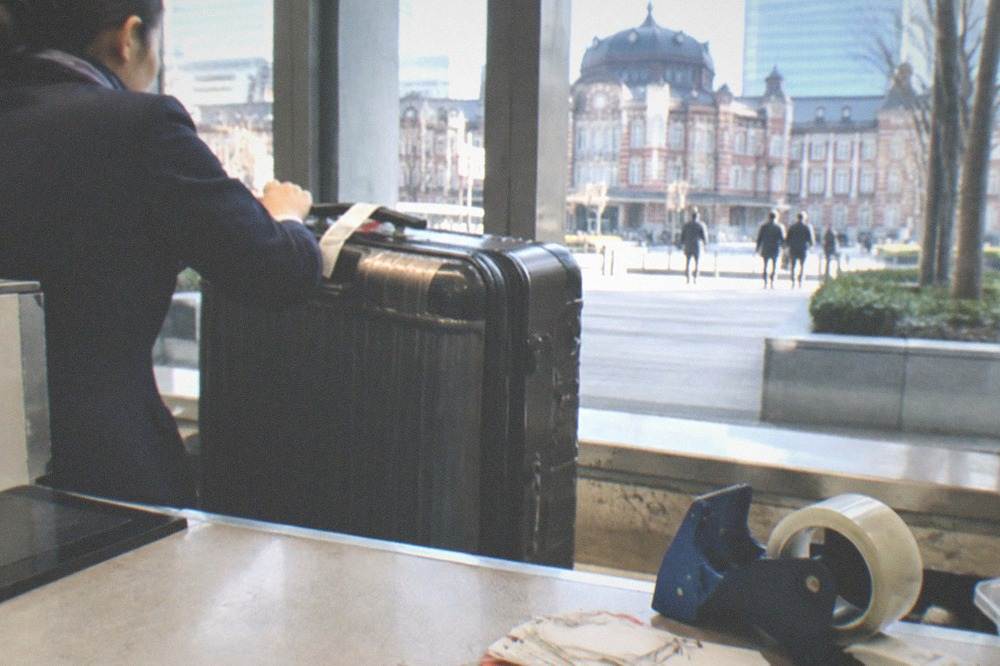
One number this site will not print is a delivery time. Transit times for forwarding could not be sourced for any lane: Yamato publishes them only through an interactive tool and no public service table exists for personal customers. Any page promising next-day arrival on a Tokyo-to-Kyoto suitcase is filling a gap the carriers have not filled themselves. What can be stated is the discount structure: carrying the parcel to a branch or convenience store yourself saves 100 yen, a digital waybill saves 60 yen, and sending to an airport adds 660 yen. Every Yamato page names only Seven-Eleven and FamilyMart for convenience-store drop-off; Lawson belongs to Japan Post, not Yamato.
Airport-to-hotel delivery has real cut-off times and they differ by operator. Sagawa delivers Narita to Tokyo hotels from 2,120 yen for a bag up to 60 cm to 3,390 yen for a suitcase up to 140 cm and 4,690 yen up to 200 cm, with a 14:00 cut-off and delivery from 16:00. Yamato's Narita same-day service cuts off at 10:30 at Terminals 1 and 2 and 09:50 at Terminal 3, delivering 18:00 to 21:00, and Yamato will not deliver city-to-Narita same day at all, while Sagawa will, with an 11:00 cut-off. Lodging rules matter too: Yamato is the only carrier with a published rule for Airbnb and unstaffed lodging, requiring someone certain to be there to receive. JAL and JAL ABC deliver to named hotels only.
What Does Oversized Luggage Storage Actually Cost In Tokyo?
A like-for-like day of oversized storage runs from 600 yen at a deep locker tier to 2,000 yen at a station or airport desk, with the Radical Storage staffed rate at 850 yen per bag per day plus a 355 yen per-bag fee once. The deciding costs are the maximums: 3 days in a locker, 30 days in a station room, and 2 weeks at Haneda.
The comparison that matters is against what a big bag actually costs to park for one day, not against headline rates. Radical Storage advertises from 490 yen per day, but that is a small-bag rate found at 11 points only; the real rate for a normal suitcase is 850 yen at 244 of the 249 Tokyo points on file, and a one-day booking is 850 plus the 355 yen checkout fee, 1,205 yen in total on the operator's own figures. There is no hourly tariff on either side of this comparison: a few hours is billed as a full day at Radical Storage points, and JAL ABC counts by calendar day.
| Option | Day rate for an oversized bag | Real maximum | Where it wins |
|---|---|---|---|
| JR East LW coin locker | 800 to 1,000 yen | 3 days, Multi Ecube terms | Cheapest self-service for a case up to 86 x 56 x 65 cm |
| Tokyo Station baggage room | 2,000 yen for over 200 cm | 30 days | Longest station-side horizon |
| Narita, Promotion Foundation | 1,100 yen large tier | Not published | Cheapest attended desk at Narita |
| Narita, JAL ABC | 2,000 yen, ski and snowboard tier | Calendar-day counting | The counter that names ski bags |
| Haneda T1 / T2 desk | 2,000 yen for 200 to 300 cm | 2 weeks | Heaviest and longest published limit, 30 kg / 300 cm |
| Radical Storage staffed point | 850 yen plus 355 yen once | Per-point, confirm at drop-off | Staffed counters with no fixed locker dimensions |
Two structural facts close the money question. First, locker liability is capped at 30,000 yen by identical contract terms at Metro Commerce, JR East Smart Logistics, Tokyu and Keio, and it is a contract term, not law; the same terms forbid storing anything worth 30,000 yen or more, so the cap and the prohibition meet at the same number. Second, the Radical Storage guarantee is not insurance: its own terms say so, allow withdrawal at any time, and cap payouts at EUR 3,000 per claim, a figure stated in euros and never converted here. Japanese consumer law does not let a posted notice wipe out liability entirely, but the practical position is unchanged: do not store a laptop or valuables in a locker, and treat every guarantee figure as a ceiling rather than a promise. The safety picture, including what the law does and does not require, is covered in whether luggage storage in Tokyo is safe, and options for stays longer than a locker's 3 or 4 days are in the guide to long-term luggage storage in Tokyo.
Common Questions About Oversized Bag Storage
What counts as oversized luggage in Tokyo?
There is no single threshold. Venues refuse bags with any side over 60 cm, teamLab Borderless draws its line at 50 cm, and the Shinkansen oversized rule starts at a three-side total over 160 cm. Haneda's desks accept up to 300 cm combined and 30 kg, the widest published limit in the city.
Where can you store a large suitcase at Tokyo's stations?
Lockers top out at the JR East LW tier of 86 x 56 x 65 cm at 800 to 1,000 yen per day. Attended baggage rooms go further: Tokyo Station's desks take bags over 200 cm at 2,000 yen per day for up to 30 days. Shibuya, Ikebukuro and JR Shinjuku have no attended room of their own.
Can you store oversized bags at Narita and Haneda airports?
Yes, at attended counters. Narita has 11 across Terminals 1 and 2, none in Terminal 3, with JAL ABC at 800 / 1,000 / 2,000 yen by size. Haneda's own desks publish 800 / 1,000 / 2,000 yen, accept up to 300 cm and 30 kg, and Terminal 3's desks are open 24 hours.
Can I store a ski bag at Narita airport?
JAL ABC names ski and snowboard bags in its own tariff at 2,000 yen per piece, its large tier, with payment on collection and storage counted by calendar day. The Promotion Foundation's 1,100 yen large tier is sized by three-side total, so a short bag may fit, but confirm at the counter.
Should you forward an oversized bag instead of storing it?
Usually, once the bag exceeds locker size. Sagawa Express accepts items up to 260 cm and 50 kg, the widest limit of the three carriers; Yamato caps at 200 cm and 30 kg and Japan Post at 170 cm and 25 kg. No carrier publishes a transit time for personal customers, so no delivery time can be stated.
How long can you leave an oversized bag in storage in Tokyo?
It depends on the operator: 3 days in a Multi Ecube locker, 4 days including the start day in a Tokyo Metro locker, 30 days at the Tokyo and Ueno station baggage rooms, 2 weeks at Haneda's desks, and no published limit at Yamato's Haneda Terminal 2 counter.