How Luggage Storage Works In Tokyo: Coin Lockers, Baggage Rooms And Booked Points
Tokyo runs three different systems for a parked bag, and each has its own clock, price ladder and retrieval rule. This guide walks through all three, from the coin locker beside the ticket gate to the staffed counter that can hold a suitcase for a month.
Short answer
Tokyo luggage storage works three ways: coin lockers (¥300 to ¥1,000 per day at Metro stations), attended station baggage rooms (¥500 to ¥2,000 per day, 30-day maximum at JR East counters), and booked staffed points at 850 yen per bag per day plus a one-off 355 yen fee. Lockers cap at 3 to 4 days; baggage rooms take 30.
Tokyo Metro alone operates 4,830 coin locker doors across its network, and that is only one of three rail operators running lockers in the city. Add JR East's Multi Ecube system, Toei Subway's banks, the attended baggage rooms clustered at Tokyo Station, and a booking network of staffed shops, and a first-time visitor faces three genuinely different products that all answer the same question: where does the suitcase go for the next six hours.
They do not work the same way. A locker is a metal box with a timer and a contract printed in the operator's terms. A baggage room is a human being who takes the bag and gives a receipt. A booked point is a reservation made on a phone before you leave the hotel. The research behind Luggage Storage in Tokyo traces each system to its operator's own published rules, and this guide lays out the mechanics of all three, including the details that English-language coverage tends to get wrong.
How Do Coin Lockers Work In Japan?
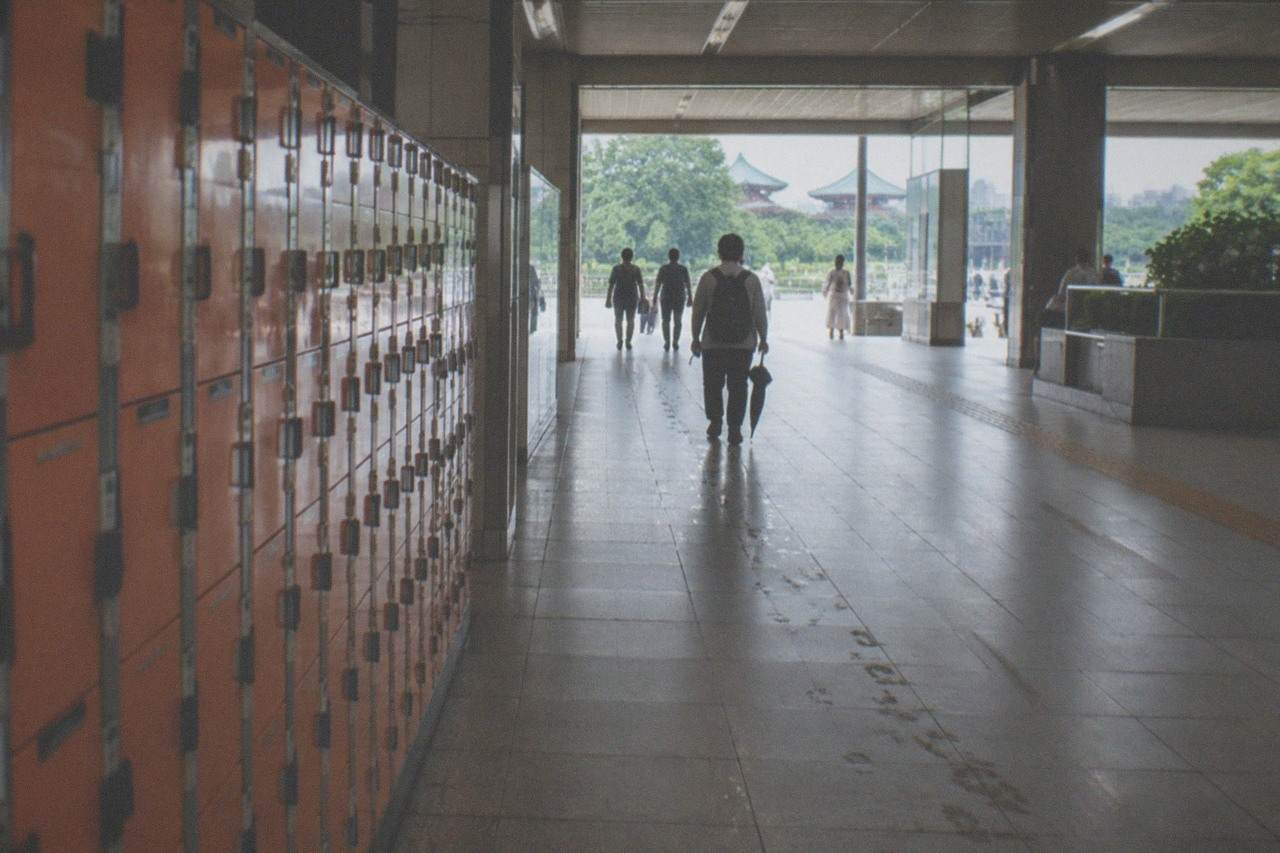
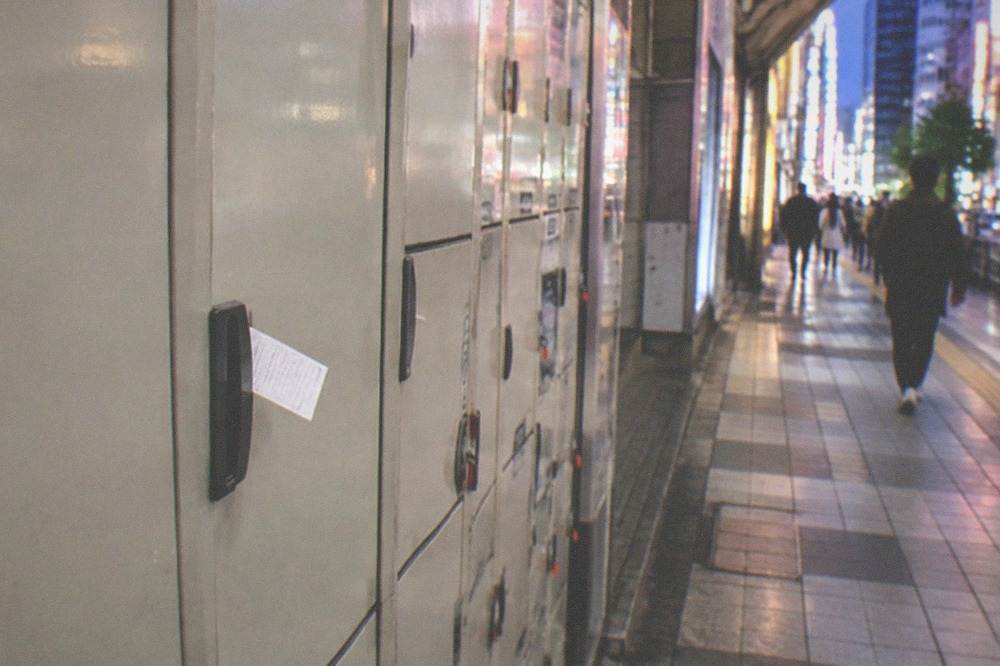
A coin locker in Japan is a self-service box inside a station. You find an empty door, put the bag in, pay with cash or an IC card, take the printed ticket or key, and present it to retrieve the bag. The rental day runs from first train to last train, and a new day is added at 2 a.m.
The mechanics take about ninety seconds. Empty lockers show a green light or a vacant panel; some stations also display a floor map of locker banks near the exits. You place the bag inside, close the door, and pay at the locker itself. Most accept coins and transit IC cards, the same Suica or PASMO you use at the ticket gate, and some newer banks take QR payment apps as well. The machine prints a ticket with a QR code or six-digit number, or issues a physical key. That ticket is the only thing that opens the door again, so it goes in a pocket, not in the bag.
What decides success is not the price but the depth. A Toei Subway large locker measures 856 x 342 x 663 mm internally, and every Toei tier shares that 342 mm depth; a JR East Multi Ecube locker is 34 cm deep. A hard-shell spinner around 26 inches is typically close to 30 cm deep with its wheels, so it clears the depth and then fails the height on the smaller tiers. The one tier built for a wide checked case is the JR East LW, at 86 by 56 by 65 cm, which takes a suitcase lying flat. English-language coverage of Tokyo lockers rarely mentions the LW tier at all.
| System | Tier | Internal size |
|---|---|---|
| Toei Subway | Large (大型) | 856 x 342 x 663 mm |
| Toei Subway | Medium (中型) | 502 x 342 x 663 mm |
| Toei Subway | Standard (標準) | 325 x 342 x 663 mm |
| Toei Subway | Half (ハーフ) | 325 x 127 x 663 mm |
| JR East Multi Ecube | S | 33 x 34 x 65 cm |
| JR East Multi Ecube | M | 50 x 34 x 65 cm |
| JR East Multi Ecube | L | 86 x 34 x 65 cm |
| JR East Multi Ecube | LW | 86 x 56 x 65 cm |
Payment is more varied than the machines suggest. At Ueno Station, JR East's own guide notes that most locker banks take cash and transit IC cards, a few take IC cards only, and two banks also accept Rakuten Edy, iD, QUICPay, Alipay, WeChat Pay and PayPay. Metro Commerce, the Tokyo Metro locker subsidiary, declines to enumerate at all: its terms simply say you pay by whatever method is displayed on the locker body. The full tier-by-tier dimensions and the payment picture are covered in the Tokyo coin locker sizes guide, and the practical payment detail is laid out in how to pay at a Tokyo coin locker. One trap deserves a flag here: if you pay by IC card, keep that same card. Retrieval terms at some operators ask for the card you paid with, alongside the ticket.
What Do Coin Lockers Cost, And How Long Can You Keep One?
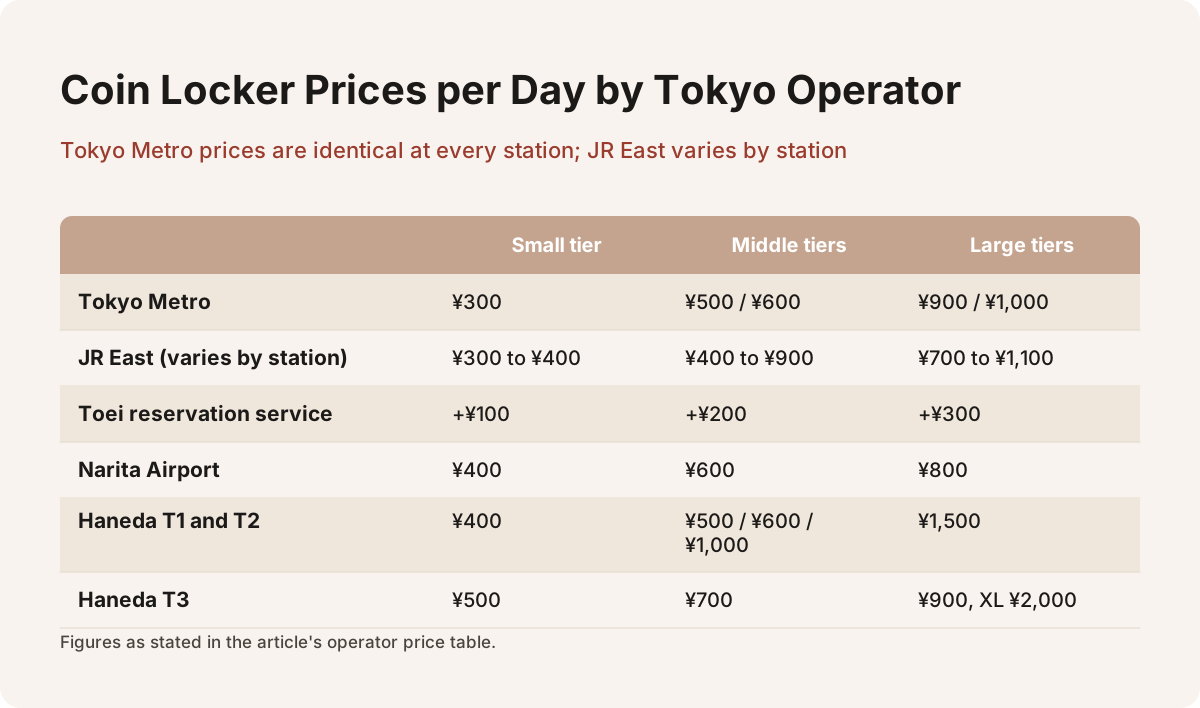
Tokyo Metro lockers cost ¥300, ¥500, ¥600, ¥900 or ¥1,000 per day depending on door size, and those prices are identical at every Metro station. JR East lockers vary by station, roughly ¥300 to ¥1,100. Metro allows 4 days including the start day; JR East Smart Logistics allows 3, and paying more does not extend it.
The Tokyo Metro ladder is published on a single page covering all 141 station rows, and it does not vary. Only the mix of door sizes differs from station to station. That single sentence contradicts a good deal of English travel writing, which describes Tokyo locker pricing as station-dependent across the board. JR East genuinely does vary: the operator's own live data shows M-tier lockers at ¥700 and L at ¥900 at Tokyo and Shinjuku, against ¥600 and ¥800 at Omiya and Hodogaya. JR East also adds ¥100 to ¥200 to M and L lockers in peak season, and charges a flat ¥500 per box to reserve a Multi Ecube locker in advance.
| Operator | Small tier | Middle tiers | Large tiers | Notes |
|---|---|---|---|---|
| Tokyo Metro | ¥300 | ¥500 / ¥600 | ¥900 / ¥1,000 | same prices at every Metro station |
| JR East (varies by station) | ¥300 to ¥400 | ¥400 to ¥900 | ¥700 to ¥1,100 | +¥500 to reserve; peak surcharge ¥100 to ¥200 on M and L |
| Toei reservation service | +¥100 | +¥200 | +¥300 | 7 stations, reserve from 2 hours ahead |
| Narita Airport | ¥400 | ¥600 | ¥800 | maximum 8 days |
| Haneda T1 and T2 | ¥400 | ¥500 / ¥600 / ¥1,000 | ¥1,500 | priced per day, maximum 7 days |
| Haneda T3 | ¥500 | ¥700 | ¥900, XL ¥2,000 | priced per 24 hours |
The airport rows carry two details that only appear on the operators' Japanese pages. Narita runs an hourly tariff at exactly two locations, the Terminal 2 B1F bank and the Terminal 3 2F bank, at ¥300 to ¥600 for the first 6 hours. Haneda Terminal 3 prices its lockers per 24 hours while Terminals 1 and 2 price per day, which matters if your flight leaves at 07:00, and Haneda publishes the full tariff on its own facilities page. The duration rules matter even more than the price:
| Operator | Maximum period | Day boundary | After expiry |
|---|---|---|---|
| Tokyo Metro / Metro Commerce | 4 days including the start day | a day is added at 02:00 | contents moved, held 30 days, same rate keeps running |
| JR East Smart Logistics | 3 days | paying more does not extend the period | food is disposed of immediately, no 30-day grace |
| Narita lockers | 8 days | midnight | operator's storage procedure applies |
| Haneda T1 and T2 | 7 days | 24 hours counts as one day | moved to storage for 30 days |
| Haneda T3 | 7 days | per 24 hours | moved to storage for 30 days |
Metro Commerce's terms spell out the clock: the locker runs from first train to last train, a day is added at 2 a.m., and the first and last days each count as a whole day however briefly you used the locker. JR East Smart Logistics is stricter and says so plainly: even if you insert more money, the bag comes out on day four. Neither system bills by the hour at ordinary station banks. A three-hour drop still costs a full day.
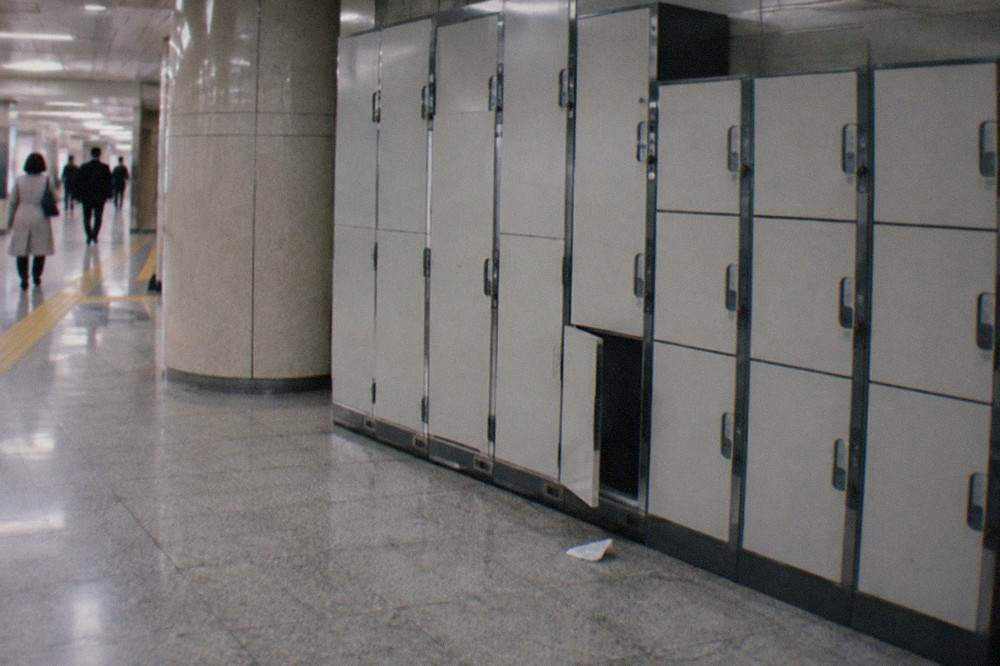
If a locker at your station is full or too small, a booked staffed point is the usual fallback, and the biggest stations have the densest coverage. Shinjuku, Shibuya and Roppongi all carry deep rosters on Radical Storage's Tokyo map, alongside Shinjuku's coin banks and its one attended counter.
How Do Staffed Baggage Rooms Work At Tokyo's Big Stations?
Tokyo Station has seven attended baggage rooms, more than any other station in the city; Shinjuku, Shibuya and Ikebukuro have none run by the rail operators themselves. Typical pricing is ¥500 for a small bag, ¥1,000 medium and ¥2,000 large per day, with a 30-day maximum at JR East Logistics counters.
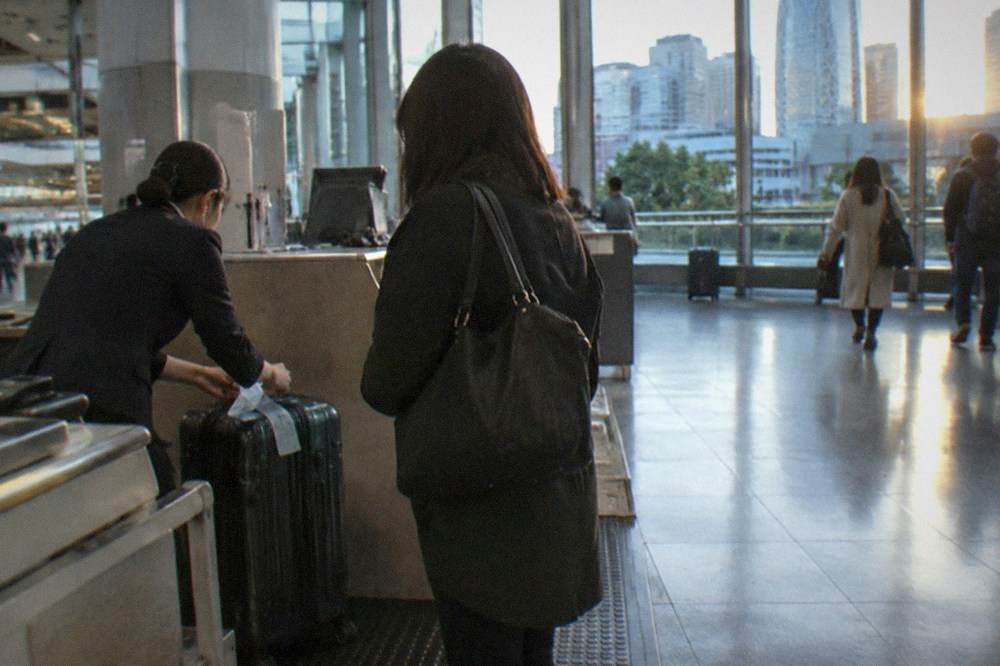
The process is the opposite of a locker. You carry the bag to the counter, a member of staff measures it, you pay, and you receive a receipt to present on collection. The JR East Logistics counters at Tokyo Station hold a bag for up to 30 days, which no coin locker in the city will do. The distribution is lopsided and worth knowing before you plan a route: JR East's own Travel Service Center page states its luggage storage is available at Tokyo Station only, which disposes of the Shinjuku, Shibuya, Ikebukuro and Ueno service centers at once.
| Counter | Hours | Price per bag per day | Maximum days |
|---|---|---|---|
| Tokyo Station, JR East Logistics (4 counters) | 09:30 to 20:00 (one to 21:00) | ¥500 small / ¥1,000 medium / ¥2,000 large | 30 |
| Tokyo Station, Gransta cloak (B1) | 08:30 to 21:00, drop-off closes 20:30 | ¥500 / ¥1,000 / ¥2,000 | same day only |
| Ueno Station, 3F inside the Park Gate | 10:00 to 20:00 daily | ¥500 / ¥1,000 / ¥2,000 | 30 |
| Shinagawa Station, inside the Central Gate | 10:00 to 19:00, closed 1 January | medium ¥800 weekdays / ¥1,000 on Saturdays, Sundays and holidays; large ¥1,600 / ¥2,000 | not published |
| Shinjuku, Sagawa at Busta 3F | 06:30 to 21:00 | ¥800 / ¥1,000 / ¥1,500 | not published |
| Asakusa, Sagawa at Kaminarimon | street level, times published at the counter | a single ¥800 price, no size tiers | not published |
| Tokyo Skytree, Sagawa at Solamachi 1F | 10:00 to 21:00 | ¥800 up to 100 cm / ¥1,000 to 160 cm / ¥1,300 above | not published |
Three details in that table repay attention. Shinagawa's weekday discount is withdrawn on forced-peak dates, 27 April to 6 May, 10 to 19 August, and 28 December to 6 January, when the higher rate applies even on a Tuesday. The Shinjuku Odakyu Travel Center takes bags but deliberately publishes no price; it says to ask at drop-off. And the Asakusa row sits next to a closure most live English content still ignores: the Asakusa Culture Tourist Information Center terminated its luggage storage service on 31 March 2026, with Taito City citing congestion from travellers' suitcases as one cause. The Sagawa counters are now the attended option in Asakusa.
Shinjuku is the clearest case study in how the systems stack. The station has 52 Tokyo Metro locker doors, a JR East side with no baggage room of its own, and one attended counter, the Sagawa desk at Busta Shinjuku on the 3rd floor. When the lockers are full, which happens most evenings, the practical alternative is a booked point: Radical Storage lists 8 points near Shinjuku Station, rated 4.75 across 384 reviews on the network's own pages, with the nearest 187 m from the gates and a mix of staffed shops and automated lockers.
How Do Luggage Storage Apps And Booking Services Work?
Two official services show live coin locker availability: Locker Concierge, run by Tokyo Metro's locker subsidiary, and multiecube.com, the JR East reservation site. Booked storage points work differently: you reserve a staffed location online, pay 850 yen per bag per day plus a one-off 355 yen fee, and show the confirmation at the counter.
The locker side first, because the apps are free and mostly unknown to visitors. Locker Concierge, at metro.akilocker.biz, is not a third-party startup; it is linked from Metro Commerce's own site header and named in Tokyo Metro's own news release. It shows which locker banks at a given Metro station are open, and it covers the network. Toei Subway runs a reservation product at 7 stations that lets you claim a locker from 2 hours ahead for a surcharge of ¥100 to ¥300 by size. On the JR East side, multiecube.com does live availability and paid reservation at ¥500 per box, with the caveat that reservation-capable Multi Ecube units are 55 cm deep rather than the 65 cm of the walk-up tiers, so a deep case may not fit the box you reserved.
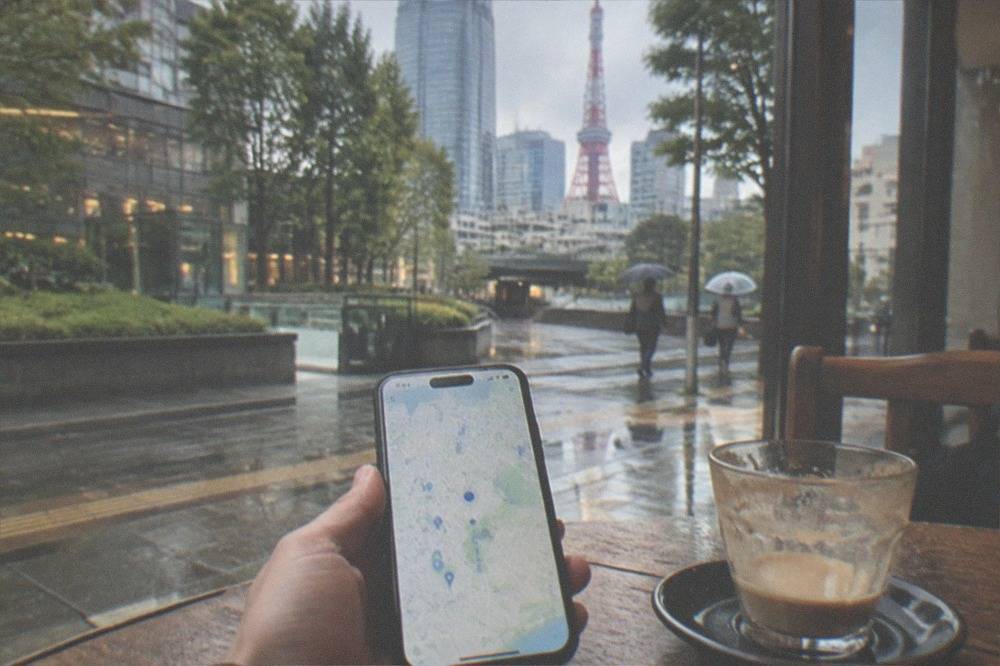
Booked storage points run on a different model entirely. Radical Storage signs up shops, hotels and café counters as partner locations; you pick a point on its Tokyo map, reserve and pay online, and drop the bag by showing the confirmation. The like-for-like rate at 244 of the 249 Tokyo points on file is 850 yen per bag per day for a regular bag, and a 355 yen per-bag fee is added once at checkout, so one bag for one day is 850 plus 355, which is 1,205 yen. Radical Storage advertises "from 490 yen per day", but that is a small-bag rate published at 11 points only, not what a traveller with a normal suitcase pays. There is no hourly tariff: a few hours is billed as a full day.
The protection side deserves plain wording. Radical Storage's cover is called the Radical Storage Guarantee, and its own terms state it is not insurance, that the company can withdraw it at any time, and that payouts are capped at EUR 3,000 per claim. This site neither owns nor operates any partner point and holds no bags; it is an independent guide to storage options across Tokyo. The network publishes no Tokyo-wide rating of its own, and its 648,000 review figure is a global network total, identical across cities. Per-area ratings belong to Radical Storage, and the honest Tokyo total is 2,758 reviews across 249 points, with 111 of those points holding no reviews at all.
Shibuya shows how the pieces fit at street level. Tokyo Metro alone runs 146 locker doors at Shibuya, and they empty and fill with the tourist day; the station has no attended baggage room on any operator's list. Radical Storage's Shibuya area lists 7 points, rated 4.75 across 163 reviews on the network's pages, nearest 306 m from the station, a mix of 5 automated locker points and 2 staffed counters, with 3 of the 7 listing 24-hour access. Hours are set point by point: 146 of the 249 Tokyo points are not open 24 hours, so the network's page titles promising otherwise should be read as a template, not a fact.
The same mechanics apply at every point in the network, from a Ginza boutique counter to a locker bank in Akihabara: reserve, receive the confirmation, drop the bag, and collect it before the point's own closing time. If a train station is the anchor of your day, the stations group on this site maps the densest clusters.
What Happens If You Overstay Or Lose The Ticket?
After the maximum period ends, the operator opens the locker, moves the bag to a separate storage area and keeps charging the same daily rate. You then have 30 days to collect it with the receipt, photo ID and the same IC card, paying the balance in cash. Locker liability is contractually capped at ¥30,000.
The expiry procedure is written into Metro Commerce's terms and is materially identical at JR East Smart Logistics. The operator unlocks the locker, inspects the contents and moves them to a designated place. The contents are held for 30 days counted from the start date of the original rental, the same daily rate keeps running during that separate storage, and your own travel costs to go and collect the bag are yours. Collection requires the receipt, photo ID and the same IC card you paid with, and the separate storage fee is cash only. After 30 days the contents are deemed abandoned and the operator may dispose of them, and may bill you for the cost of disposal.
| Event | Rule | Cost or consequence |
|---|---|---|
| Locker overstayed | contents moved to separate storage, held 30 days | same daily rate keeps running, cash on collection |
| Food left in a JR East locker | disposed of immediately | no 30-day grace at all |
| Lost key (Keio) | published replacement fee | ¥2,000 |
| Lost IC card or receipt (Keio) | published replacement fee | ¥1,000 |
| Damage or loss with operator at fault | contractual liability cap | ¥30,000 maximum |
| Prohibited item stored | no payout even where the operator was at fault | items worth ¥30,000 or more were never allowed in |
That last row is the quiet trap. Four operators, Metro Commerce, JR East Smart Logistics, Tokyu and Keio, publish the identical ¥30,000 cap, and the same terms ban storing anything worth ¥30,000 or more, so the cap and the ban are the same number by design. The cap is a contract term, not Japanese law, and consumer legislation does not let a business wipe out liability entirely, but the practical position stands: a locker will not make you whole for a laptop, and a laptop was never an allowed item in the first place. On a Multi Ecube locker, one retrieval ends the rental, a multi-day reservation is forfeited with no refund, and the only grace is a yellow reopen button giving 15 minutes. Keep the paper ticket, whatever you paid with; the two JR East group pages disagree on whether the card alone suffices, and the ticket works regardless.
Which Option Should You Choose For Your Bag?
For one day with a bag that fits, a coin locker is usually the cheapest option, starting at ¥300 to ¥500 at most stations. For an oversized case, a same-day visit or a station with no free lockers, a staffed point at 850 yen plus a 355 yen fee, or a baggage room, is the better fit.
The decision almost always comes down to three variables: does the bag fit a 34 cm deep box, how many days does it need, and is there a free door when you arrive. A locker wins on price for a single day with a carry-on-sized case. A baggage room wins on duration, up to 30 days at Tokyo Station or Ueno, and on size, since the staff measure rather than the box. A booked point wins on certainty, since the reservation exists before you leave the hotel, and on oversized bags, since staffed points take cases no standard locker door will swallow.
| Situation | Best fit | Typical cost |
|---|---|---|
| One day, bag fits a standard door | coin locker | ¥300 to ¥1,000 |
| Wide or oversized checked case | LW locker, baggage room or staffed point | ¥800 to ¥2,000, or 850 + 355 yen |
| Multiple days, up to a month | station baggage room | ¥500 to ¥2,000 per day |
| No free lockers at a big station | booked staffed point | 850 + 355 yen per bag per day |
| Airport layover with a big case | airport counter or airport locker | ¥800 to ¥2,000 per day at counters |
Two honest limits close the picture. Lockers run out at exactly the stations a visitor uses; the reasons and the timing are covered in why Tokyo coin lockers are always full, and the maximum-stay rules are unpacked in how long you can leave luggage in Tokyo. And no booking network has a point inside an airport terminal: the nearest Radical Storage point to Narita is about 6.0 km away in Tomisato, Chiba, and the nearest to Haneda about 3.4 km away in Kawasaki, Kanagawa. Inside the terminals themselves, the airport's own counters and lockers, not a booking service, are the real options.
Roppongi is a good example of the booked model in a district with thin locker coverage. The area sits on the Toei Oedo Line rather than the densest JR corridors, and Radical Storage lists 3 points there, all staffed counters rather than automated lockers, rated 4.88 across 47 reviews on the network's pages, with the nearest 199 m from the station. For a gallery-and-hills afternoon with a checked bag in tow, that is the shape of the decision: check the locker map first, and fall back on a reserved counter when the banks are full or the doors too small.
Common Questions About How Luggage Storage Works In Tokyo
How do I use a coin locker to store my luggage in Japan?
Find an empty locker, place the bag inside, close the door and pay at the locker with cash or a transit IC card such as Suica or PASMO. The machine prints a ticket with a QR code or six-digit number, or issues a key. Keep that ticket: it is what opens the door again. The rental day runs from first train to last train, with a new day added at 2 a.m., so a bag left past the last train starts a second day.
How to use luggage storage apps?
Two official services cover Tokyo coin lockers. Locker Concierge, at metro.akilocker.biz, is run by Tokyo Metro's own locker subsidiary and shows live locker availability across the Metro network. Multiecube.com is JR East Smart Logistics' own site for live availability and paid reservation at ¥500 per box, noting that reservation-capable units are 55 cm deep. Booking apps for staffed points work differently: you choose a location, reserve and pay online at 850 yen per bag per day plus a one-off 355 yen fee, and show the confirmation at the counter.
Can I pay for a Tokyo coin locker with a credit card?
Mostly no at ordinary station banks. The standard payment is cash or a transit IC card. At Ueno Station, two JR East locker banks also accept QR and mobile payment services alongside cash and IC cards, and airport locker rows at Haneda T1 and T2 accept cash, card, IC and QR. Metro Commerce's terms say you pay by whatever method is displayed on the locker body itself, so check the door before you rely on a card.
What happens if I leave my bag in a locker past the limit?
The operator opens the locker, inspects the contents and moves them to a separate storage area. The same daily rate keeps running, and you have 30 days from the original start date to collect with the receipt, photo ID and the same IC card, paying the balance in cash. After 30 days the contents are deemed abandoned. JR East disposes of food immediately, with no 30-day grace.
Is a booked storage point cheaper than a coin locker?
Not usually, for a single day with a bag that fits. A large Metro locker is ¥900 or ¥1,000 per day, against 850 yen per bag per day plus a one-off 355 yen fee at a booked point, which is 1,205 yen for one bag for one day. The booked point wins on oversized bags, on stations where the lockers are full, and on the guarantee of a reserved slot rather than a hunt for a free door.
Can I open a locker again after taking my bag out?
On a JR East Multi Ecube locker, no. One retrieval ends the rental, a multi-day reservation is forfeited with no refund, and the only grace is a yellow reopen button giving 15 minutes. Repeated access to your bag during the day is a real limitation of lockers generally; a staffed counter or baggage room can hand the bag back and take it again within its opening times.