Can I Bring Luggage On A Keisei Skyliner?
Yes, you can bring luggage on a Keisei Skyliner, but there is no checked-bag service, so everything travels with you. Here are the size limits, the Narita storage options, and how forwarding works.
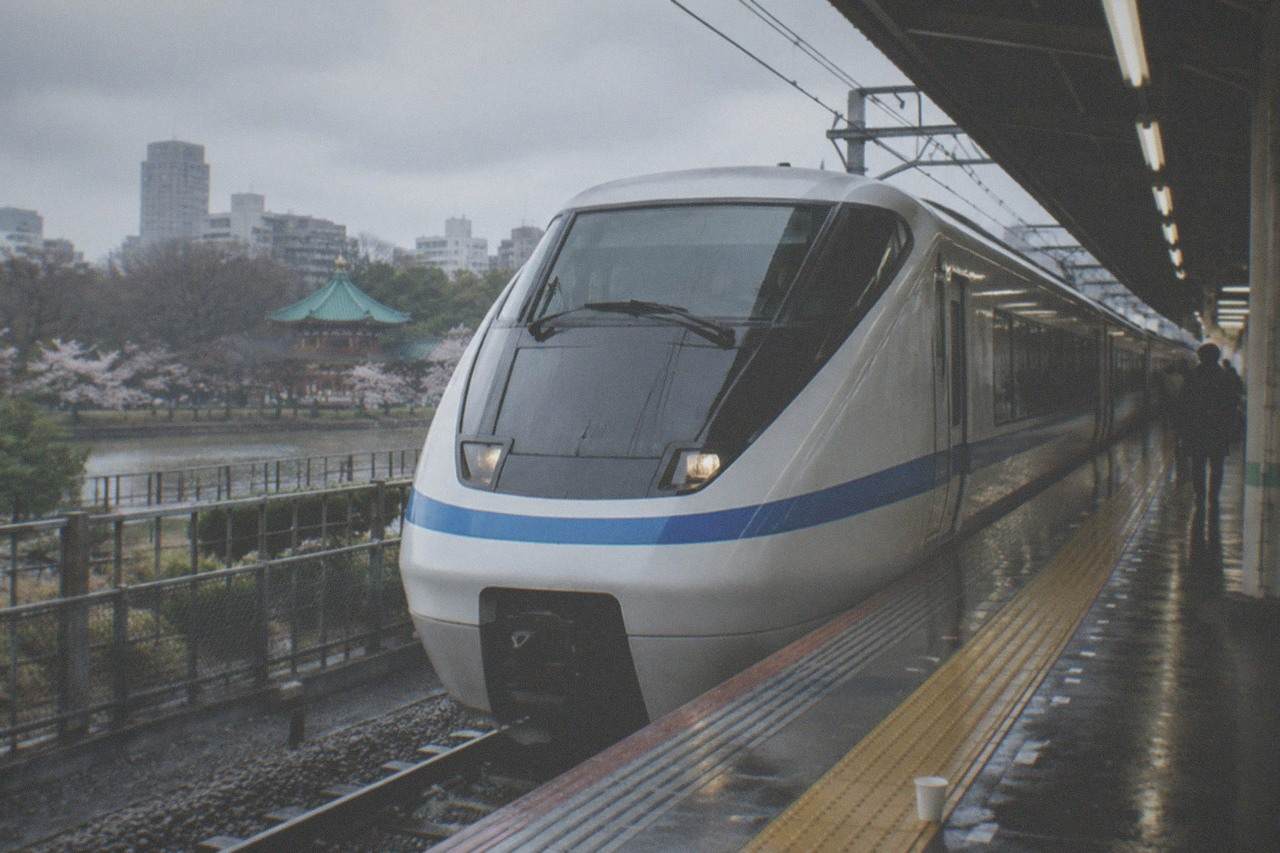
Can I Bring Luggage On A Keisei Skyliner?
Yes, you can bring luggage on a Keisei Skyliner, and plenty of travelers ride it between Narita Airport and central Tokyo with suitcases in tow. There is no checked-bag service on board, so everything you bring stays with you at your seat or in the luggage racks. No published size or weight limit for Skyliner luggage has been verified, so the sensible approach is to pack as carry-on and plan around that.
The question gets asked constantly, and mostly by people who have already bought a ticket or are about to. A reserved-seat express with a fixed timetable is a different beast from a city subway: the seats are assigned, the ride is smooth, and there is room around the seats for a case. What there is not, on any train in this research record, is a member of staff who takes your suitcase and hands it back at the other end. The Skyliner is a train ride, not a flight, and the luggage rules follow train logic rather than airline logic.
That logic cuts both ways. On one hand, nobody weighs your bag at the platform edge. On the other hand, whatever you bring has to fit around your seat, and on a busy departure you will be manoeuvring it past other passengers doing exactly the same thing. Travellers with one large case generally manage fine. Travellers with two large cases and a backpack start to feel the geometry by the time the second bag needs a home.
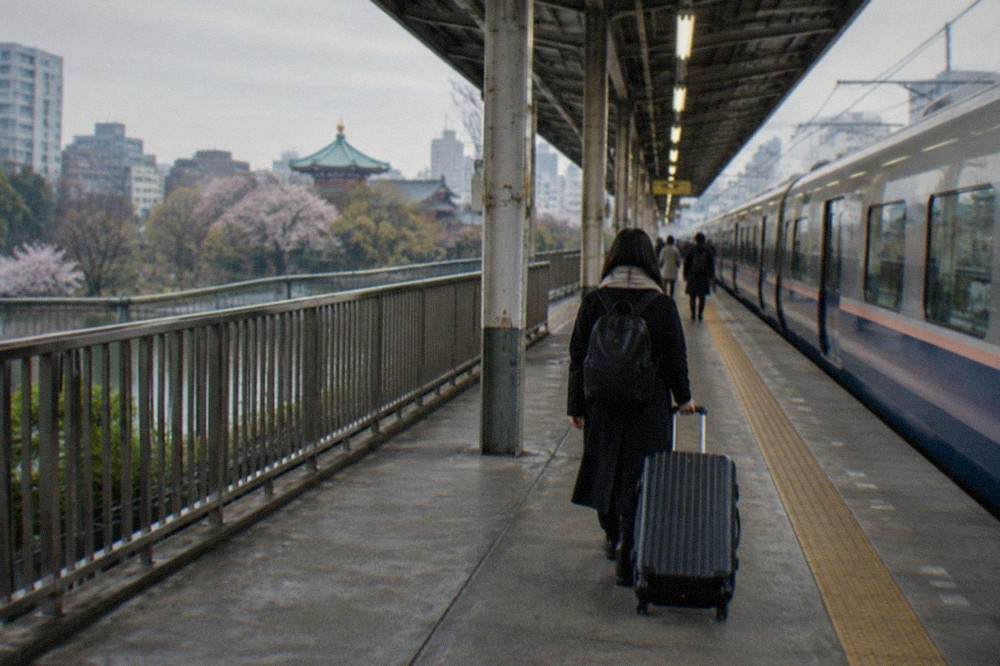
Before the practical details, one honest scoping note. Keisei publishes its own passenger guidance for the Skyliner, and that guidance sets no size or weight limit on the luggage a passenger brings on board. Where a number matters and the source is silent, this page says so rather than filling the gap with a figure borrowed from another train. Anything about Shinkansen limits that appears later is stated as a Shinkansen rule, never as a proxy for the Skyliner.
If the plan is to keep the bag with you, the sections below on boarding and on arriving at Ueno are the ones that matter. If the plan is to travel light and let someone else carry the case, the forwarding section gives the real published fares, including one asymmetry between the two airport operators that surprises people. And if the bag should simply not be on the train at all, there are storage options at the Narita end and at the Ueno end, both covered with figures.
How Much Luggage Can You Actually Bring On Board?
There is no verified published size or weight limit for Skyliner luggage, and no checked-bag service exists, so every bag travels as carry-on. The real constraint is the space around your assigned seat rather than a rule on a sign. One large suitcase per traveller is the comfortable pattern, and two per traveller is possible but starts to strain the space. Any figure quoted as a Skyliner limit elsewhere should be checked against Keisei's own guidance.
Start with what a reserved-seat airport train physically gives you. Every passenger has an allocated seat, typically a reclining seat in a two-plus-two layout, and there is luggage space designed into the carriage: racks above the seats for smaller items and areas for larger bags near the doors or at the end of the carriage. The design brief of an airport express is that people arrive with suitcases. That is the whole reason the service exists.
The comfort answer, then, is about the ratio of bags to people. A single traveller with one full-size spinner will find a spot for it and will rarely think about it again. A couple with two large cases will usually also manage, parking one case each. A family with four cases plus cabin bags should think seriously about forwarding at least two of them, because four cases in a full carriage means two of them end up blocking footspace, and blocking footspace on a moving train is a genuine safety point, not a matter of etiquette.
It helps to put the Skyliner in context against the one train in this research record whose luggage rules are fully documented: the Shinkansen. The Shinkansen rules are precise. Bags with a three-side total over 160 cm require a mandatory, free reservation of an oversized-baggage seat on the Tokaido, Sanyo, Kyushu and Nishi-Kyushu lines, and boarding without that reservation risks a 1,000 yen carry-on fee per journey. The absolute ceiling on board any JR Shinkansen is 250 cm three-side total, 30 kg, with no item over 2 metres long, and each passenger may bring two pieces within those limits. Those numbers are the Shinkansen's own published rules and are stated here as such. The Skyliner is a different operator with a different network, and none of those figures can be transferred to it. What the comparison does show is the scale of case that intercity rail in Japan is built to accept: a bag that fits inside a 250 cm three-side total is a bag the whole country's rail system expects to see.
One pattern from the research that travellers reliably get wrong: the Shinkansen lines out of Tokyo to the north have no oversized-baggage reservation and no fee, and the caveat that travels with that fact is that no reservation also means no guaranteed space. That is a Shinkansen fact, but the underlying logic applies to any reserved-seat train in the record. A seat is guaranteed to you. Floor space near your seat is first come, first served, and the only way to guarantee luggage space on a busy departure is to be on the platform early.
For anyone weighing a very large or very heavy case, the forwarding section below is the genuine alternative. Sagawa Express accepts parcels up to a 260 cm three-side total and 50 kg, which exceeds every rail cap in this research, and the published fares for Narita delivery are listed later in this page with their real numbers.
Where Can You Store A Bag At Narita Before Boarding?
The best option is Narita's own attended baggage counters: eleven in total across Terminal 1 and Terminal 2, operated by JAL ABC, Sagawa Express, and the Narita Airport Promotion Foundation, with published rates starting at 500 yen per small bag per day. Terminal 3 has no attended counter at all, and Radical Storage has no point inside any Narita terminal, its nearest location being about 6.0 km away in Tomisato, Chiba.
Start with the honest geometry. The nearest Radical Storage point to Narita is about 6.0 km from the airport, in Tomisato in Chiba. That is a real place with a real partner, and it is not inside any terminal. No storage point in the Radical Storage network sits inside a Narita or Haneda terminal, so anyone arriving at Narita and wanting to park a bag before boarding the Skyliner should look at the airport's own facilities first, not at a network whose nearest point is a taxi ride away.
The airport's attended counters are the default. Narita has eleven of them, all in Terminal 1 and Terminal 2, run by three operators: JAL ABC with seven counters, Sagawa Express with three, and the Narita Airport Promotion Foundation with one. Terminal 3 has no attended baggage-storage counter of any kind, its only baggage desk being a Yamato delivery counter on 1F, and the airport's own facility filter for Terminal 3 returns nothing. If you land in Terminal 3 with a bag to park, you walk or shuttle to Terminal 2.
The prices are published by each operator, per piece per day, tax included, and they differ meaningfully:
| Operator at Narita | Small | Medium | Large | Size rule | Counter hours |
|---|---|---|---|---|---|
| Narita Airport Promotion Foundation, T2 3F north | 500 yen | 700 yen | 1,100 yen | 115 cm / 160 cm / 161 cm+ three-side total | 06:30 to 22:00 |
| Sagawa Express, 3 counters | 500 yen | 700 yen | 1,150 yen | 100 cm / 160 cm / 200 cm three-side total | varies by counter |
| JAL ABC, 7 counters | 800 yen | 1,000 yen | 2,000 yen | A4 envelope / suitcase / ski and snowboard sizes | varies by counter |
Two details in that table earn their place. The Promotion Foundation desk is the cheapest attended storage at Narita, and it is the one desk the airport's own English facility page names without publishing its price, so a traveller who checks only the airport page will never see the 500 yen figure. And JAL ABC charges by calendar day, not by the hour, in its own words, so a few hours of storage is billed as a full day. That is the same day-counting rule that governs Radical Storage, where a few hours is billed as a full day too, and it is the single most common way travellers overpay for short storage.
Sagawa's Narita counters are also newer than most English coverage reflects. From Sagawa's own notice list, a counter opened at Terminal 1 South 4F in September 2026, and two more opened in July 2026, at Terminal 1 North 1F and Terminal 2 1F. The airport picture at Narita is actively changing, which is a good reason to treat any blog post older than a season with suspicion.
Beyond the counters, there are coin lockers. Narita's lockers run 400 / 600 / 800 yen per day, with the day boundary at midnight and a maximum of 8 days, and an hourly tariff of 300 / 500 / 600 yen for six hours exists at two locations only, Terminal 2 B1F and Terminal 3 2F. A Multi Ecube bank at Terminal 2 B1F charges 400 to 1,200 yen per day with a 500 yen reservation surcharge. For a small or medium bag held for a few daylight hours, a locker is usually the cheapest thing at the airport. For a large case, the deep Toei and JR East locker banks in the city have depth limits that matter, covered later in this page, and the attended counters at Narita are the safer answer.
For anyone planning to end the day back at the airport, the blog post on leaving luggage at the airport and going out covers the round-trip pattern in detail.
Is Forwarding The Bag Better Than Carrying It On The Train?
Yes, forwarding is usually the better choice: Sagawa ships a suitcase from Narita to a Tokyo hotel for 2,120 to 4,690 yen depending on size, with a 14:00 cut-off and same-day delivery from 16:00, while Yamato runs the same service from Haneda but will not deliver city to Narita the same day. You trade a modest fee and a cut-off time for travelling hands-free.
The question underneath the question is whether the suitcase should be on the Skyliner at all. For a short stay ending back at Narita, carrying it is reasonable. For a first day in Tokyo with a hotel booked, handing the case to a courier at the airport and riding the train with a daypack is a materially better day, and the cost is a published, fixed number.
The real fares from Narita, from Sagawa's own airport-service pages, per piece: 2,120 yen for a bag with a three-side total of 60 cm or less, 3,390 yen for a suitcase of 140 cm or less, and 4,690 yen for a case of 200 cm or less. The cut-off at Narita is 14:00, delivery to Tokyo hotels in ten wards plus Urayasu begins from 16:00, and the served area is hotels rather than arbitrary addresses. JAL ABC runs a competing hotel-delivery service at 1,800 yen per piece one way for bags up to 20 kg, cash only, with applications taken between 07:30 and 13:00 for airport-to-hotel and collection between 16:00 and 20:00.
The asymmetry worth memorising: Yamato publishes same-day delivery from Haneda to Tokyo's 23 wards, with fares from 2,450 to 7,550 yen depending on band and destination, but its own documents state that same-day delivery to Narita is not offered at all, in its own words the service to Narita Airport is not performed on the same day. Sagawa will deliver city to Narita, with published fares of 2,120 to 3,650 yen and an 11:00 cut-off. So the direction of travel changes which operator can help you, and any advice that treats the two airports as interchangeable on this point is wrong.
Unstaffed lodging matters here. Yamato's published rule for this product is that it will not deliver to an Airbnb, a minpaku or any unstaffed address unless someone is certainly there to receive the parcel, and convenience stores are not an option for airport delivery. JAL's same-day service serves hotels only. If the first night is an apartment with a keypad, carrying the bag or parking it at the airport are the real options, and forwarding becomes a hotel-only tool.
The size ceiling is the other half of the comparison. Rail caps out at 250 cm three-side total and 30 kg on the Shinkansen. Yamato's TA-Q-BIN caps at the same 200 cm and 30 kg with any one side at 170 cm or less. Sagawa's large-size service accepts up to 260 cm and 50 kg, the highest ceiling of any carrier or operator in this research, and Japan Post's Yu-Pack stops at 170 cm and 25 kg. A genuinely oversized or heavy case has exactly one courier that will take it, and no train that will.
One caution that must travel with any forwarding advice: transit times could not be sourced for any lane in this research, and no delivery time, day count or next-day claim appears anywhere in this page. The delivery windows quoted above, from 16:00 at Sagawa's Narita desk, are published windows for that specific airport product, not general transit times.
What About Arriving At Ueno With A Heavy Bag?
The Skyliner's city terminus is Ueno, and Ueno is one of the best-served stations in Tokyo for a heavy bag: a JR East Logistics attended baggage room inside the Park Gate at 500 to 2,000 yen per bag per day for up to 30 days, coin lockers with 127 doors published by Tokyo Metro alone, and eight Radical Storage points with a 4.87 rating from 285 reviews. Few arrivals in the city land somewhere this well prepared.
Ueno deserves its reputation. The JR East Logistics baggage room sits on the 3F concourse inside the Park Gate, open daily from 10:00 to 20:00, charging 500 yen for a bag of 100 cm or less, 1,000 yen for 200 cm or less and 2,000 yen for anything larger, per bag per day, with a 30-day maximum. That 30-day maximum is the longest single-stay storage figure in the station record, and it makes Ueno a candidate for a bag parked for a whole trip, not just an afternoon.
The lockers are extensive and officially counted. Tokyo Metro alone publishes 127 locker doors at Ueno, and JR East's own materials count 19 locker locations, a count of banks rather than doors, which is a distinction English coverage routinely loses. Published JR East retail prices at Ueno run 300 yen for the smallest tier sized for hand baggage, 500 yen for a tier meant to take a carry-on-sized suitcase, 700 yen for carry-on plus souvenirs, 900 yen for the large tier, and 1,000 to 1,100 yen for the larger L tier. Payment at most Ueno locker banks is cash or transit IC card, with two banks also taking electronic money and QR payment methods including Alipay, WeChat Pay and PayPay.
| Option at or near Ueno | Price | Max stay | Notes |
|---|---|---|---|
| JR East Logistics baggage room, inside Park Gate | 500 / 1,000 / 2,000 yen per bag per day | 30 days | Open 10:00 to 20:00 daily |
| Coin lockers, JR East | 300 to 1,100 yen per day by tier | 3 days on Multi Ecube units | Paying more does not extend the period |
| Radical Storage points near Ueno | 850 yen per regular bag per day, plus a 355 yen once-per-bag checkout fee | booked per day | 8 points, 4.87 from 285 reviews |
The Radical Storage line in that table needs the arithmetic stated plainly, because quoting a day rate alone understates a one-day booking by roughly a third. One regular bag for one day is 850 yen plus 355 yen, which is 1,205 yen, presented here as arithmetic on Radical Storage's own published figures rather than as a checkout price. The 490 yen figure Radical Storage advertises is a small-bag rate found at 11 of the 249 Tokyo points on file, not what a traveller with a normal suitcase pays, and the 244 points carrying the 850 yen regular rate are the honest baseline. The 2,758 reviews spread across those 249 points are the real Tokyo total, while the 648,000 figure Radical Storage displays belongs to its global network and is identical across cities, so it is never a Tokyo number.
Why choose a Radical Storage point over a 500 yen baggage room or a 700 yen locker? Staffing and hours, mostly. All eight Radical Storage points near Ueno are staffed, none is a bank of automated lockers, and the baggage room's 10:00 opening is late for a traveller arriving on a morning flight. The guarantee question deserves precision: the Radical Storage Guarantee is not insurance, its own terms say so in clause 9.2.2, it can be withdrawn at any time under clause 9.2.1, and payouts are capped at EUR 3,000 per claim in clause 9.4. That cap is stated in euros exactly as the terms state it, never converted. For comparison, coin locker liability across Tokyo's operators is capped contractually at 30,000 yen, a contract term rather than a statutory rule, and locker terms prohibit storing anything worth 30,000 yen or more, which means the cap and the ban are the same number and a valuable was never meant to be inside in the first place.
The locker duration rules are the trap most travellers never see, and Ueno is where they bite. Tokyo Metro's terms allow 4 days including the day you start, with the day rolling at 02:00 rather than midnight and the first and last days each counting as whole days however briefly the locker held a bag. JR East's Multi Ecube terms allow 3 days, and its own wording adds that paying more money does not extend the period, the bag comes out on the fourth day. After expiry the operator opens the locker, moves the contents to a designated place, holds them for 30 days counted from the original start date, keeps charging the same daily rate for that separate storage, requires your receipt, photo ID and the same IC card you paid with, takes cash only for the separate storage fee, and leaves your travel costs to collect it with you. The guide on how long you can leave luggage in Tokyo walks the full timeline.
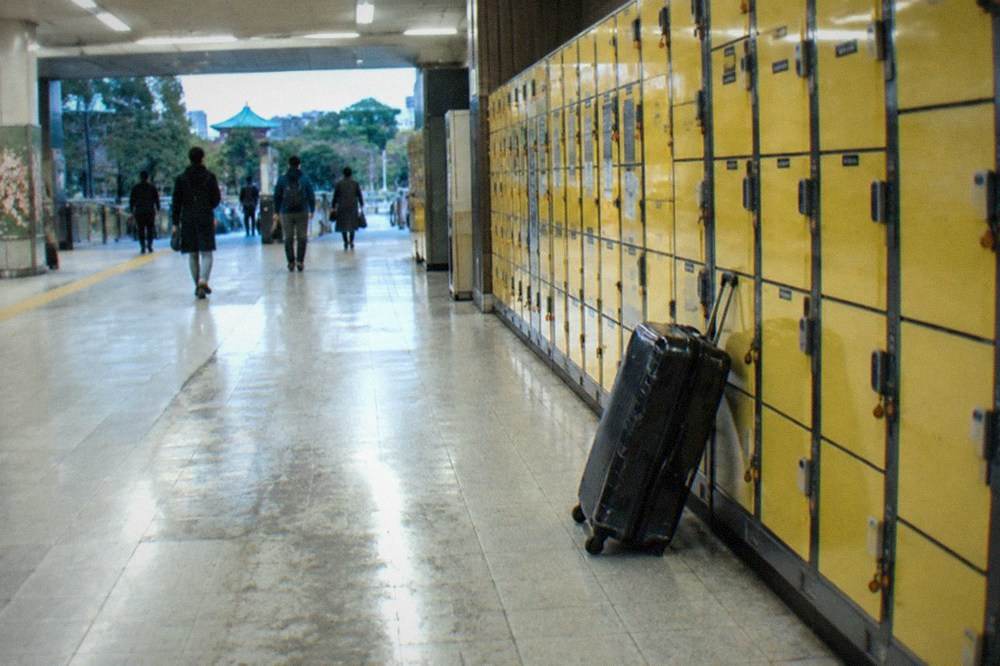
Locker dimensions decide more than price does, and the published internal sizes are worth knowing before you commit. JR East's Multi Ecube tiers run SS at 15 x 34 x 65 cm, S at 33 x 34 x 65, M at 50 x 34 x 65, L at 86 x 34 x 65, and the LW tier at 86 x 56 x 65 cm, the only common tier deep enough to swallow a wide checked suitcase lying flat, and a tier English coverage of Tokyo lockers almost never mentions. Reservation-capable units of the same tiers are 55 cm deep rather than 65. Toei's locker tiers in Asakusa publish internal dimensions with a 342 mm depth, materially the same constraint: a 26-inch spinner around 30 cm deep with its wheels fits the depth and fails the height on the standard tiers. The size guide at Tokyo coin locker sizes does this in full.
Storing A Bag Near The Airport When There Is No Terminal Point
Yes, you can store a bag near Narita Airport even without a terminal point. One staffed Radical Storage point sits in the Narita area: nearest ~6.0 km in Tomisato, rated 5 from 1 review. A regular bag costs 850 yen per day plus a one-time 355 yen checkout fee, so 1,205 yen total for one day. These points suit a car-side or hotel-side stop rather than a terminal drop.
The honest framing is that these are points around the airport, not in it. The nearest is about 6.0 km away in Tomisato, Chiba, which for a traveller with a Skyliner ticket in hand is usually not the right first stop: the terminal counters at 500 yen small or 700 yen medium undercut the 1,205 yen arithmetic anyway. Where the near-Narita points earn their keep is the pattern of a driver, a nearby hotel, or a group with more bags than a terminal counter wants to receive at once, and the fact that all four are staffed rather than automated.
Two things travel with every Radical Storage price on this site. The checkout fee of 355 yen per bag is charged once and does not scale with days, so it appears every time a price is quoted, and there is no hourly tariff: a few hours is billed as a full day. Both facts are the partner's own published mechanics, and both are reasons a short locker at the terminal, at 400 to 800 yen per day or 300 to 600 yen for six hours at the two Narita locations running the hourly tariff, is usually the cheaper short-stay answer at this airport.
For the Haneda half of the same question, the nearest Radical Storage point is about 3.4 km away in Kawasaki, Kanagawa, across a prefecture boundary, and Haneda's own terminals publish real prices that Narita's do not: 800 / 1,000 / 2,000 yen per day by size in Terminals 1 and 2, and Terminal 3 runs its desks 24 hours with pricing per 24 hours rather than per calendar day, a distinction the English travel web reliably misses. Yamato's Terminal 2 international counter charges 800 to 2,000 yen per day and publishes no limit on the storage period, which contradicts the airport's own two-week sitewide rule, and both facts are recorded here rather than resolved.
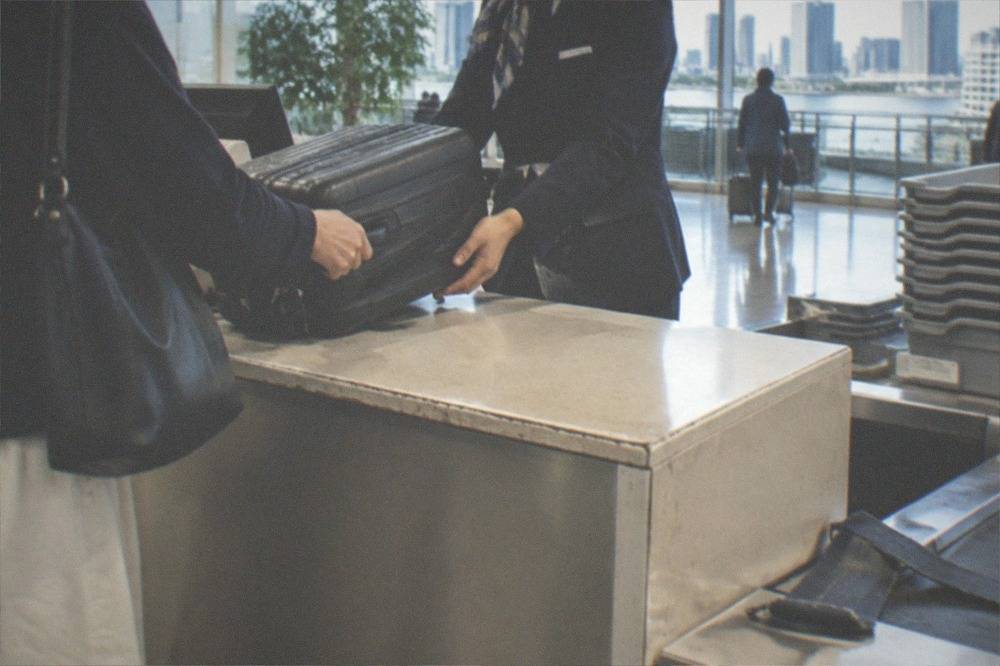
The pattern that connects everything on this page: the airport end of a Skyliner journey is served by the airport's own counters and lockers, the city end at Ueno is served by one of the best-stocked stations in Tokyo, and the middle question, whether the bag rides the train with you, is answered by geometry rather than by rule. For one large case, carry it. For two or more, or for a case that exceeds what rail accepts, the forwarding fares quoted above with their real cut-offs are the alternative, and the direction of travel decides which courier can help.
The resource that ties all of it together, the full area-by-area coverage on Luggage Storage in Tokyo, maps the 249 points on file across every district and station in this research, with the honest per-area figures rather than a network-wide average.
Common Questions About Bringing Luggage On A Keisei Skyliner
can i bring luggage on a keisei skyliner?
Yes. The Skyliner is a reserved-seat airport express, and travellers bring suitcases on it routinely. There is no checked-bag service, so everything you carry stays with you, and the research behind this page records no published Skyliner size or weight limit, so treat it as carry-on and check Keisei's own guidance for anything binding.
Is there a luggage size limit on the Skyliner?
No verified published limit appears in the research behind this page, so this site does not print one. The practical constraint is the space around your assigned seat. For comparison only, the Shinkansen's fully documented rule is a free but mandatory reservation for bags over 160 cm three-side total on certain lines, with an absolute ceiling of 250 cm and 30 kg, and those figures belong to the Shinkansen, not to the Skyliner.
Can I store a suitcase at Narita Airport before taking the Skyliner?
Yes, at the airport's own attended counters: eleven in Terminals 1 and 2, run by JAL ABC, Sagawa Express and the Narita Airport Promotion Foundation, with published prices from 500 yen per small bag per day. Terminal 3 has no attended storage counter at all. Narita's coin lockers run 400 to 800 yen per day with an 8-day maximum.
Is it cheaper to forward a bag from Narita than to store it?
They answer different questions. Forwarding a suitcase from Narita to a Tokyo hotel with Sagawa costs 3,390 yen for a case of 140 cm or less, with a 14:00 cut-off and delivery from 16:00. Attended storage at Narita starts at 500 yen per day. Forwarding buys a hands-free journey; storage buys a bag waiting at the airport on your return.
What can I do with luggage when I arrive at Ueno on the Skyliner?
Plenty. Ueno has a JR East Logistics baggage room inside the Park Gate at 500 to 2,000 yen per bag per day with a 30-day maximum, Tokyo Metro publishes 127 locker doors, and eight Radical Storage points sit nearby at 850 yen per regular bag per day plus the 355 yen once-per-bag checkout fee.
Can luggage be delivered to my hotel or Airbnb from Narita?
Hotels yes, unstaffed lodging effectively no. Sagawa and JAL ABC deliver to hotels in their published areas, and Yamato's own rule refuses unstaffed addresses unless someone is certainly present to receive the parcel, with convenience stores excluded from airport delivery. JAL's same-day service is hotels only.