First Time In Tokyo: What Surprises First-Time Visitors
Tokyo rewards preparation more than most cities, and nearly every first-visit surprise traces back to the same handful of rules: when a hotel releases its rooms, where a suitcase is allowed to sit, and what each option costs. Every figure here comes from operator pages and this site's own storage data.
Short answer
Hotel check-in starts at 15:00, coin lockers at the big stations fill by mid-morning, and a suitcase over 60 cm on any side is refused at Tokyo Skytree. Staffed storage through Radical Storage is 850 yen per bag per day plus a 355 yen checkout fee, so 1,205 yen for one bag for one day.
What Surprises People Most On A First Trip To Tokyo?
Most first-visit surprises in Tokyo come from three rules: hotels release rooms at 15:00, the trains have a last service and do not run all night, and the coin lockers everyone relies on fill at exactly the stations visitors use. Everything else, small rooms included, is manageable once those three are planned for.
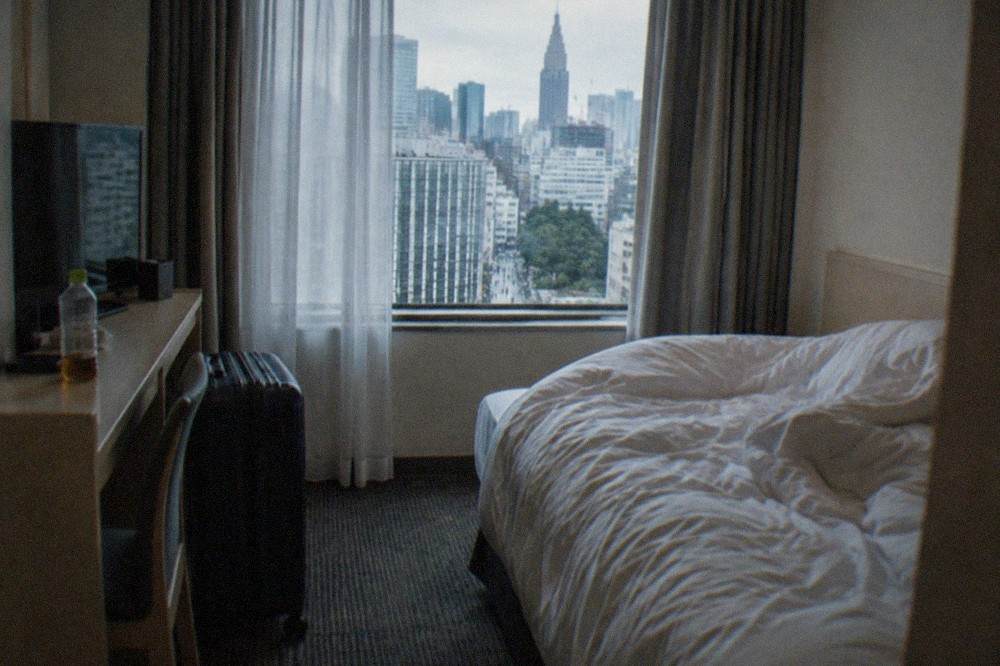
The room-size surprise is real but overrated. A standard business-hotel single in Tokyo is compact, and a suitcase opened flat can occupy most of the free floor. What actually bites is the timing around it. A flight that lands in the morning hands you the bag five or more hours before the room exists, and a flight that leaves in the evening takes the room away at midday while the departure is still eight hours off. Both gaps are storage problems, and both are solved the same way.
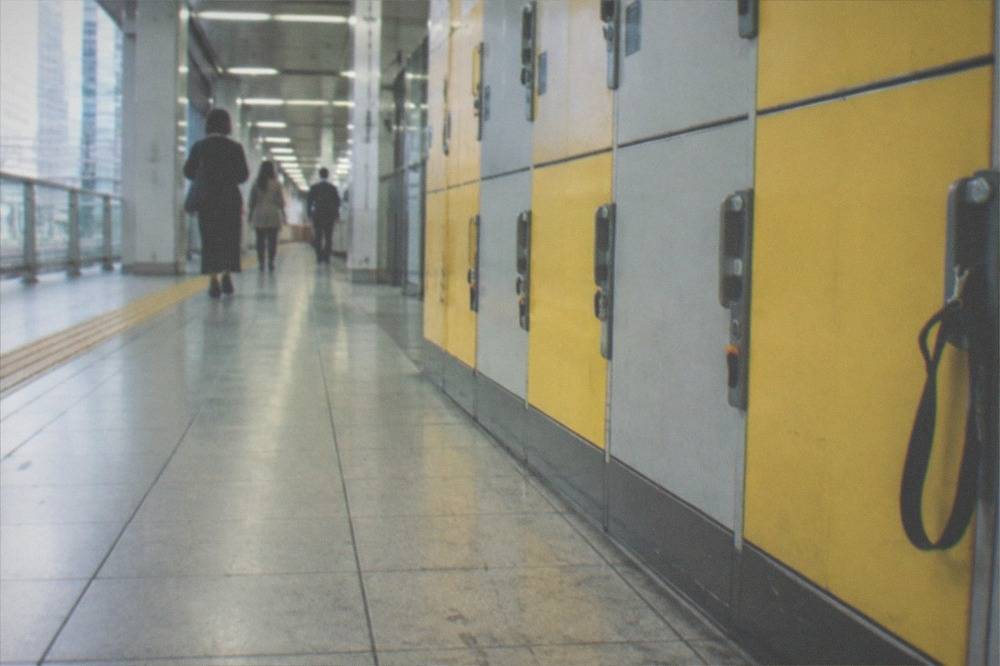
The locker surprise is less visible until it happens. Tokyo Metro alone operates 4,830 locker doors, which sounds inexhaustible, until you learn that the stock concentrates at a handful of stations, and that the mid-size and large doors a suitcase needs are the first to go. Capacity is limited at exactly the stations a visitor uses.
Every figure on this page comes from the research behind Luggage Storage in Tokyo, including operator terms, published tariffs and the partner network's own location data. The short version of the surprises, and what each one costs:
| The surprise | The rule behind it | What it means on the ground |
|---|---|---|
| No room before 15:00 | Housekeeping turns rooms over in one cycle | Morning arrival means hours with a bag in hand |
| Lockers full at midday | 4,830 Metro doors citywide, but thin at big stations | Mid and large tiers sell out first |
| Locker time limits | 4 days at Metro, 3 days at JR East, and paying more does not extend it | Long stays need a different option |
| Big bag on the Shinkansen | Over 160 cm total needs a free reserved seat, or a 1,000 yen fee applies | Reserve when you book the train |
| A 60 cm rule at venues | Tokyo Skytree refuses any item with a side over 60 cm, enforced by inspection | A checked suitcase cannot enter at all |
None of these are hostile rules. They are the ordinary operating constraints of a city of 37 million that runs on trains with a last service, dense hotels and finite locker stock. The visitors who enjoy Tokyo most are the ones who treat the arrival day as a planning window rather than dead time.
Why Can't You Check Into Your Tokyo Hotel In The Morning?
Hotels hold rooms until mid-afternoon because housekeeping cycles turn them over in one pass, and 15:00 is the standard release time. An arrival on an overnight flight lands the suitcase in your hands hours before a key exists. That gap, not the flight itself, is the first problem a first-timer meets.
The gap is longest at the airports. Narita is the extreme case: there is no Radical Storage point inside any terminal, and the nearest point in the network sits about 6.0 km away in Tomisato, Chiba. Haneda's nearest point is about 3.4 km away in Kawasaki, Kanagawa, across a prefecture boundary. Neither is a walk-in option with a suitcase, so the airport answer is the airport's own counters. Haneda publishes its prices: Terminal 3's attended desks are open 24 hours and charge 800 yen for a small bag, 1,000 for medium and 2,000 for large, with storage allowed up to two weeks, per the airport's own facility page. Narita runs eleven attended counters across Terminals 1 and 2, with none at all in Terminal 3, and counter prices start at 500 yen per piece per day.
Inside the city, one operator-backed option exists at the biggest station of all. JR East's Travel Service Center at Tokyo Station, on the first floor of the Marunouchi side outside the gates, holds luggage from 08:30 to 20:00, same day only, and JR East's own page is explicit that this service runs at Tokyo Station only. The same page settles a question first-timers often ask about other hubs: JR East's customer support page scopes the storage to one station, not a network of them. Shibuya and Ikebukuro have no attended station baggage room at all, and Shinjuku's JR side has none either, though a Sagawa counter inside the Busta terminal on the 3rd floor takes bags from 06:30 to 21:00 at 800 to 1,500 yen by size.
Some hotels will hold a bag at the front desk before check-in and after checkout, and many do it willingly, but it is a courtesy rather than a published service, so ask rather than assume. The one habit worth forming is different: never plan an arrival morning around the room. Plan it around the bag.
For a morning arrival into the city, the staffed clusters near the big stations do the job the room cannot. A suitcase parked near a station you were going to visit anyway converts the dead hours into a walkable afternoon:
One more timing note belongs here because it surprises people exactly once. Forwarding a bag to your hotel is a real alternative to carrying it, but no transit time for any forwarding lane could be sourced from any operator, so no page on this site promises a delivery window. If a same-morning handoff matters, storage beats forwarding.
The full check-in mechanics, including what to do with a bag when the room is not ready and the hotel says no, are covered in the separate Tokyo hotel check-in times guide.
Where Do You Leave A Suitcase On Day One In Tokyo?
The workable answers are a staffed Radical Storage point near a big station, a station baggage room where one exists, or a coin locker big enough for the bag. Radical Storage charges 850 yen per bag per day plus a 355 yen checkout fee, and its points cluster minutes from Shibuya, Ueno and Ginza.
Start with what the network actually looks like near the stations a first-timer visits. The figures below are Radical Storage's own area data: point counts, the ratings and review counts it publishes per area, and the distance from the station to the nearest point.
| Area | Points | Radical Storage rating | Reviews | Nearest point |
|---|---|---|---|---|
| Shibuya | 7 | 4.75 | 163 | 306 m from the station |
| Ueno | 8 | 4.87 | 285 | 171 m from the station |
| Ginza | 2 | 4.84 | 118 | 1,131 m from the station |
| Tokyo Station | 3 | 4.89 | 213 | 558 m from the station |
| Asakusa | 13 | 4.85 | 268 | 193 m from the station |
Shibuya is the one first-day neighbourhood where the locker-versus-staffed split is worth knowing precisely. Five of the area's seven Radical Storage points are automated locker installations and two are staffed, and three points list 24-hour opening, which means four do not. If a late pickup matters, the listing hours of the specific point matter more than the area average.
Ueno is the calmer counterpart. All eight of its points are staffed, the nearest sits 171 metres from the station, and the area's 285 reviews make it one of the deepest review pools in the network's Tokyo data. The park, the museums and the station's own baggage room on the 3rd floor inside the Park Gate, open 10:00 to 20:00 at 500 to 2,000 yen by size, give a first-timer more choice in one block than most of the city offers in a district.
Two honest caveats belong beside any recommendation. The guarantee that travels with a Radical Storage booking is not insurance, and their own terms say so in clause 9.2.2, with payouts capped at EUR 3,000 per claim under clause 9.4. And hours vary point to point: 146 of the 249 Tokyo points in the network's data are not open 24 hours, whatever a search result headline implies, so the hours on the specific point are the ones to check.
What Does It Cost To Store A Bag In Tokyo?
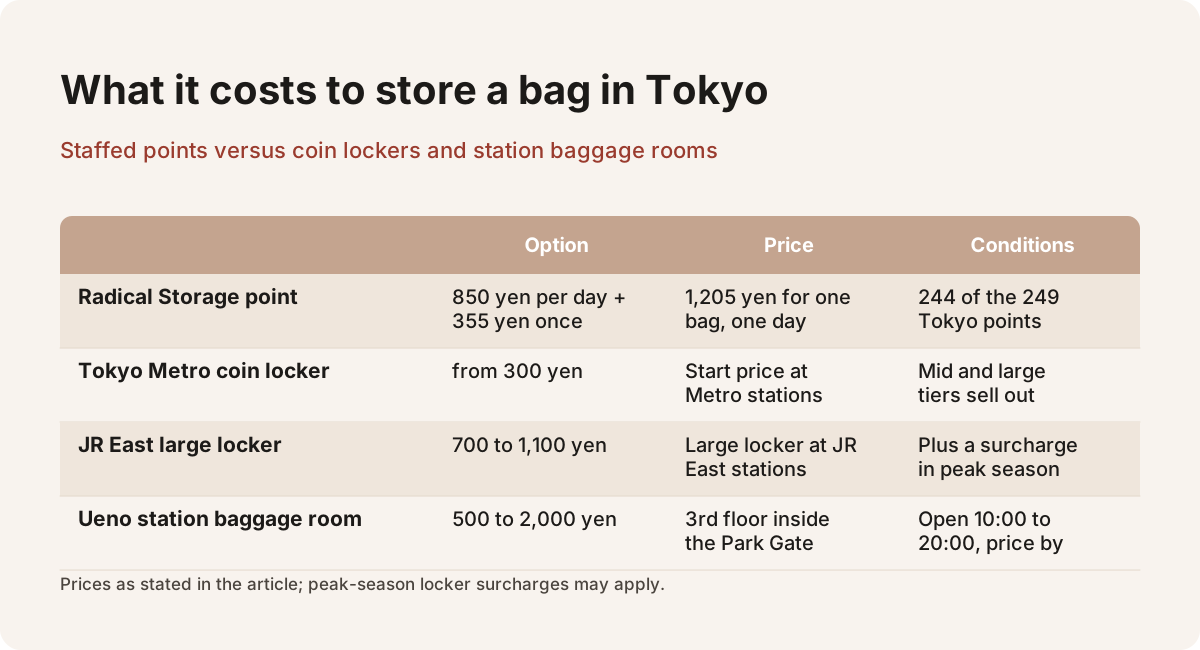
A day of staffed storage through Radical Storage is 850 yen per bag plus a once-off 355 yen checkout fee, so 1,205 yen for one bag for one day. Coin lockers start cheaper, from 300 yen at Tokyo Metro stations, but a large locker at JR East stations runs 700 to 1,100 yen, plus a surcharge in peak season.
The staffed rate is the same across every area on this site: 850 yen per bag per day for a regular bag, at 244 of the 249 Tokyo points on file, with the 355 yen checkout fee charged once per bag rather than per day. Radical Storage advertises from 490 yen per day, but that is a small-bag rate found at 11 points only, not what a traveller with a normal suitcase pays. There is no hourly tariff at all: a few hours is billed as a full day, exactly as it is at Narita's JAL ABC counters, which charge by calendar day.
| Option | Price | Notes |
|---|---|---|
| Radical Storage point | 850 yen per bag per day + 355 yen once | 1,205 yen for one bag, one day; fee does not scale with days |
| Tokyo Metro coin locker | 300 to 1,000 yen per day by tier | Same price ladder at every Metro station |
| JR East coin locker (large) | 700 to 1,100 yen per day | Varies by station; +100 to 200 yen peak surcharge on mid and large |
| Station baggage room (Tokyo, Ueno) | 500 / 1,000 / 2,000 yen by size | 30 days maximum; 09:30 to 20:00 at Tokyo Yaesu South |
| Haneda Terminal 3 counter | 800 / 1,000 / 2,000 yen per 24 hours | Open 24 hours; up to two weeks |
| Narita counter (Promotion Foundation, T2) | 500 / 700 / 1,100 yen by size | 06:30 to 22:00; the lowest published counter price at Narita |
The station baggage-room row deserves its own sentence, because it is the option English coverage forgets. Tokyo Station alone has seven attended storage spots run by JR East Logistics, from the Yaesu South window outside the gates to the BAGGAGE STORAGE+ counter on basement level 1 of Gransta, each at the same 500 / 1,000 / 2,000 yen tiers with a 30-day maximum, per JR East Logistics' own baggage page. Ueno's is on the 3rd floor concourse inside the Park Gate. Shinagawa's sits inside the Central Gate at 800 yen for a mid-size bag Monday to Friday, 1,000 yen on Saturdays and Sundays and on forced-peak dates.
The Metro locker line in that table is its own small revelation. Tokyo Metro's operator, Metro Commerce, publishes one price ladder across all 141 station rows on its locker page: 300, 500, 600, 900 and 1,000 yen, identical at every Metro station, and only the mix of door sizes varies by location. A great deal of English travel writing says the opposite, that locker prices are station-dependent everywhere. On Metro they are not. On JR East they genuinely are, and the ranges in the table reflect that.
Which Bags Actually Fit A Tokyo Coin Locker?
Depth is the constraint, not width. Toei's large lockers are 342 mm deep internally and JR East's are 34 cm, so a 26-inch spinner, about 30 cm deep, clears the depth and then fails the height of the standard tiers. The wide LW tier at JR East stations, 86 by 56 by 65 cm, is the one common tier that swallows a wide checked suitcase lying flat.
| Operator | Tier | Internal size | What it takes |
|---|---|---|---|
| Toei Subway | Large | 856 x 342 x 663 mm | One large suitcase, nothing beside it |
| Toei Subway | Medium | 502 x 342 x 663 mm | A carry-on plus a daypack, tightly |
| Toei Subway | Standard | 325 x 342 x 663 mm | A backpack or small duffel |
| JR East | M | 50 x 34 x 65 cm | A carry-on-sized case plus souvenirs |
| JR East | L | 86 x 34 x 65 cm | One large suitcase |
| JR East | LW | 86 x 56 x 65 cm | A wide checked case lying flat |
Two details from the operators' own dimension pages change decisions. First, the LW tier exists at all, and English coverage of Tokyo lockers almost never mentions it; at 56 cm deep it is the only common tier that takes a wide case the way a hotel floor would. Second, the reservation-capable Multi Ecube units are 55 cm deep, not 65, so the same tier name buys a shallower box if you reserve ahead through the operator's own site, and that reservation adds 500 yen per box.
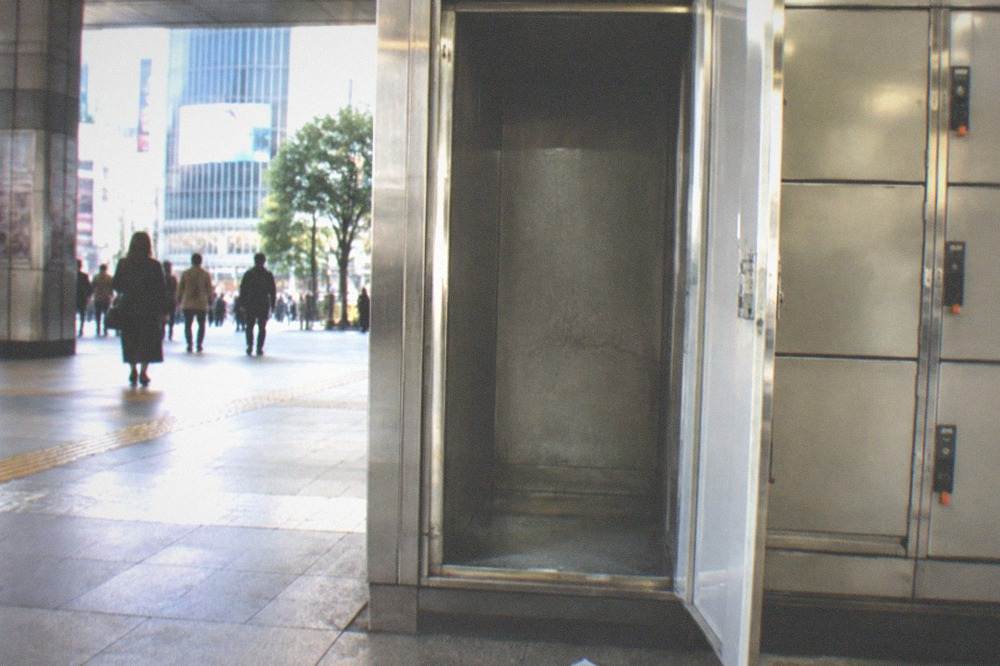
The venue rules are the other half of the size question. Tokyo Skytree prohibits any item with a side over 60 cm, enforced by bag inspection at entry, and the venue's own page names its two paid alternatives: the Skytree Town coin lockers or the Sagawa counter in Solamachi, which charges 800 yen for a case up to 100 cm and 1,300 yen for anything over 160 cm. teamLab Planets is stricter still: nothing may be carried into the artwork spaces at all, the free lockers measure 23 by 34 by 37 cm, and a suitcase larger than that is wire-locked in the open stroller area, which is materially weaker custody than a locker. The full tier-by-tier measurements, including the JR East reservation units and the Toei banks at Asakusa, are in the Tokyo coin locker sizes guide.
Why Are The Coin Lockers Always Full?
Tokyo Metro alone runs 4,830 locker doors across its network, yet the stock concentrates where visitors concentrate: 146 doors at Shibuya, 127 at Ueno, 100 at Tokyo Station. Mid-size and large doors sell out first, because those are the tiers a suitcase needs, and a full locker bank has no overflow shelf.
The door counts above are Tokyo Metro's own, per station. At Shibuya the neighbouring JR and private-rail banks add more, and at Shinjuku the Metro figure is 52 doors, which is why a station that feels infinite has a locker problem at all. The counts are also the most misreported numbers in English coverage of Tokyo: Ueno is routinely described as having 19 lockers, when JR East's own 19 counts nineteen banks, nineteen locations, and Tokyo Metro alone publishes 127 doors there. A location is not a door, and no operator publishes a combined all-operator count for any station.
Timing matters more than location. The practical pattern at the big stations is that the large tiers go by late morning and the small ones survive into the evening, and the reason is structural: the large doors serve exactly the people with suitcases, of whom there are the most between the morning checkout and the afternoon check-in. Two live services exist and both belong to the operators themselves, Tokyo Metro's Locker Concierge for Metro lockers and multiecube.com for the JR East reservation system. A third path, reserving a Multi Ecube box for 500 yen over the walk-up price, converts a full-bank problem into a solved one.
The fuller picture of why stock runs out, and which stations to treat as hopeless by noon, is in why Tokyo coin lockers are full.
What Should A First-Time Visitor Do Differently?
Book the bag drop before the flight, treat the arrival morning as a planning window rather than dead time, and reserve an oversized-baggage seat on the Shinkansen if the case passes 160 cm in total. Those three moves remove most of the friction a first visit to Tokyo can produce.
The Shinkansen rule is the one that costs money when ignored. A case with a three-side total over 160 cm needs a seat with an oversized-baggage space on the Tokaido, Sanyo, Kyushu and Nishi-Kyushu lines; the reservation is free but mandatory, and boarding without it incurs a 1,000 yen fee, once per journey, written into the tariff text of all three operators. The absolute maximum on board is 250 cm total and 30 kg, two items, and the JR East Shinkansen lines out of Tokyo, the Tohoku, Hokuriku and the rest, have no reservation requirement at all, though that also means no guaranteed space. Strollers, sports equipment and instruments are exempt everywhere.
The arrival-day plan itself is simple. Pick one staffed point near the first neighbourhood, not the hotel, because the hotel is where the bag is going eventually and the neighbourhood is where you actually are. Ginza is the classic first-afternoon choice for exactly this reason: the department stores and the station sit within one walkable block cluster, and the area's one Radical Storage point holds a 4.84 rating across 118 reviews, with the nearest 1,131 metres from the station. Asakusa works just as well with thirteen points, the deepest count in the network's Tokyo data.
Then plan the last day as deliberately as the first. A night flight with a midday checkout is the same gap in reverse, and the moves that solve it, from airport counters with published prices to storage near the station you will leave from, are laid out in your last day in Tokyo before a night flight.
The single habit underneath all of it: never let the suitcase be the thing you improvise. Rooms, trains, venues and lockers all have published rules in Tokyo, and the operators publish them. The visitors who are surprised are the ones who assumed the rules resembled home.
Common Questions About A First Visit To Tokyo
Can I check into a Tokyo hotel before 15:00?
Most properties release rooms at 15:00 because housekeeping turns them over in a single cycle, and early check-in is a courtesy rather than a right. The reliable move is to plan the arrival morning around the bag instead: an airport counter at Narita or Haneda, a station baggage room such as the JR East Logistics windows at Tokyo Station, or a booked Radical Storage point near your first neighbourhood.
Where can I leave my luggage on my first day in Tokyo?
Staffed Radical Storage points cluster near the big stations: seven around Shibuya, eight around Ueno and thirteen in Asakusa, all bookable in advance. Stations themselves add baggage rooms where they exist, and Tokyo Station has seven, from the Yaesu South window to counters inside Gransta, at 500 to 2,000 yen per bag per day with a 30-day maximum.
How much does luggage storage cost in Tokyo per day?
Staffed storage through Radical Storage is 850 yen per bag per day for a regular bag plus a 355 yen checkout fee charged once, so 1,205 yen for one bag for one day. Coin lockers run 300 to 1,000 yen per day on the Tokyo Metro ladder and 700 to 1,100 yen for a large JR East door, and there is no hourly tariff anywhere: a few hours is billed as a full day.
Will my suitcase fit in a Tokyo coin locker?
Depth is the limit. Toei's large lockers are 342 mm deep and JR East's are 34 cm, so a 26-inch spinner clears the depth but fails the height of standard tiers. The JR East LW tier, 86 by 56 by 65 cm, is the one common tier that takes a wide checked case lying flat, and reservation-capable units are 55 cm deep rather than 65.
Is it safe to store a bag in Tokyo?
Coin locker liability is capped at 30,000 yen by every major operator's terms, and the same terms ban storing anything worth 30,000 yen or more, so a laptop was never an allowed item. Radical Storage's guarantee is not insurance; its own terms say so, and payouts are capped at EUR 3,000 per claim. Keep valuables with you regardless of where the suitcase goes.
What happens if the coin lockers are full?
Large and mid-size doors sell out first at the big stations. Two operator-run services show live availability, Locker Concierge for Tokyo Metro lockers and multiecube.com for JR East, and a Multi Ecube box can be reserved for 500 yen over the walk-up price. Failing those, a staffed storage point or a station baggage room absorbs the bag lockers cannot.