Tokyo Hotel Check-In Times: What To Do With Your Luggage Before You Can Enter Your Room
Landing in Tokyo at 8 a.m. with a suitcase and a 3 p.m. check-in leaves a seven-hour gap that no hotel receptionist will bend. This guide walks through the honest storage options, from coin lockers to the Radical Storage network, so your first morning in the city is hands-free.
Short answer
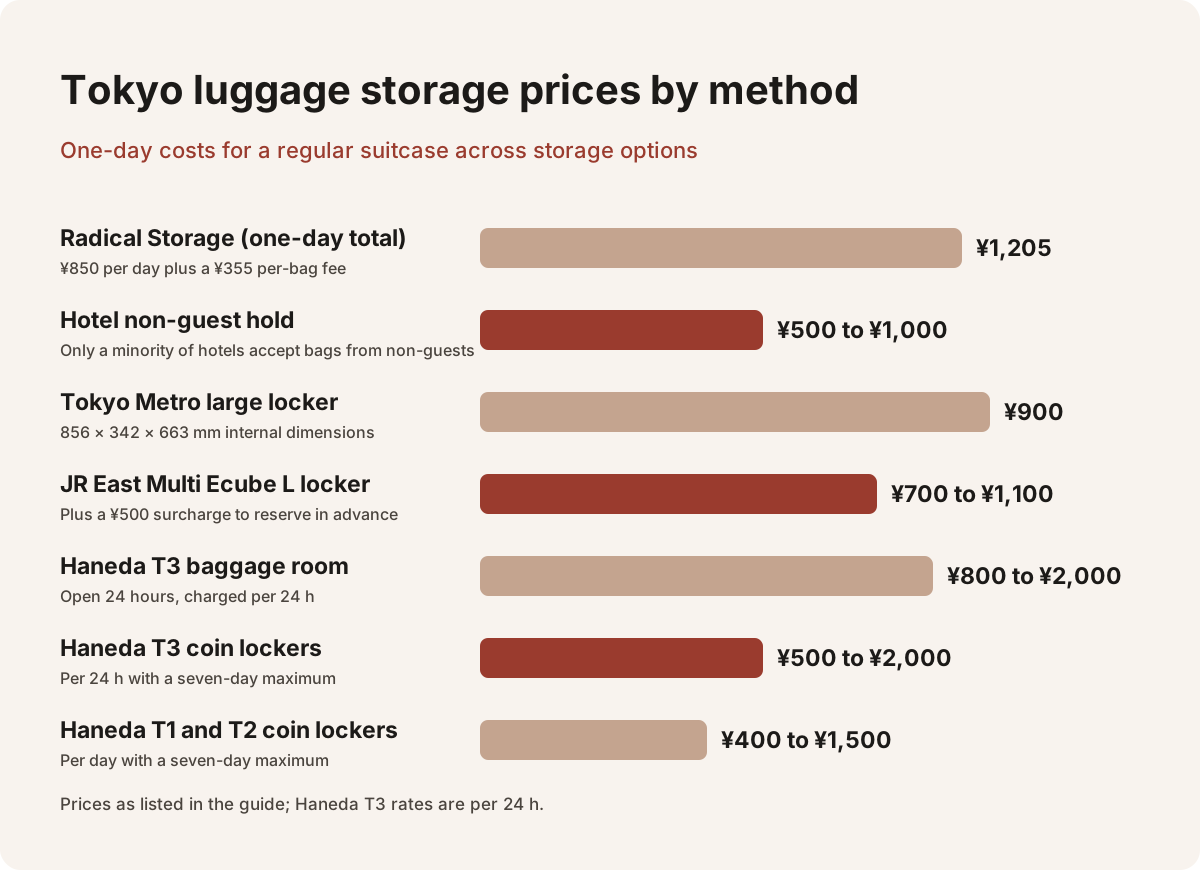
Tokyo hotels typically enforce a check-in time of 3 p.m., with a few business hotels allowing 2 p.m. That leaves a window of several hours after a morning arrival. Radical Storage points near major stations hold a regular bag for ¥850 plus a ¥355 per-bag fee once, making a one-day total of ¥1,205. Coin lockers start at ¥300 for a small door, and airport baggage rooms at Haneda and Narita accept suitcases on the spot.
Most Tokyo hotels list 3 p.m. as the earliest check-in time. The hotel may let you drop your suitcase at the front desk a little earlier if the room is ready, but a guaranteed 2 p.m. entry is rare and an 11 a.m. check-in almost unheard of. This guide from Luggage Storage in Tokyo explains exactly what you can do with your bag during that wait, and which of the city's many luggage storage methods will actually hold a full-sized suitcase.
What Is The Typical Hotel Check-In Time In Tokyo?
Most Tokyo hotels enforce a 3 p.m. check-in, though a small number of business hotels open at 2 p.m. Check-out is 10 a.m. or 11 a.m., so a room that turned over may be available a little earlier, but you cannot count on it. The gap between a morning flight and mid-afternoon is real, and the front desk rarely has the authority to override it.
Hotels in Tokyo are strict about check-in because the rooms are compact and the cleaning schedule tight. A 3 p.m. entry time is written into the reservation terms, and the front desk rarely has the authority to override it. The same is true in reverse: check-out is typically 10 a.m. or 11 a.m., and late departure past noon is almost always a surcharge. That means a traveler with a late-night flight can also face a luggage gap on the last day. What matters is that a suitcase in your hand during those hours is a genuine problem, not a minor inconvenience. Shinjuku Station at 9 a.m. with a roller bag is every bit as miserable as it sounds.
What Do You Do With Your Luggage Before Check-In?
The hours between a morning flight and 3 p.m. are the single most common luggage-storage demand in Tokyo. Carrying a suitcase through Shinjuku Station or Shibuya at rush hour is neither practical nor enjoyable. The solution is to store the bag where you plan to spend those hours, using a reliable drop‑off network, a coin locker at a major station, or a station baggage room.
Many visitors default to the hotel itself, but only a minority will hold a bag for a non-guest. A networked luggage storage service is far more dependable. Radical Storage has points across Tokyo inside hotels, shops and restaurants that are already open when you arrive. A regular suitcase costs ¥850 per day plus a ¥355 per-bag fee charged once at checkout, bringing a one-day total to ¥1,205. That is a transparent price with no hourly tariff and no hidden surcharge. The Radical Storage Tokyo network covers 249 locations, and three areas stand out for a traveler who needs to park their bag near a major station or the airport: Haneda, Ikebukuro and Shinjuku.
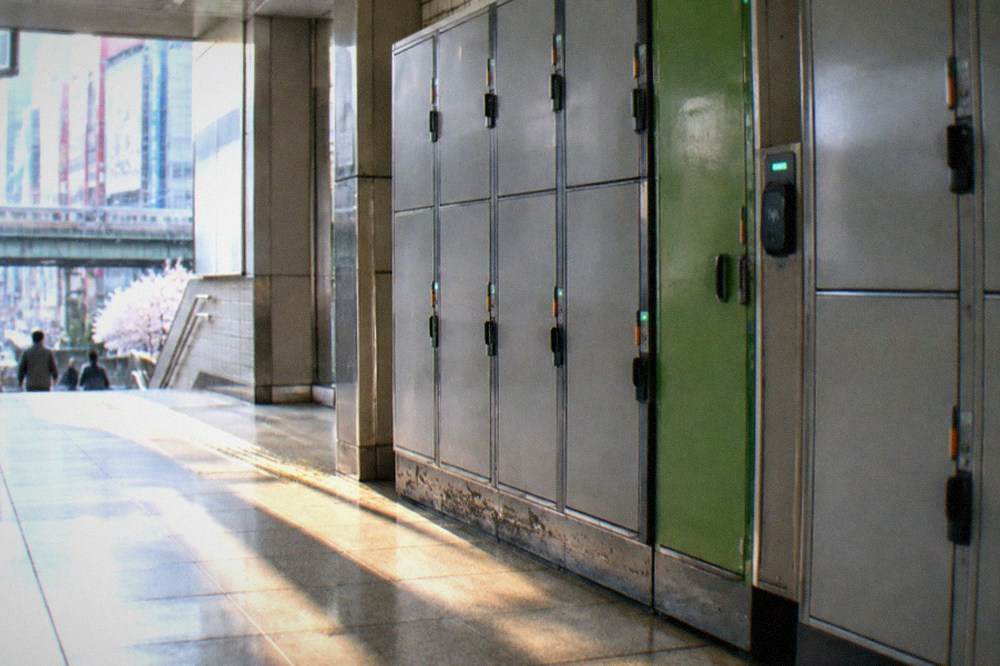
Beyond Radical Storage, every major Tokyo station has coin lockers, but the size, price and time limit rules matter. A large locker at Tokyo Metro costs ¥900 per day and has internal dimensions of 856 × 342 × 663 mm, which fits a checked suitcase if the depth is under 34 cm. JR East’s Multi Ecube L lockers measure 86 × 34 × 65 cm and cost ¥700 to ¥1,100 depending on the station, plus a ¥500 surcharge to reserve in advance. The real trap is the duration limit: Tokyo Metro lockers cap out at four days including the start date, and the clock rolls at 2 a.m., not midnight. If you leave a bag past the limit, the operator removes it to a separate storage room and keeps charging the daily rate. Collecting it requires the receipt, photo ID and the same IC card you paid with. The liability cap is ¥30,000, and any item worth more than that is forbidden in the first place, so a laptop stored in a coin locker is entirely at your own risk.
Can You Store Luggage At A Hotel You Are Not Staying At?
Some Tokyo hotels will hold a bag for a non‑guest for a few hours, particularly larger chain hotels in Shinjuku or near Tokyo Station. There is no guarantee, and the fee, if any, is at the desk’s discretion. It is not a reliable plan by itself. A networked luggage storage service, a coin locker or a station baggage room is far more dependable.
A handful of hotels will accept a bag for a fee of ¥500 to ¥1,000, but the front desk is under no obligation and can simply say no. The practice is more common in smaller, family-run hotels than in the big international chains where policy is rigid. If you are standing in the lobby with a suitcase before check-in and the room is not ready, the hotel you are actually staying at will almost always hold it behind the desk until the room is released. That is the one exception. The safer approach is to use a luggage storage service that publishes a fixed price, a clear cancellation policy and a defined liability cap. Radical Storage’s guarantee, for example, is not insurance but sets a payout ceiling of EUR 3,000 per claim if a bag is lost or damaged while in a partner’s care.
Luggage Storage Near Haneda Airport
Haneda Airport has no Radical Storage point inside the terminals, but the nearest drop‑off sits about 3.4 km away in Kawasaki. The airport’s own attended baggage rooms at Terminal 3 are open 24 hours and charge ¥800, ¥1,000 and ¥2,000 per 24 h. Coin lockers at Haneda T3 cost ¥500 to ¥2,000 per 24 h with a seven‑day maximum.
Radical Storage’s Haneda-area points are still the most convenient offline storage option for a traveler who wants to leave the airport and explore Tokyo unencumbered. You drop your bag at a local shop or hotel, receive a digital confirmation, and collect it later the same day. The nearest point is about 3.4 km from the terminal in Kawasaki, Kanagawa Prefecture, so it is not a 5‑minute walk but a short train or taxi ride. If you would rather keep your bag inside the airport, the attended storage counters at Haneda T1 and T2 open from 08:00 to 19:30 and charge the same three-tier rate per calendar day, while the T3 counters operate 24 hours and price per 24‑hour block. The distinction matters: an overnight stay at T3 resets the 24‑hour period at the drop-off time, not at midnight.
The practical choice often comes down to whether you need your bag again before heading into the city. If you land at Haneda and plan to go straight to your hotel area, storing at a Radical Storage point near Shinjuku or Ikebukuro puts the bag exactly where you will retrieve it later. If you have a meeting or a sightseeing stop near the airport first, the T3 attended counter or a large T3 coin locker works for a few hours. Check the Haneda to Tokyo with luggage guide for the exact train routes and transfer stations where lockers are plentiful.
Coin lockers inside Haneda are the other built-in option. At T1 and T2 they cost ¥400 to ¥1,500 per day with a seven-day maximum, while T3 lockers run ¥500 to ¥2,000 per 24 h and large doors cost more. All T3 lockers accept cash and IC cards but not credit cards, so carry a Suica or PASMO with enough balance. The airport also runs a bonded baggage storage for goods under customs formalities, which is not relevant for a regular suitcase.
Luggage Storage In Ikebukuro, Shinjuku And Other Busy Districts
Radical Storage runs 10 drop‑off points near Ikebukuro Station and 8 near Shinjuku Station, many inside hotels and shops that stay open late. A regular suitcase costs ¥850 per day plus a ¥355 fee once, totalling ¥1,205 for one day. The guarantee covers loss up to EUR 3,000 per claim, though it is not insurance and is awarded at the partner’s discretion.
Ikebukuro’s storage points cluster within a few minutes’ walk of the east and west exits. The nearest Radical Storage location sits about 227 m from the central gate, serving the busy Saikyo and Yamanote line corridors. Because Ikebukuro has no attended station baggage room, Radical Storage fills the gap for anyone who needs to leave a bag for more than a few hours. A full breakdown of station‑by‑station prices and locker policies is in the Tokyo luggage storage prices guide, which explains the yen figures behind every option.
Shinjuku’s eight Radical Storage points include both staffed shops and automated lockers, with two of them open 24 hours. The nearest point is roughly 187 m from the station, and 2 of the 8 locations publish locker-style access while the rest are staffed. Shinjuku Station also has coin lockers from ¥300 to ¥1,100, but the highest-capacity LW lockers that fit a wide checked suitcase are not guaranteed. A Radical Storage drop-off is the surer way to park a full-sized bag without gambling on locker availability. The rules on how long a locker can hold your bag are explained in the how long can you leave luggage in Tokyo guide.
| Station | Radical Storage points | Nearest (m) | 24h points | Coin locker count (doors) | Locker max daily price |
|---|---|---|---|---|---|
| Shinjuku | 8 | 187 | 2 | 52 (Tokyo Metro only) | ¥1,100 |
| Ikebukuro | 10 | 227 | 2 | not published (Tokyo Metro) | ¥1,100 |
| Shibuya | 7 | 306 | 3 | 146 (Tokyo Metro only) | ¥1,100 |
| Tokyo | 3 | 558 | 0 | 100 (Tokyo Metro only) | ¥1,000 |
Other Ways To Handle Luggage Before Check-In
Beyond Radical Storage, the main alternatives are a coin locker at a train station, a station attended baggage room, or luggage forwarding through a takuhaibin service. Coin lockers are cheapest for a few hours but cannot hold oversized suitcases, and the daily clock starts at 2 a.m., not at the moment you drop your bag. Forwarding is reliable but requires someone at the hotel to sign for the delivery.
Tokyo Metro coin lockers use a fixed price ladder across all 141 stations: ¥300, ¥500, ¥600, ¥900 and ¥1,000 per day, with the size tier varying by station rather than the price. The large-door dimension of 856 × 342 × 663 mm accommodates a standard checked case, but the depth of 34 cm rules out hard-shell spinners wider than about 30 cm with the wheels. JR East’s Multi Ecube lockers add an LW tier at 86 × 56 × 65 cm that fits a wide suitcase lying flat, and you can reserve one online for a ¥500 surcharge. The real ceiling is the duration: Tokyo Metro caps storage at four days including the start date, and JR East Smart Logistics at three days. In both cases, paying extra does not extend the period, and after expiry the bag is moved and a daily fee keeps running. The Tokyo Metro locker terms make clear that you need the receipt, photo ID and the same IC card you paid with to recover your bag, and the liability maximum is ¥30,000.
Luggage forwarding, or takuhaibin, is the other native Japanese solution. Yamato Transport’s TA‑Q‑BIN will take a suitcase up to 200 cm total and 30 kg, and the fare from a Tokyo address to a Kyoto or Osaka hotel is ¥2,170 for a 120‑cm band up to ¥5,410 for a 200‑cm band. Same-prefecture delivery within Tokyo costs ¥1,730 to ¥3,690. Sagawa Express accepts parcels up to 260 cm and 50 kg at a slightly higher price, and it will deliver city‑to‑Narita same‑day, which Yamato will not. The catch for a just‑arrived traveler is that the bag will not reach the hotel until late afternoon or evening, and someone must be there to sign for it. If your hotel does not have a 24‑hour reception, forwarding is useless on arrival day. The full forwarding rules and price tables are in the takkyubin explained guide.
Station attended baggage rooms are the third option, but they exist only at a handful of stations. Tokyo Station has seven, including a 30‑day service at the Yaesu South counter (S ¥500, M ¥1,000, L ¥2,000) and a same‑day-only cloak at Gransta. Ueno Station has one inside the Park Gate, and Shinagawa has a weekday‑discount counter (M ¥800 on weekdays, ¥1,000 on weekends). Shinjuku, Shibuya and Ikebukuro have no attended baggage room, despite being the city’s busiest interchanges. Haneda Airport’s own storage counters are the backup for a late‑night arrival, with Terminal 3 open around the clock and pricing per 24‑hour block.
The locker network at major stations also has a live‑availability feature many travelers miss. Tokyo Metro’s Locker Concierge site, reachable at metro.akilocker.biz, shows which stations have empty large doors in real time, and JR East’s multiecube.com lets you reserve a Multi Ecube box in advance. Both are operator‑run, not third-party apps, and they are far more accurate than a generic crowd‑sourced map. For a traveler with a 3 p.m. check-in who lands at 9 a.m., spending 60 seconds on the availability page before hitting the station exit can save a wasted tramp through the ticket gates.
| Station | Attended baggage room | Hours | Price per day | Max days |
|---|---|---|---|---|
| Tokyo (Yaesu South) | Yes, JR East Logistics | 09:30–20:00 | S ¥500 / M ¥1,000 / L ¥2,000 | 30 |
| Tokyo (Gransta B1) | Yes, Gransta cloak | 08:30–21:00 | Same tiers | Same day only |
| Ueno (3F concourse) | Yes, JR East Logistics | 10:00–20:00 | ¥500 / ¥1,000 / ¥2,000 | 30 |
| Shinagawa (Central Gate) | Yes, JR East Logistics | 10:00–19:00 | M ¥800 weekday / ¥1,000 weekend; L ¥1,600 / ¥2,000 | Not published |
| Shinjuku | No | N/A | N/A | N/A |
| Shibuya | No | N/A | N/A | N/A |
| Ikebukuro | No | N/A | N/A | N/A |
| Option | One-day cost (regular suitcase) | Max suitcase size | Max days | Guarantee / liability |
|---|---|---|---|---|
| Radical Storage | ¥1,205 (¥850 + ¥355 fee) | Operator-set | No published limit | EUR 3,000 per claim (discretionary) |
| Coin locker (Tokyo Metro large) | ¥900 to ¥1,000 | 85.6 × 34.2 × 66.3 cm internal | 4 days including start | ¥30,000 liability cap |
| Station attended (Tokyo Stn) | ¥1,000 to ¥2,000 | S ≤100 cm, M ≤200 cm, L >200 cm | 30 (most desks) | Not published |
| Yamato takuhaibin (120 band) | ¥1,730 (Tokyo to Tokyo) | 120 cm total, 15 kg | n/a | ¥300,000 per parcel |
A traveler who lands at Narita with a suitcase and a 3 p.m. check‑in can put the bag on a luggage‑forwarding van at the airport, but the earliest same‑day hotel delivery window is 18:00‑21:00. Sagawa’s cut‑off is 14:00, Yamato’s is 10:30 at T1 and T2, and 09:50 at T3. If your plane touches down after 10:00 a.m., forwarding will not work. Storage, not forwarding, is the only same‑day answer.
Common Questions About Hotel Check-In Times And Bag Storage
What is the typical hotel check-in time in Tokyo?
Most Tokyo hotels enforce a 3 p.m. check-in. A small number of business hotels allow 2 p.m., and some will store your luggage behind the front desk if you arrive early while they prepare the room. Late check-out is almost always a surcharge.
Can I store luggage at a hotel if I am not staying there?
Some hotels, particularly smaller independent ones, will hold a bag for a non-guest for a few hours at a small fee, but there is no obligation to do so. A networked luggage storage service or a coin locker is far more reliable.
Where can I store my luggage near Haneda Airport?
Radical Storage has points about 3.4 km from Haneda in Kawasaki. Inside the terminals, attended baggage counters at T3 are open 24 hours and charge ¥800‑2,000 per 24 h. Coin lockers at T3 cost ¥500‑2,000 per 24 h, with a seven‑day limit.
Are coin lockers cheaper than luggage storage services for a few hours?
Coin lockers are cheaper for half a day if the bag fits. A large Tokyo Metro locker costs ¥900‑1,000 per day, and there is no hourly rate. Radical Storage charges ¥1,205 for a one‑day bag, but the fee covers any size and you get a guaranteed drop‑off with a published guarantee.
How much does Radical Storage cost for one bag in Tokyo?
The real rate for a regular suitcase at 244 of the 249 Tokyo points is ¥850 per bag per day, plus a ¥355 per‑bag fee once at checkout. One bag for one day totals ¥1,205. Some points display a small‑bag rate of ¥750 or ¥490, but those apply only to compact items.
What happens if my luggage is too big for a coin locker?
A suitcase that exceeds 34 cm in depth or 86 cm in height will not fit in a standard large locker. JR East’s LW lockers (86 × 56 × 65 cm) accommodate a wide checked case, but they are not at every station. If the bag does not fit, the only options are a Radical Storage point, a station baggage room or luggage forwarding.