How Do I Use A Coin Locker To Store My Luggage In Japan?
A step-by-step walkthrough of using a coin locker in Japan: choosing a size, paying with coins or an IC card, the day-counting rules, and what happens if you overstay the maximum period.
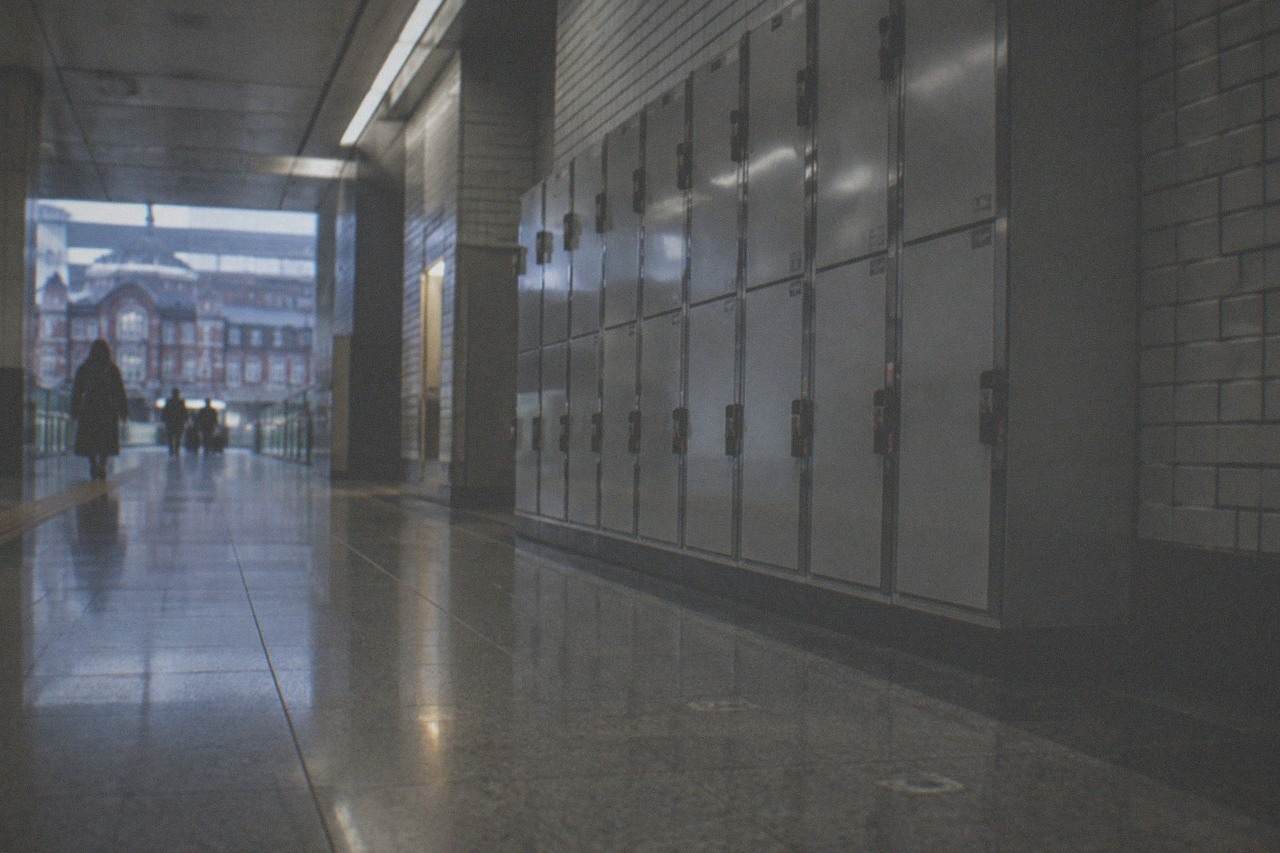
How Do I Use A Coin Locker To Store My Luggage In Japan?
You find a bank of lockers near a station exit or platform, pick an empty door your bag fits into, pay at the door with coins or a tap of an IC card, take the ticket or key, and come back before the maximum storage period ends. The machine does not ask your name, take a deposit or print a receipt with your details, so the ticket is the whole contract: lose it and retrieval becomes a phone call.
The physical routine takes under two minutes. Empty lockers show a green light or an empty keyhole; occupied or reserved ones show red. In most of Tokyo the door opens only after payment, so check the size label first, in millimetres or centimetres depending on the operator, then commit. Some JR East machines run the sequence in reverse: the door opens, you load the bag, close it, and pay at a central touchscreen that lists your door number.
What surprises first-time users is not the machine but the surroundings. Locker banks sit in the paid area, outside the ticket gates, more often than on the street, and in a big station like Shinjuku or Tokyo they can be several minutes' walk apart on different floors. Tokyo Metro's Ueno Station alone publishes 127 locker doors across its site, and Shibuya publishes 146. Those counts are doors, a specific and honest unit: when English coverage says a station "has 19 lockers", it is usually repeating a count of locations, meaning banks of lockers, not individual doors.
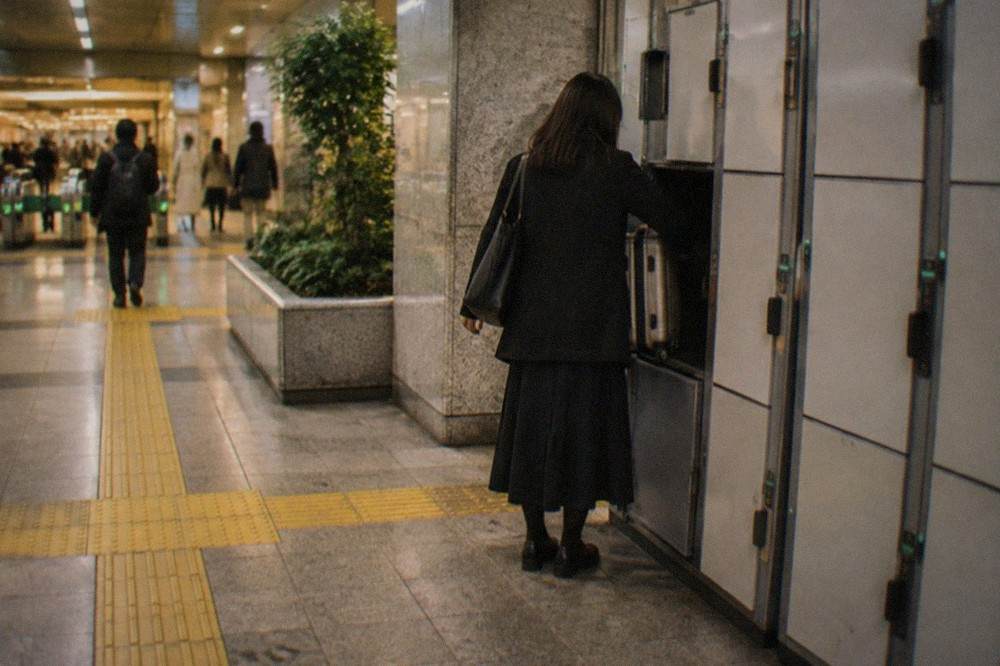
One habit worth forming on day one: photograph the locker bank and the door number the moment you close it. Japanese stations repeat the same grey doors on every concourse, and the four-digit bank number is what staff will ask for if anything goes wrong. The ticket itself, a paper slip with a QR code or a six-digit number on JR East's Multi Ecube machines, unlocks the door again, so it belongs in a zip pocket, not loose in a coat.
What Size Coin Locker Fits A Suitcase?
A standard checked suitcase does not fit the small and standard tiers: the binding constraint is depth, about 34 cm on both major systems, followed by height. A carry-on-sized case fits the medium tier on either system, and a wide or tall checked case needs the large tier, or on JR East the LW tier, which is 56 cm deep and swallows a wide checked case lying flat. Measure the case before leaving the hotel.
The two size ladders most visitors actually meet are Toei Subway's Alpha system and JR East's Multi Ecube. Toei publishes internal dimensions in millimetres: the large tier is 856 x 342 x 663, the medium 502 x 342 x 663, the standard 325 x 342 x 663, and the half tier 325 x 127 x 663. JR East publishes in centimetres: SS at 15 x 34 x 65, S at 33 x 34 x 65, M at 50 x 34 x 65, L at 86 x 34 x 65, and LW at 86 x 56 x 65.
| Operator and tier | Internal size | What it takes in practice |
|---|---|---|
| Toei large | 856 x 342 x 663 mm | A large checked suitcase, standing |
| Toei medium | 502 x 342 x 663 mm | A carry-on-sized spinner |
| Toei standard | 325 x 342 x 663 mm | A daypack or small duffel |
| Toei half | 325 x 127 x 663 mm | A slim bag or folded coat |
| JR East S | 33 x 34 x 65 cm | A backpack |
| JR East M | 50 x 34 x 65 cm | A carry-on-sized suitcase |
| JR East L | 86 x 34 x 65 cm | A large checked suitcase |
| JR East LW | 86 x 56 x 65 cm | A wide checked case, lying flat |
The depth figure is the one that ruins trips. A 26-inch spinner is typically around 30 cm deep with the wheels, so it clears the 34 cm depth and then fails the height on the standard tiers, which is why travellers stand in front of a row of empty small lockers unable to use any of them. The LW tier is the genuinely underused option: at 56 cm deep it is the only common tier that takes a wide checked suitcase flat, and English-language coverage of Tokyo lockers rarely mentions it.
A second trap sits inside the reservation systems. The Multi Ecube units you can reserve in advance through the operator's own site are 55 cm deep, not 65 cm: the same tier names on a shallower box. A bag that fits an ordinary L locker can fail a reservable one by ten centimetres. Anyone reserving a specific door should re-check the dimensions on the reservation screen rather than assuming the walk-up sizes carry over.
When a case is genuinely oversized, the honest answer is that no coin locker tier in Tokyo takes it, and the alternatives are a staffed baggage room, a paid counter or a staffed storage point in a shop. That decision, and the prices behind it, is covered further down this page.
How Much Does A Coin Locker Cost At Tokyo Stations?
Tokyo Metro charges 300, 500, 600, 900 and 1,000 yen by door size, and those prices are identical at every Metro station in the city: only the mix of door sizes varies. JR East prices do vary by station, roughly 300 to 1,100 yen by tier, with a 500 yen surcharge per box for advance reservation and a 100 to 200 yen peak-season surcharge on medium and large doors at some stations.
The Metro figure comes straight from the operator's own locker page, which publishes one price ladder across all 141 station rows, and that single fact contradicts a lot of English travel writing that describes Tokyo locker pricing as station-dependent across the board. On Metro it is not. On JR East it genuinely is: the operator's own live data shows Tokyo and Shinjuku at 700 yen for M and 900 for L, against Omiya and Hodogaya at 600 and 800, per the Multi Ecube reservation site.
| Operator | Price range by tier | Reservation | Notes |
|---|---|---|---|
| Tokyo Metro | 300 / 500 / 600 / 900 / 1,000 yen | Not offered network-wide | Same prices at every Metro station |
| JR East walk-up | SS 300 to 400, S 400 to 500, M 500 to 900, L 700 to 1,100, LW 800 to 1,000 yen | +500 yen per box on Multi Ecube | Prices vary by station |
| Toei smartphone reservation | +100 small, +200 medium, +300 large yen | Reserve from 2 hours ahead | 7 stations only |
| Airport lockers, Narita | 400 / 600 / 800 yen per day | +500 yen on Multi Ecube at T2 | Max 8 days |
| Airport lockers, Haneda T1 and T2 | 400 / 500 / 600 / 1,000 / 1,500 yen per day | Not offered | Max 7 days |
The Metro Commerce locker page is also where the network's live availability service lives. Locker Concierge, linked from that same page, shows free doors at Metro stations before you walk there, and it is the operator's own service rather than a third-party app. JR East's equivalent is the Multi Ecube site above. In peak season, and at any station near a major event, checking one of those two pages first saves a twenty-minute circuit of full banks.
How Long Can You Leave A Bag In A Coin Locker?
Tokyo Metro lockers allow four days including the day you start; JR East's Multi Ecube lockers allow three, and paying more does not extend the period. The day counter rolls over at 2 a.m., not midnight, and the first and last days each count as a full day however briefly you used them. After expiry the operator empties the locker, holds the contents for 30 days from your original start date, and keeps charging the daily rate.
The two operators' terms disagree, and the difference is worth knowing before a five-day trip out of the city. Metro Commerce's terms, dated November 2024, state the rental period is four days including the start day. JR East Smart Logistics' terms, dated ten days earlier, set three days and add, in so many words, that paying more money does not get the bag past day four. The clock itself is the subtle part: the locker runs from first train to last train, and a day is added at 2 a.m., so a bag dropped at 11 p.m. and collected at 9 a.m. has consumed two days. The wider set of guides lives on Luggage Storage in Tokyo.
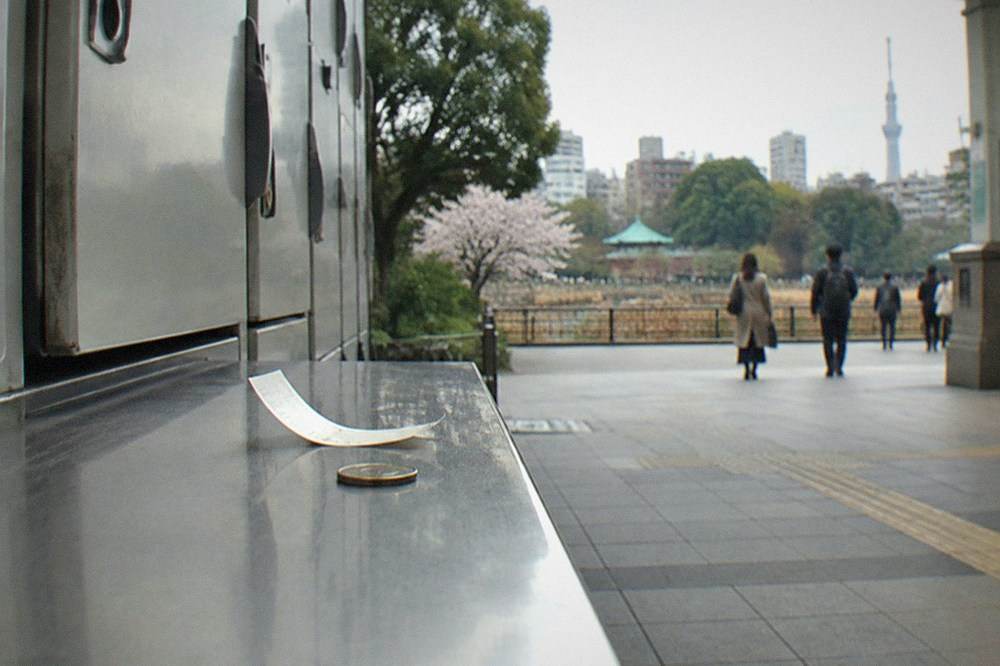
What happens after the period expires is spelled out in Metro Commerce's terms, sections 7(1) to 7(4), and JR East Smart Logistics is materially identical. The operator unlocks the door, inspects the contents and moves them to a designated holding place. The same daily rate keeps running throughout that separate storage. Your own travel costs to go and collect the bag are yours. To retrieve it you need the receipt, photo ID, and the same IC card you paid with, and the separate storage fee is cash only. After 30 days from the original start date the contents are deemed abandoned and the operator may dispose of them, and may bill for the cost of disposal. JR East disposes of food immediately, with no 30-day grace at all.
Two more rules sit inside the same terms and catch people who use a locker as a base camp. One open ends the rental on a Multi Ecube locker: retrieve the bag and you cannot put it back, and a multi-day reservation is forfeited with no refund. The only grace is a yellow reopen button that gives you 15 minutes. And for anything longer than the maximum period, a station baggage room or a storage point with staff is the honest answer, not a second round of coins.
What Payment Methods Work At Japanese Coin Lockers?
Cash and transit IC cards, Suica and PASMO, cover almost every locker in Tokyo. Some JR East banks additionally take electronic money and QR payment apps, and a small number of banks are transit-IC-only. Payment methods are displayed on the locker body itself, so check the sticker on the bank before loading a bag if you are carrying only cash or only a card.
The cleanest published detail comes from JR East's own Ueno Station guide: most banks there take cash and transit IC cards, some are transit-IC-only, and two banks additionally accept Rakuten Edy, iD, QUICPay, Alipay, WeChat Pay and PayPay. Metro Commerce's terms decline to enumerate and simply direct you to pay by whatever means is displayed on the locker body. That is not evasion, it is an accurate description of a mixed estate of machines installed across decades.
The retrieval side has one recorded conflict worth acting on. The Multi Ecube terms say the IC card you paid with is required at retrieval; the Multi Ecube FAQ says the printed ticket unlocks the door by QR code or its six-digit number regardless of how you paid. Both are current official pages from the JR East group. The safe line, and the one worth following every time: keep the paper ticket. If both the ticket and the card are lost, the Multi Ecube service line is 0120-829-532, open 08:00 to 21:00, and staff will need the four-digit door number.
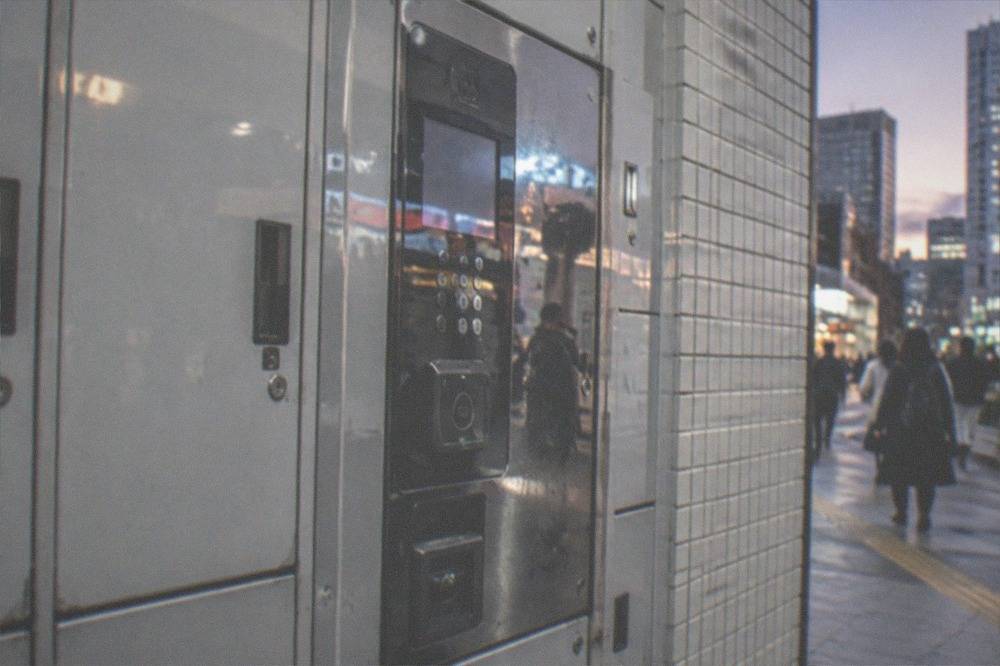
One mechanical detail that catches visitors from countries where lockers take a deposit: Japanese coin lockers do not. The door opens on payment and the money is not returned when you collect the bag. There is also no hourly tariff at station lockers, a few hours is billed as a full day, and the first day is charged in full even if the stay is twenty minutes. Only Narita Airport's Terminal 2 basement and Terminal 3 second floor offer a genuine six-hour rate, 300, 500 or 600 yen, with an extension fee per 24 hours after that.
What If Your Bag Does Not Fit, Or Every Locker Is Full?
When the size ladder fails or the banks are full, the alternatives are a station baggage room, a paid counter, or a staffed storage point. Tokyo Station has seven attended baggage rooms at 500, 1,000 and 2,000 yen per bag per day by size, with a 30-day maximum. Staffed Radical Storage points cost 850 yen per bag per day plus a 355 yen one-time fee, so one bag one day is 1,205 yen.
The station baggage room is the option most visitors never hear about, because it is concentrated in one place. Tokyo Station has seven, run by JR East Logistics and others, at 500 yen for a bag up to 100 cm, 1,000 yen up to 200 cm and 2,000 yen above that, with a 30-day maximum at most of them. Ueno has one inside the Park Gate, Shinagawa has one inside the Central Gate, and Shinjuku has Sagawa counters at Busta and the Odakyu Travel Center. Shibuya and Ikebukuro have none of their own, and JR East's own travel-centre page states its luggage storage exists at Tokyo Station only.
Staffed storage points work differently: a shop or hotel front desk that takes bags through the Radical Storage network, this site's partner, which neither owns nor operates any of them. At Harajuku, for example, there are four points, rated 4.93 from 38 reviews, with the nearest 172 metres from the station: one locker point and three staffed shop counters. Staffed points hold any shape of bag, which is the whole point of them when a coin locker's 34 cm depth has already rejected the case. For the full picture on sizes, see the Tokyo coin locker sizes guide.
Ginza runs smaller but deep-reviewed: one point, rated 4.84 from 118 reviews, with the nearest 1,131 metres from the station concourse. Near Haneda Airport the four published points are all lockers rather than staffed counters, and none sits inside a terminal: the nearest is about 3.4 km away in Kawasaki, Kanagawa, across a prefecture boundary. That distance is not a rounding issue, it is the real shape of airport storage on this network, and the airport's own attended counters, priced from 800 yen per day by size, are the practical in-terminal option there.
| Alternative | Price | Maximum period | Best for |
|---|---|---|---|
| Tokyo Station baggage room | 500 / 1,000 / 2,000 yen per bag per day | 30 days | Oversized bags, long holds |
| Haneda Terminal 3 attended counter | 800 / 1,000 / 2,000 yen, per 24 hours | 2 weeks | Airport days, including nights |
| Narita Promotion Foundation counter | 500 / 700 / 1,100 yen per piece per day | Not published | Cheapest attended storage at Narita |
| Staffed Radical Storage point | 850 yen per bag per day plus 355 yen once | Varies by point | Odd shapes, full lockers, no size ladder |
Is A Coin Locker Safe, And What Is It Actually Liable For?
Every major locker operator in Tokyo caps its liability for lost or damaged contents at 30,000 yen, and that cap is a contract term, not Japanese law. The same terms ban storing valuables, including anything worth 30,000 yen or more, so an item the cap would have mattered for was never allowed in. A coin locker is excellent against opportunistic theft and poor against losing a laptop: do not put one in.
Four operators publish the identical 30,000 yen figure: Metro Commerce for Tokyo Metro, JR East Smart Logistics for the Multi Ecube estate, Tokyu and Keio. There is no statutory cap; the number is set in each operator's terms. The banned-items list is where it bites: cash, securities, jewellery, precious metals, cameras and anything worth 30,000 yen or more cannot go in at all, and if a prohibited item is lost, the terms pay nothing even where the operator was at fault. Losing the key, ticket or IC card is expressly your loss; Keio alone publishes the amounts, 2,000 yen for a lost key and 1,000 for a lost card or receipt.
Japanese consumer law does still set a floor. The Consumer Contract Act voids clauses that totally exempt a business from liability, and the Commercial Code means a posted notice of non-responsibility does not wipe out the duty of care a business owes customers on its premises, even for free storage. The practical position, though, is unchanged: a locker will not make you whole for a laptop, and a laptop was never an allowed item.
That is the real difference between a locker and a staffed point, and it is worth stating plainly rather than in marketing language. Radical Storage's guarantee is not insurance, its own terms say so in clause 9.2.2, and it can be withdrawn at any time under clause 9.2.1. Payouts are capped at EUR 3,000 per claim, a figure the terms state in euros. The honest comparison is not which one is safe and which is risky; it is that a locker's terms exclude valuables outright, while a staffed point's guarantee is capped, discretionary in structure and never a substitute for travel insurance.
Common Questions About Using A Coin Locker In Japan
How do I use a coin locker to store my luggage in Japan?
Find an empty bank, usually near a station exit inside the ticket gates, choose a door your bag fits by checking the posted internal dimensions, pay at the door with coins or a tap of a Suica or PASMO card, and keep the ticket or key. Return before the maximum period, four days on Tokyo Metro lockers including the start day and three on JR East Multi Ecube lockers, and unlock the door with the ticket, the key or the same IC card you paid with.
Can I pay with a Suica or PASMO card?
Yes, at most locker banks in Tokyo. Most JR East banks take cash and transit IC cards, some take only transit IC cards, and a few also accept electronic money and QR payment apps. The accepted methods are displayed on the locker body itself, so check the sticker before loading your bag. Keep the paper ticket even when you pay by card, because the ticket unlocks the door regardless of payment method on JR East's own FAQ.
How long can I leave luggage in a coin locker?
Four days including the day you start on Tokyo Metro lockers, and three days on JR East Multi Ecube lockers, where paying more does not extend the period. The day counter rolls over at 2 a.m., and the first and last days each count as a full day however briefly you used the locker. After expiry the contents are moved to a holding area, the daily rate keeps running, and they are held for 30 days from the original start date before being deemed abandoned.
What happens if I lose the key or the ticket?
On Multi Ecube machines, call 0120-829-532 between 08:00 and 21:00 with the four-digit door number. On other systems, go to the station staff counter with photo ID; Metro Commerce and JR East Smart Logistics charge a prescribed amount for a lost key, ticket or IC card, and Keio alone publishes its figures, 2,000 yen for a lost key and 1,000 for a lost card or receipt. Losing the ticket is expressly your loss under the terms.
What if my suitcase is too big for a coin locker?
The binding constraint is depth, about 34 cm on both major systems, so a wide or tall checked case needs a large tier or JR East's LW tier, which is 56 cm deep. If no tier fits, use a station baggage room, 500 to 2,000 yen per bag per day at Tokyo Station with a 30-day maximum, or a staffed Radical Storage point at 850 yen per bag per day plus a 355 yen one-time checkout fee, which holds any shape of bag because there is no door to fit through.