Tokyo To Nikko Day Trip Without Your Luggage
A Nikko day trip is one of the easiest runs out of Tokyo, until a suitcase turns it into a workout. This page is about the bag: where it stays, what that costs, and which alternative wins on the day.
Short answer
Leave the bag in Tokyo and travel light. Staffed storage through the Radical Storage network runs 850 yen per bag per day plus a 355 yen per-bag checkout fee, so one bag for one day is 850 plus 355, or 1,205 yen in arithmetic on the operator's own published figures. Asakusa and Ueno, the two Nikko departure stations, hold 13 and 8 staffed points respectively.
Can You Do A Tokyo To Nikko Day Trip Without Dragging A Suitcase?
Yes, and it is the only sensible way to do it. Nikko is a long return run from Tokyo, the walking once you arrive is uphill and uneven between the shrine gates, and none of it rewards a wheeled case. Two stations carry the trip: Asakusa, where the Tobu line runs, and Ueno, where the JR Utsunomiya line starts. Both sit inside dense storage coverage, so the bag problem is genuinely solved before you board.
The temptation is to think of the bag as a small problem. It is not, on this route. The train ride out of Asakusa or Ueno runs well over an hour each way, the return often lands in the evening, and between those two sits a day of stone steps, bus transfers between Nikko's scattered sights, and shrine approaches built for pilgrims rather than rollers. A suitcase on that route does not slow the day down. It removes whole sections of it.
The honest framing is that a traveller to Nikko has exactly four options for the bag, and this page walks through each in turn. Store it at a staffed drop-off point near the departure station. Park it in a coin locker and accept the duration and size rules that come with that. Forward it ahead with a luggage courier, so it travels without you. Or, if the Nikko day is part of a longer run down the Shinkansen network, plan around the oversized baggage rule that starts at 160 cm.
One thing this page is not: a guide to Nikko itself. The shrines, the lake, the waterfall, the food all have their own coverage elsewhere, and none of it changes the answer to the question that actually decides the day, which is what happens to the suitcase at 08:30 in the morning. Every option below follows what the operators themselves publish, including the parts a first page of search results tends to leave out.
Where Do You Leave The Bag Before The Train To Nikko?
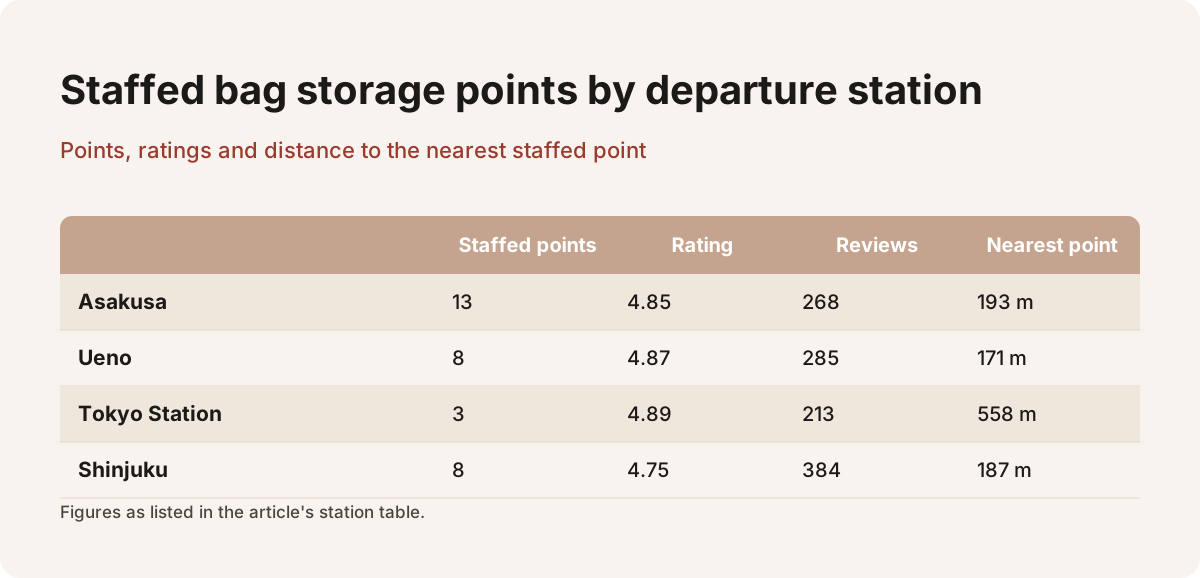
Leave it within walking distance of Asakusa or Ueno, not at your hotel. Asakusa holds 13 staffed storage points with a 4.85 rating across 268 reviews, the nearest 193 m from the station. Ueno holds 8 staffed points at 4.87 across 285 reviews, the nearest 171 m away. Both clusters are Radical Storage partners, staffed, and open through normal shopping hours, which is what a day trip actually needs.
The station choice matters because the two Nikko routes start in different places. The Tobu departure leaves from Asakusa, which means the storage cluster there is the one that fits the morning: drop the bag within a few minutes of the gate, ride out, ride back, collect. The JR route leaves from Ueno, where the storage cluster sits equally close. Either way, the bag never crosses the ticket gate, which is the entire point.
The coverage picture, drawn from the published numbers for each area:
| Departure station | Staffed points | Rating | Reviews | Nearest point | Lockers listed |
|---|---|---|---|---|---|
| Asakusa | 13 | 4.85 | 268 | 193 m | 0 |
| Ueno | 8 | 4.87 | 285 | 171 m | 0 |
| Tokyo Station | 3 | 4.89 | 213 | 558 m | 0 |
| Shinjuku | 8 | 4.75 | 384 | 187 m | 2 |
Read the last column carefully before treating it as a contradiction of anything. It counts storage points listed in a given area, not individual doors, and the areas above are staffed-heavy by design. Ueno also carries one of the best attended baggage rooms in the city at the JR East Logistics window inside the Park Gate, open daily 10:00 to 20:00 at 500, 1,000 or 2,000 yen per bag per day by size, with a 30-day maximum. That is a genuine second option on the JR side of the Nikko trip, and it is often the better one for a large case, because a staffed window has no internal dimensions to satisfy.
Ueno deserves one more note before moving on. Its staffed points cluster tightly around the station, and the area's 4.87 rating across 285 reviews is one of the deepest review pools of any station cluster in the city, so the coverage there is not thin or new. For a day that starts early and ends late, depth of options matters more than any single point's headline number, because the nearest one may be full or closed when the return train lands.
Asakusa's own cluster is the deepest of all in the districts group: 13 staffed points, the nearest 193 m out, and a rating of 4.85 across 268 reviews. One closure needs saying plainly. The free luggage holding service at the Asakusa Culture Tourist Information Center ended on 31 March 2026, with street congestion from suitcases given as a cause by Taito City itself. If an older article or forum thread points you at that building, it is pointing at a service that no longer exists.
What Does A Day Of Storage Actually Cost?
850 yen per bag per day for a regular bag, plus a 355 yen per-bag fee charged once at checkout, never per day. One bag for one day is 850 plus 355, which is 1,205 yen. There is no hourly tariff: a few hours is billed as a full day. Radical Storage advertises 490 yen per day, but that is a small-bag rate at 11 of the 249 Tokyo points on file.
The arithmetic is worth doing in the open, because the advertised number and the paid number are different things. Radical Storage's own Tokyo page leads with a from-490-yen figure, and that figure is real, at the 11 points that publish a small-bag rate. A traveller with a normal suitcase pays the regular rate at 244 of those 249 points. Writing the 490 as the price of luggage storage in Tokyo would understate a one-day booking by roughly two and a half times, so this page does not write it that way.
The figures that make up any booking, and what each one actually is:
| Figure | What it is |
|---|---|
| 850 yen per bag per day | The regular-bag day rate, at 244 of the 249 Tokyo points |
| 355 yen per bag | A checkout fee, charged once per booking, not per day |
| 1,205 yen | 850 plus 355, the arithmetic for one bag for one day |
| 490 yen per day | What the operator advertises; a small-bag rate at 11 points |
| 750 yen on a card | The small-bag rate staffed points display; not a cheaper point |
A Nikko day trip sits in the third row of that table. Leave the bag at 08:30, collect it at 21:30, and the calendar has still only turned one page, so the day rate is charged once and the checkout fee once. The fee is per bag and charged at booking, not per day.
Two honesty notes attach to any Radical Storage price on this site. The Guarantee that comes with a booking is not insurance, their own terms say so in clause 9.2.2 and allow withdrawal at any time under 9.2.1, and payouts are capped at EUR 3,000 per claim in clause 9.4. And the ratings quoted on area pages belong to Radical Storage, not to this site, which sells nothing and holds no bags. It is an independent guide that owns no storage point and holds no bags.
Not every reader leaves from Asakusa or Ueno. Plenty stay on the west side of the city, and Shinjuku is the deepest station cluster anywhere in this data: 8 storage points, 6 of them staffed, 2 locker listings, a 4.75 rating across 384 reviews, and the nearest point 187 m from the station. That cluster answers the same morning question for anyone whose Nikko plan starts with a ride across town to Asakusa or Ueno first.
The comparison that actually matters for a day trip is not between storage points, because at a like-for-like 850 yen they cost the same. It is between a staffed point and the coin lockers sitting ten metres further into the station, which are cheaper for a single day and come with rules most travellers never read. That is the next section, and it is where the real decision lives.
Coin Lockers Or A Staffed Drop-Off For A Day Away?
For one day, a coin locker is usually cheaper: Tokyo Metro lockers run 300 to 1,000 yen, JR East 300 to 1,100 depending on station and size. But the duration rules bite. Tokyo Metro allows 4 days including the start day; JR East Smart Logistics allows 3, and paying more does not extend it. The depth is the binding limit: about 34 cm on both systems, which fails many hard-shell suitcases on the standard tiers.
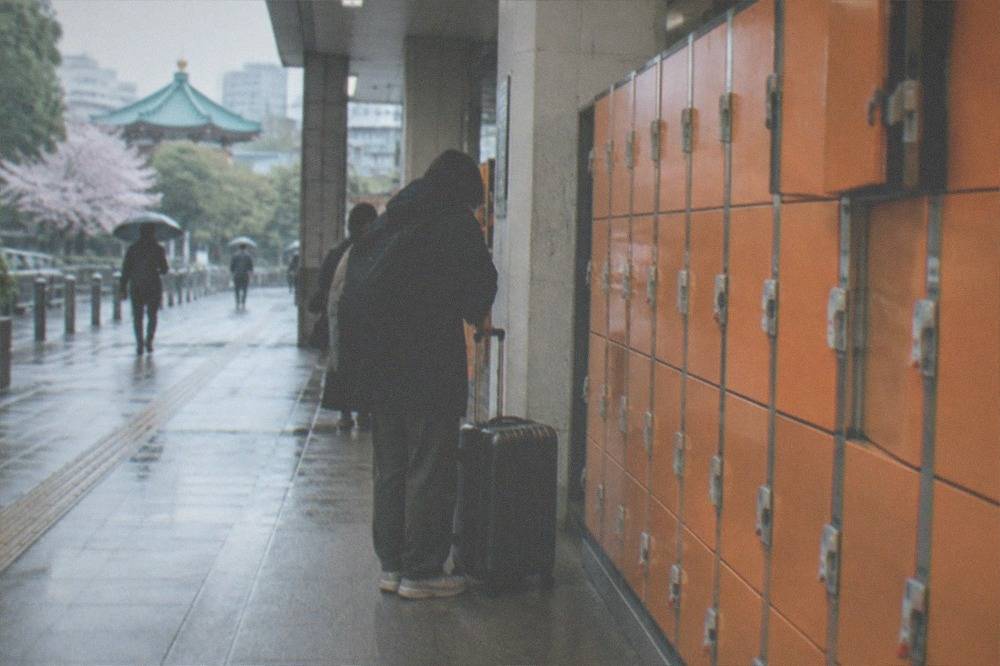
Start with what actually decides whether a suitcase fits: the internal dimensions, not the door. Toei's published internal sizes for its large tier are 856 x 342 x 663 mm, and the 342 mm depth is the constraint that matters, because a 26-inch spinner is typically around 30 cm deep with wheels and then fails on height instead. JR East's Multi Ecube tiers go up to an L at 86 x 34 x 65 cm, and there is a tier most English coverage never mentions: the LW, at 86 x 56 x 65 cm, the only common tier that takes a wide checked suitcase lying flat. Reservation-capable Multi Ecube units are shallower again, 55 cm rather than 65, same tier names.
The prices, per operator, as published:
| Operator | Size ladder | Price range | Maximum period | Key rule |
|---|---|---|---|---|
| Tokyo Metro | One ladder at all stations | 300 to 1,000 yen | 4 days incl. start day | A day is added at 02:00 |
| JR East Multi Ecube | SS, S, M, L, LW | 300 to 1,100 yen | 3 days | Paying more does not extend it |
| JR East reservation | Any tier | +500 yen flat per box | Same | Forfeited on early opening |
| Toei smartphone reservation | 7 stations | +100 to +300 yen | Same | Reserve from 2 hours ahead |
One sentence here contradicts a surprising amount of English travel writing: Tokyo Metro locker prices do not vary by station. The same five-step ladder, 300, 500, 600, 900 and 1,000 yen, is published across all 141 station rows on the operator's own locker page. Only the mix of door sizes varies. JR East genuinely does vary, Tokyo and Shinjuku sitting at the top of its M and L range, and JR East also adds a documented 100 to 200 yen peak-season surcharge on its larger tiers.
For a Nikko day trip the duration rules barely bite, since one day fits every operator's window. They start to matter the moment a plan stretches: a bag abandoned past the window is opened by the operator, moved, billed at the same daily rate for separate storage, held 30 days from the original start date, and collectable only with the receipt, photo ID and the same IC card used for payment, with the separate storage fee in cash only. JR East disposes of food immediately, with no grace period at all.
The honest comparison is therefore not one of price alone. A locker is cheaper for a single day, when the bag fits the depth. A staffed point takes any size, needs no coin or IC card gymnastics, and is the only option when the case is a wide or oversized one. Both are real alternatives, and this site sells neither lockers nor anything else.
Forwarding The Bag Ahead Instead Of Storing It
Takuhaibin, the luggage courier, sends the bag ahead instead of parking it. Yamato's published Tokyo-to-Tokyo fares run 1,730 yen for the 120 band up to 3,690 yen for the 200 band, tax included. Hard caps: 200 cm three-side total, 30 kg, no side over 170 cm. Sagawa goes to 260 cm and 50 kg. No transit time is published for any lane, so no delivery day may be promised here.
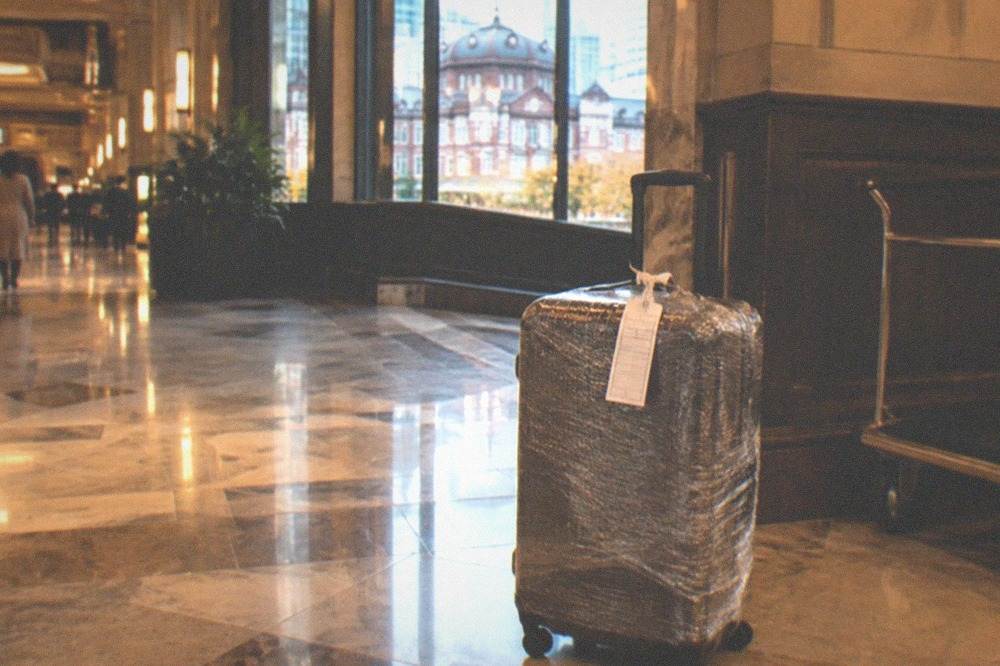
For a pure Nikko day trip, forwarding is usually the wrong tool: the bag would need to be somewhere useful by the time the return train reaches Tokyo, and the same-day airport-to-hotel products do not cover that shape of trip. Where forwarding earns its place is the longer run. A traveller doing Nikko on the way out of a Tokyo hotel, or heading straight on to Kyoto or Osaka afterwards, can put the suitcase on a courier and ride to Nikko with a daypack.
The fares that matter, all published by the operator and tax included:
| Yamato band | Tokyo to Tokyo | Tokyo to Kyoto or Osaka |
|---|---|---|
| 120 (up to 120 cm or 15 kg) | 1,730 yen | 2,170 yen |
| 140 | 2,090 yen | 2,780 yen |
| 160 | 2,410 yen | 3,160 yen |
| 180 | 3,030 yen | 4,480 yen |
| 200 | 3,690 yen | 5,410 yen |
The band is the greater of the three-side total in centimetres or the actual weight, and a suitcase is charged at its measured size within the 200 cm and 30 kg caps, verbatim from the operator's own size page. Small discounts exist for carrying a parcel to a branch or convenience store yourself, and sending a parcel to an airport adds 660 yen. Only Seven-Eleven and FamilyMart take Yamato parcels; Lawson belongs to Japan Post. And one Yamato rule that catches Airbnb users: no delivery to unstaffed lodging unless someone is certainly there to receive.
Sagawa is the carrier that matters for a genuinely oversized case, since its large-size service runs to 260 cm and 50 kg where Yamato stops at 200 and 30. Japan Post's Yu-Pack caps at 170 cm and 25 kg. There is also a hotel-to-hotel Shinkansen product, luggage forwarding by train rather than van, but that belongs to the next section's world, and the numbers for it sit there.
Transit time is the gap that must be stated honestly. Yamato publishes it only through a postcode tool that returns nothing for public scraping, and no public service-level table exists for personal customers, confirmed by the operator's own business FAQ. Any English page promising a delivery day for a forwarding lane is filling that gap from memory. This one will not.
What If The Day Trip Runs By Shinkansen?
The oversized rule triggers at a three-side total over 160 cm, and the reservation is mandatory and free on the Tokaido, Sanyo, Kyushu and Nishi-Kyushu lines. Board without one and the carry-on fee is 1,000 yen, once per journey. The absolute maximum on board is 250 cm. On the JR East Shinkansen lines out of Tokyo, Tohoku, Hokkaido, Joetsu, Hokuriku, Yamagata and Akita, there is no reservation and no fee at all.
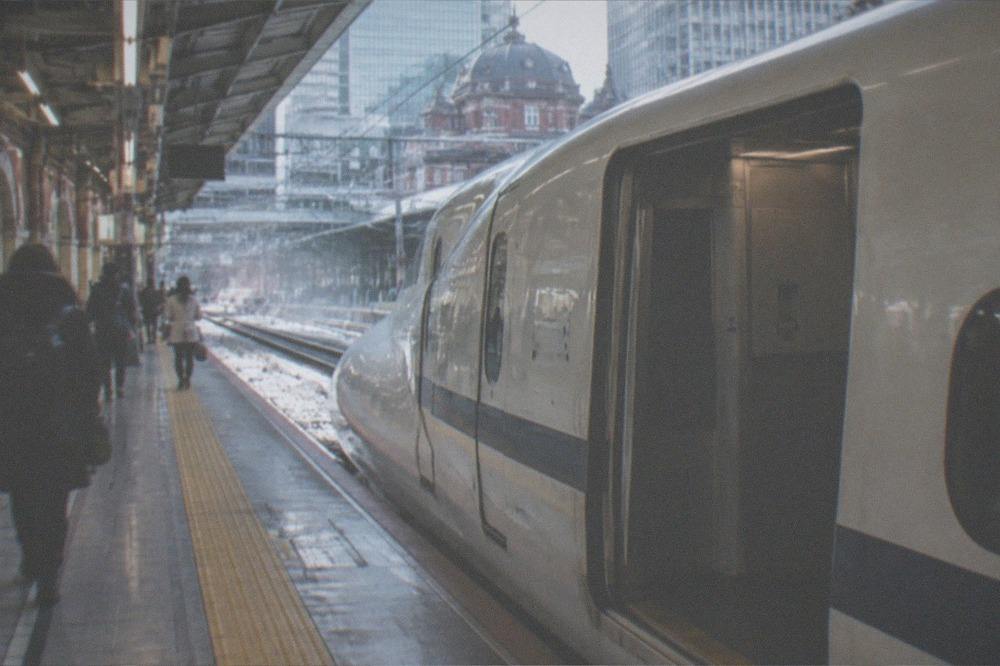
Nikko itself is not a Shinkansen destination, but plenty of day trips from Tokyo are, and the bag rules on those trains are the exact reason some travellers end up storing or forwarding a case they could otherwise carry. The full picture, from the operators' own tariff pages:
| Rule | Value | Where it applies |
|---|---|---|
| Oversized threshold | 3-side total over 160 cm | Tokaido, Sanyo, Kyushu, Nishi-Kyushu |
| Reservation | Mandatory, same price as an ordinary reserved seat | Same lines |
| No-reservation fee | 1,000 yen once per journey | Same lines, in the tariff text itself |
| On-board maximum | 250 cm, nothing over 2 m long | Network-wide |
| Free allowance | 2 items, each up to 250 cm and 30 kg | Unchanged by the rule |
| JR East lines out of Tokyo | No reservation, no fee | Tohoku, Hokkaido, Joetsu, Hokuriku, Yamagata, Akita |
That JR East exemption carries a caveat that must travel with it: no reservation also means no guaranteed space. Storage areas exist only on some trains, work first-come, and cannot be booked. A reader taking a big case to Sendai or Kanazawa has no reserved slot waiting, which is a materially different promise from the Tokaido's free-but-mandatory seat.
The 2025 change most coverage gets wrong is worth restating here because it changes behaviour. Since 1 July 2025, every 16-car Tokaido set carries six reservation-free deck luggage corners, in cars 3, 5, 7, 9, 13 and 15. The trap is that those free areas explicitly may not hold a bag over 160 cm. Writing that the Shinkansen now has free luggage space, so no reservation is needed, is false, and the operator's own pages say so. Exempt items, regardless of size, include strollers, musical instruments, sports equipment and wheelchairs.
For a bag that clears the rule, none of this matters, and the train simply is the storage: the case rides in the oversized space by the door and the day trip proceeds. For a bag that does not clear 160 cm, or a traveller on a JR East line who wants certainty rather than first-come space, the earlier sections of this page are the answer, and the bag stays behind in Tokyo. The rail operators' own pages carry the full rules, JR Central's oversized baggage guide and JR East's carry-on guide both linked from the tariff sources above.
Coming Back Late: The Hours That Decide Where The Bag Waits
Hours, not price, are the usual trap on a day trip. Of the 249 Tokyo storage points on file, 146 are not open 24 hours, so the operator's 24/7 page titles are a template, not a fact. Coin lockers run from first train to last train, with a day added at 02:00. The Ueno JR baggage room closes at 20:00. Match the collection time to the return train before choosing a drop-off, not after.
A Nikko return that lands at Asakusa at 21:00 finds a very different station from a 17:00 arrival. Staffed points in the districts keep shop hours, because they are shops, hotels and cafés. The fixed facilities keep facility hours: the Ueno JR East Logistics window runs daily 10:00 to 20:00, the Asakusa Tobu information center 07:20 to 19:00 year-round, and the coin lockers from first train to last, with the 02:00 day rollover written into the terms themselves.
Two rules from the locker terms deserve their own sentence. The rental period at Tokyo Metro lockers runs from first train to last train, and a day is added at 2 a.m., with both the first and last days counted as whole days however briefly the locker was used. And on a Multi Ecube locker, one opening ends the rental: retrieve the bag mid-period and it cannot go back, a multi-day reservation is forfeited without refund, and the only grace is a 15-minute reopen button on the screen.
None of this is hostile. It is just the difference between a facility that closes and a staffed point whose hours follow a real business. The planning move is small: check the return train time first, then pick a drop-off whose hours cover it, then stop thinking about the bag. A point that is 193 m from the gate and closes at 19:00 loses to a point 500 m away that is open when the 21:10 pulls in.
One caution that applies to any station plan: never trust a station facility map as evidence that a service does not exist. Tokyo Station's own map shows none of its seven baggage rooms. For what genuinely exists where, the staffed-room picture is on Luggage Storage in Tokyo and its station pages, and the duration rules behind every option are set out in detail in how long you can leave luggage in Tokyo.
A Sample Bag Plan For A Nikko Day
Departing from Asakusa on the Tobu line: drop the bag at one of the 13 staffed points within 193 m of the station, pay 850 yen plus the 355 yen checkout fee for the day, and collect after the return. Departing from Ueno: use one of the 8 staffed points or the JR baggage room inside the Park Gate at 500 yen for a case up to 100 cm. Either way, the bag never rides to Nikko.
Asakusa is the natural base for this plan because the Tobu line starts there and the storage cluster is the deepest in the districts group. The morning is short: arrive, drop, walk to the platform. The evening is short in reverse. The cost is the one-day row of the arithmetic above, 1,205 yen for one regular bag, and nothing about the shrine route needs to be planned around a suitcase.
For a traveller ending the day elsewhere in the city, or starting from the west side, the shape changes slightly. The Shinjuku cluster, 8 points with 6 staffed, covers the morning ride into Asakusa. The Harajuku cluster, 4 points at 4.93 across 38 reviews with the nearest 172 m out, covers a Meiji Shrine morning before an afternoon train. And the coin locker route stays open as the cheap single-day fallback whenever the case is slim enough for a 34 cm depth, with the full size picture in Tokyo coin locker sizes and what fits.
The plan that most often goes wrong is the forwarding one, not because the service fails but because the expectations do. Transit time is unpublished for every lane, so a bag sent ahead arrives when it arrives, and a same-day shape like a Nikko loop is not what the courier products are built around. Forwarding shines on the multi-city run, sending luggage Tokyo to Kyoto while the traveller takes the slow route, and that is where its published fares belong.
For everything else, the practical summary fits in three lines. A staffed point takes any size and keeps shop hours. A locker is cheaper for one day and has a published size ceiling. The bag stays in Tokyo either way, and Nikko gets the day it deserves.
Common Questions About A Nikko Day Trip And Your Luggage
Can I do a day trip to Nikko with a suitcase?
Physically yes, practically no. The route involves long train rides, uphill walking and bus transfers between sights. A suitcase changes the shape of the day. Store it near Asakusa or Ueno, the two departure stations, and travel with a daypack instead.
Where should I leave my luggage for a Nikko day trip?
Within walking distance of your departure station. Asakusa holds 13 staffed storage points, the nearest 193 m from the station; Ueno holds 8, the nearest 171 m. Ueno also has a JR East Logistics baggage room inside the Park Gate, open 10:00 to 20:00 at 500 to 2,000 yen per bag per day by size.
How much does it cost to store a bag for a day in Tokyo?
850 yen per bag per day for a regular bag through the Radical Storage network, plus a 355 yen per-bag fee charged once at checkout. One bag for one day is 850 plus 355, or 1,205 yen. There is no hourly tariff; a few hours is billed as a full day.
Are coin lockers big enough for a suitcase?
Sometimes. The binding constraint is depth, about 34 cm on both the Toei and JR East systems. A 26-inch spinner fits the depth and fails the height on standard tiers. JR East's LW tier, at 86 x 56 x 65 cm, is the one common tier that takes a wide checked suitcase lying flat.
Can I forward my luggage instead of storing it?
Yes, for a multi-city trip. Yamato's Tokyo-to-Tokyo fares run 1,730 yen at the 120 band to 3,690 yen at the 200 band, and Sagawa takes cases up to 260 cm and 50 kg. No transit time is published for any lane, so plan around arrival on a later day, never a same-day return.
Do I need a reservation for a large bag on the Shinkansen?
Only on the Tokaido, Sanyo, Kyushu and Nishi-Kyushu lines, and only for a bag over 160 cm three-side total. The reservation is free. The JR East Shinkansen lines out of Tokyo require no reservation and charge no fee, but storage space there is first-come and cannot be booked.