Can I Store My Luggage At 7-11 Japan?
No, Japanese 7-11 stores do not hold bags, but their counters send them. What a konbini Yamato counter really does, what it costs, and where to park a bag for a few hours instead.
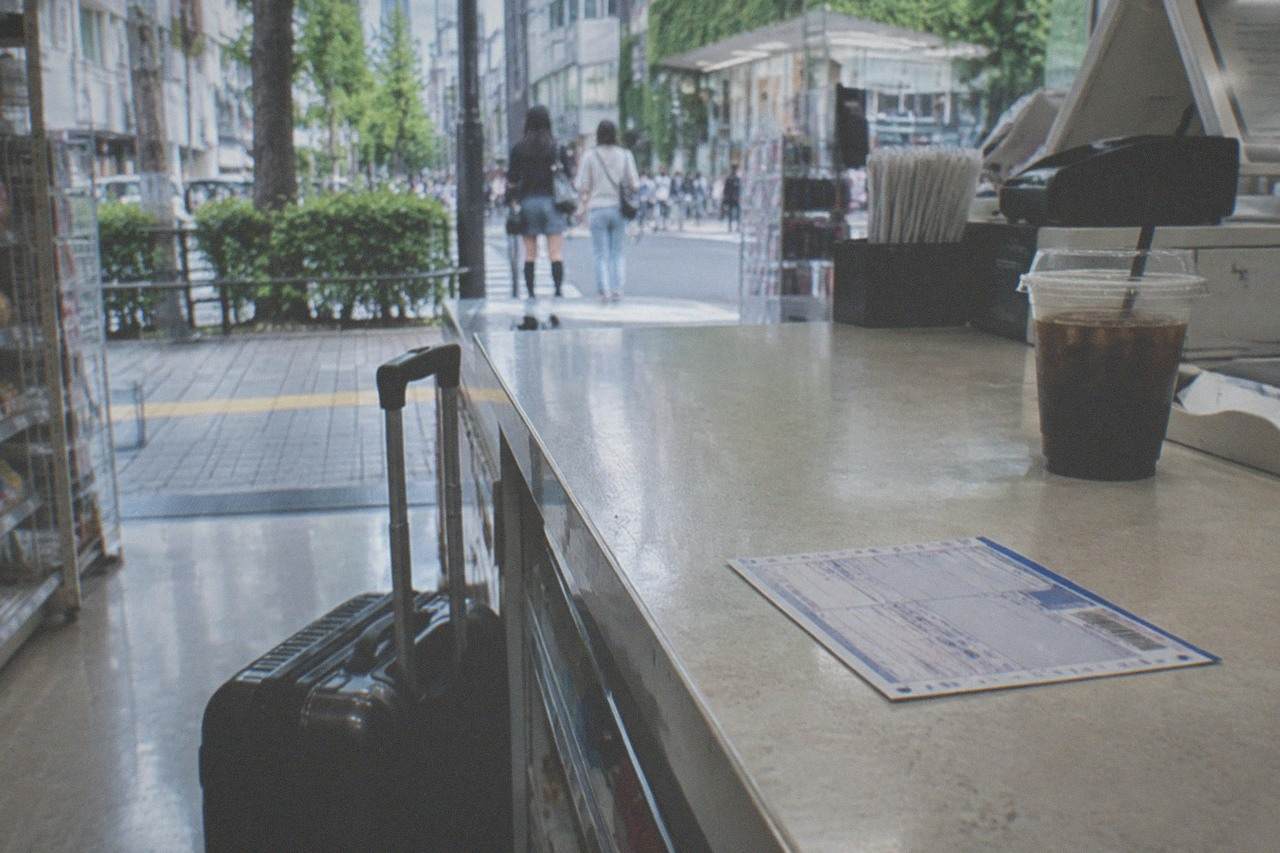
Can I Store My Luggage At 7-11 Japan?
No. A Japanese 7-11 store will not hold your bag while you go sightseeing, and no konbini chain runs a left-luggage service. What 7-11 stores do instead is ship: nearly every branch doubles as a Yamato Transport pickup counter for takuhaibin, the luggage-forwarding network. You hand the bag over, it travels to your hotel, an airport or an address across Japan, and the counter never sees it again.
That distinction, holding versus sending, is the whole answer, and it trips up a remarkable amount of English-language travel advice. The question "Can I store my luggage at 7-11 Japan?" shows up constantly in English-language advice about convenience stores, alongside variants like "Does 7-Eleven Japan hold luggage?" and "Does 7-11 do luggage storage in Japan?" The people asking are almost always standing in one of two situations: a bag on a last morning with hours to fill before a night flight, or an oversized suitcase that cannot come onto a train or into a venue.
The konbini, short for convenience store, is genuinely part of the Japanese luggage system. It is just the sending half of it, not the keeping half. If you walk into a 7-11 with a suitcase and ask to leave it for three hours, the counter staff will politely decline and, in many cases, offer the alternative themselves: filling in a Yamato waybill and shipping the case to your next stop. The basics of takuhaibin are covered in a separate guide, and the comparison between forwarding and storing a bag has its own page too, so this one stays on the konbini counter itself.
Two more things frame the answer honestly. First, the counter service is a real, cheap, official way to move a suitcase between Tokyo and Kyoto or Osaka, with fares from the operator's own published tariff. Second, if what you actually need is a place to park the bag for the afternoon and collect it again, Tokyo has staffed storage points in every major district, and those are the product to look at instead. Both halves of this page are real options; neither substitutes for the other.
What A 7-11 Counter Actually Does With Your Suitcase
The counter accepts parcels for Yamato Transport's TA-Q-BIN service, Japan's nationwide door-to-door courier. You fill in a waybill, staff weigh and measure the bag, tape a shipping label on it, and the case leaves on a courier run. Typical transit is measured in days, not hours, and Yamato publishes no personal-customer delivery times for any lane, so no honest page can promise a bag arrives next day.
The mechanics matter more than most travellers expect. The billable size is not the weight alone: Yamato charges by the greater of the three-side total in centimetres or the actual weight, so a light but bulky suitcase still lands in a high band. Payment happens at the counter when the waybill is written. The address is written by hand or generated in the Yamato app, and the app version earns a small discount, which the tariff table below shows.
There is one limitation worth stating before any other: not every branch takes every parcel. Yamato's own size guidance says branches, meaning ordinary konbini counters, may decline parcels at or above the 180 size band, and agency shops stop at the 200 band and 30 kg outright. A 7-11 counter is a small retail till with a courier contract, not a freight depot, and staff will turn away a case they cannot handle. When that happens, a Yamato branch office or a Sagawa Express counter is the fallback, and Sagawa accepts genuinely oversized items the other carriers refuse.
What the counter will not do, under any circumstances, is keep the bag behind the till. There is no ticket, no tag, no retrieval process, because the service is a shipping service. Asking twice does not change this, and offering to pay for the afternoon does not either. The staff are not being unhelpful; the product simply does not exist at konbini, and the law of the arrangement is the courier waybill.
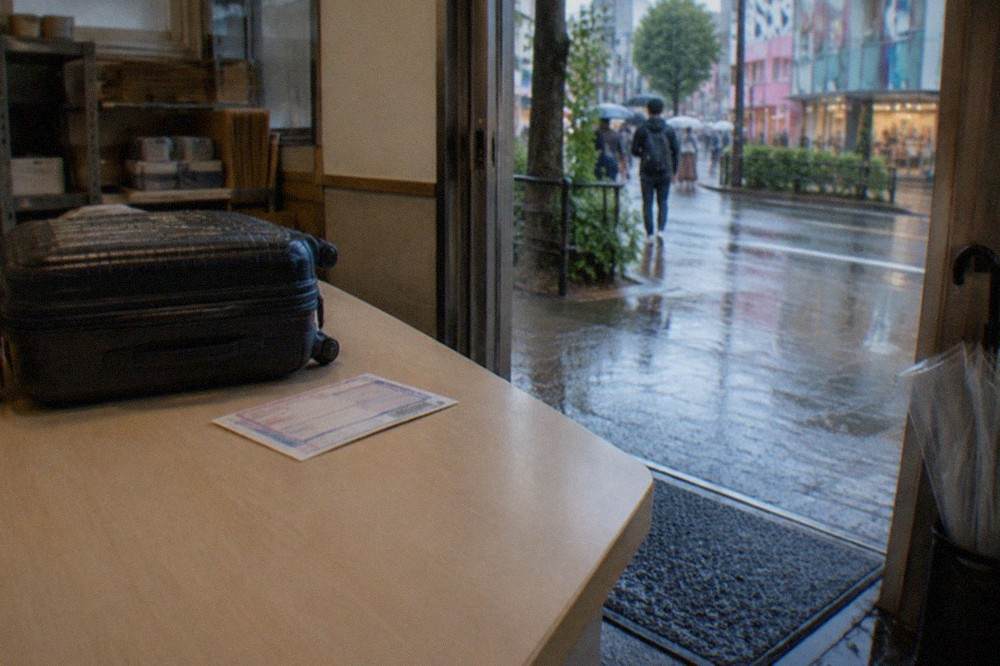
How Much It Costs To Send A Bag From A 7-11 Counter
Sending a suitcase from Tokyo to Kyoto or Osaka by Yamato TA-Q-BIN costs 2,170 yen at the 120 band, rising to 5,410 yen at the 200 band, per parcel, tax included. Within Tokyo itself the same bands run 1,730 to 3,690 yen. These are Yamato's published cash tariffs for a Kanto origin, and konbini drop-off earns a 100 yen reduction per parcel.
The table shows the bands a suitcase realistically falls into. The band is the greater of the three-side total or the weight, and a typical checked spinner tends to land at the 140 or 160 band. Kyoto and Osaka sit in the same Yamato tariff zone, so the fare is identical for both destinations, which surprises people who assume Osaka being closer must be cheaper.
| Band | Three-side total | Weight | Tokyo to Tokyo | Tokyo to Kyoto or Osaka |
|---|---|---|---|---|
| 120 | up to 120 cm | up to 15 kg | 1,730 yen | 2,170 yen |
| 140 | up to 140 cm | up to 20 kg | 2,090 yen | 2,780 yen |
| 160 | up to 160 cm | up to 25 kg | 2,410 yen | 3,160 yen |
| 180 | up to 180 cm | up to 30 kg | 3,030 yen | 4,480 yen |
| 200 | up to 200 cm | up to 30 kg | 3,690 yen | 5,410 yen |
Source: Yamato's own fare table for a Kanto origin, cash payment, tax included, published at the carrier's fare page, with the size definitions on Yamato's size and weight page. The bands and the hard caps, 200 cm total, 30 kg, and no single side over 170 cm, come from the same tariff.
The discounts are small but real, and they stack in ways worth knowing before the counter. Carrying the parcel in yourself, rather than booking doorstep collection, earns the 100 yen reduction shown above. Generating the waybill digitally earns another 60 yen off. Sending two or more parcels to one address takes 100 yen off each. The one surcharge that surprises people runs the other way: parcels addressed to an airport, rather than a street address, carry a 660 yen addition, tax included, on top of the band fare.
| Adjustment | Amount | Notes |
|---|---|---|
| Drop off at the counter yourself | minus 100 yen | Applies at konbini, branch offices and agencies |
| Digital waybill | minus 60 yen | Generated in the Yamato app |
| Two or more parcels to one address | minus 100 yen each | Standard multi-parcel rule |
| Addressed to an airport | plus 660 yen | Tax included, applies to airport-bound parcels |
Size And Weight Limits You Will Hit At The Till
A konbini counter takes parcels up to the 200 band, 200 cm three-side total and 30 kg, but Yamato's own guidance says some stores decline parcels at 180 and above, so a genuinely large case may need a branch office instead. Sagawa Express is the only major carrier that goes beyond, accepting up to 260 cm and 50 kg, but Sagawa counters are not inside 7-11 stores.
In practice, the numbers mean this: a carry-on sized suitcase sends from almost any 7-11 without a question. A mid-size checked suitcase sends from most. A large case near the 160 to 180 boundary is where staff start measuring carefully and sometimes declining, and an oversize case beyond 200 cm cannot go by Yamato at all, from a konbini or anywhere else. Anyone sending a heavy or genuinely oversized case should plan on Sagawa's large-size service, which reaches 260 cm and 50 kg, or on a different strategy entirely.
The weight side is simpler. Thirty kilograms is the ceiling for the standard service regardless of size, and the band is set by whichever of size or weight is greater. A dense 28 kg trunk in a 120 cm footprint still bills at the 180 band, because weight, not the tape measure, wins. Staff weigh at the counter when they doubt a declared figure, and the measured size, not the band guessed on the waybill, is what the tariff applies.
One more boundary worth knowing because it changes what you can do with the counter: certain Yamato products cannot ship from a konbini at all. Cool TA-Q-BIN, the refrigerated service, and Time Service, the time-critical one, require a branch office, and return-leg parcels work the same way. For luggage this rarely matters, but a traveller trying to forward a case and something perishable in the same errand will find the konbini takes one and not the other.
Where To Actually Store A Bag For A Few Hours Instead
For a few hours, the practical choices are coin lockers, staffed station baggage rooms, and Radical Storage, a network of shop-front drop-off points across Tokyo. Radical Storage charges 850 yen per bag per day plus a one-time 355 yen per-bag fee at checkout, so a single bag for a single day comes to 1,205 yen on the network's own published figures.
The reason a konbini cannot do this job, and a shop front can, is the difference in what each business is. A 7-11 till processes thousands of transactions a day and has no secure back room for a stranger's suitcase. A Radical Storage point is a café, a hotel lobby, a shop or a dry cleaner that has agreed to hold booked bags in its own staffed space, with the booking and payment handled through Radical Storage's system rather than over the counter. Every point listed on this site is a Radical Storage partner location, and this site neither owns nor operates any of them.
Ginza makes the clearest example of how dense the network is where travellers actually are. The district carries 1 Radical Storage point rated 4.84 across 118 reviews, with the nearest point about 1,131 m from the station, staffed rather than an automated locker. Because the booking runs through Radical Storage, the price is the network's published Tokyo rate, the 850 yen day rate plus the single 355 yen checkout fee, and the holding period is a day at a time rather than the fixed maximum a coin locker imposes.
Akihabara is the same product one station cluster over, and it is worth naming alongside Ginza because the two districts attract different visitors with the same problem: a bag bought or dragged through the electronics quarter with hours of browsing still ahead. Akihabara carries 9 Radical Storage points, rated 4.88 across 171 reviews, with the nearest point about 31 m from the station, which is closer than most coin locker banks in the same complex. Nine staffed points spread across a station quarter is meaningfully more capacity than the station's own locker walls, and staffed points take oversize bags that a standard locker tier cannot swallow.
Harajuku rounds out the picture for anyone combining a storage errand with the Meiji shrine and Takeshita street circuit, where venue and crowd rules make a parked bag far more pleasant than a carried one. The area carries 4 Radical Storage points rated 4.93 across 38 reviews, the nearest about 172 m from the station, with 1 locker point and 3 staffed points among them. The small review pool is exactly that, a small pool, and is printed here beside the rating for that reason rather than dressed up as anything broader.
Forwarding Versus Storing: Which One Fits Your Plans
Forwarding from a 7-11 wins when the bag is only needed at the far end: a suitcase sent to a Kyoto hotel for a few thousand yen travels without you and disappears from your day. Storage wins when you need the bag back the same day, in the same place, or when the destination address is not fixed yet, because a courier needs an address and a same-day storage point does not.
The honest comparison is about certainty, not price. A forwarded bag needs a name and address at the other end before the waybill is written, which is easy for a booked hotel and impossible for a night flight followed by an airport check-in desk, since airport delivery from a konbini address has its own cut-off hours and a 660 yen surcharge. A stored bag needs nothing but the drop-off, which makes it the only one of the two that works for a spontaneous afternoon. The trade runs the other way on effort: forwarding is a single errand at the start, while storage is an errand at both ends of the day.
There is also a timing fact that no honest page can soften: Yamato publishes transit times only through an interactive tool for business account holders, and no public service-level table exists for personal customers. Any English page promising a case sent from a 7-11 arrives next day is writing a number the carrier itself does not publish. Plan around a margin of days, use the hotel's front desk as the receiving address where possible, and the service behaves exactly as advertised.
The last-day scenario is where the two options genuinely compete. A night flight out of Haneda with a morning checkout is the classic case: forward the bag to the airport and spend the day hands-free, or park it at a storage point and collect it on the way to the train. The last day before a night flight has its own guide with the cut-off hours spelled out, and the Haneda transfer with luggage page covers the airport end. What decides it is usually the cut-off, not the fare.
7-11 Luggage Myths Worth Clearing Up
Three beliefs about konbini and luggage circulate widely, and all three fail against the operators' own pages: that every chain takes Yamato parcels, that a konbini can hold a bag briefly, and that sending a bag to the airport works like sending it to a hotel. Lawson routes through Japan Post, no chain offers holding as a service, and airport parcels carry a surcharge and cut-off hours that hotel delivery does not.
The Lawson point is the one most worth checking, because the assumption is so natural. Yamato's own drop-off guidance names Seven-Eleven and FamilyMart only. Lawson's parcel counter operates on the Japan Post system, with different size bands, different prices and a different tracking network, so a traveller who walks into a Lawson with a Yamato app waybill is at the wrong till. The store-specific size caveat matters too: Yamato's own text says some stores cannot accept parcels at or above the 180 band, so a large case is never guaranteed at any particular branch.
The airport point deserves its own care, because this is where forwarding from a konbini quietly stops being the easy option. A parcel addressed to an airport costs 660 yen more, tax included, and airport same-day delivery is a different Yamato product from ordinary TA-Q-BIN, run from airport counters with their own cut-off times, not from a konbini till. At Haneda, same-day delivery to a hotel address has an 11:00 cut-off; at Narita, same-day delivery exists but city-to-Narita same day does not, so a bag flying out of Narita on the day of departure has to travel the day before or go with the traveller. The 7-11 luggage delivery question has a full guide of its own, and the Narita transfer with luggage page covers the airport mechanics.
What is true, and worth ending the myth list on, is that the konbini counter is the single easiest place in Japan to hand a suitcase to a stranger in a uniform and have it reliably turn up somewhere else. The system is not a workaround; it is the country's main luggage logistics channel, used by residents daily. It simply answers a different question from the one most visitors are asking when they push open the door with a suitcase and hope for a shelf behind the till.
The Short Version For The Counter
Take the suitcase to a 7-11 when you know where it is going and do not need it until it gets there; take it to a storage point when you need it back today. The konbini sends a bag from 2,170 yen to Kyoto at the 120 band, and a Radical Storage point holds one for the day at 850 yen plus the 355 yen checkout fee, 1,205 yen in arithmetic on the network's own figures.
For a visitor deciding on the spot, the practical sequence is short. If the hotel address at the far end is booked, the konbini counter is the cheaper and simpler choice, and the earlier in the day the waybill is written, the more delivery margin exists. If the day is unplanned, the bag goes to a staffed point near the first stop, and the collection happens wherever the afternoon actually ends, because storage points are booked per day rather than per address. Anyone weighing the two against coin lockers as well will find the full Tokyo price picture and the coin locker size guide on their own pages, and this site, Luggage Storage in Tokyo, keeps both sides of the choice in one place.
Common Questions About Storing Luggage At 7-11 In Japan
Can I store my luggage at 7-11 Japan?
No. Japanese 7-11 stores do not hold bags for later collection. Nearly every branch acts as a Yamato Transport pickup counter, so the counter can ship your suitcase to an address, a hotel or an airport, but it cannot keep it behind the till for a few hours.
Does 7-Eleven Japan hold luggage?
It does not. There is no left-luggage service at any konbini chain. The closest thing is the Yamato TA-Q-BIN counter, which forwards a bag rather than storing it, and the address has to be known before the waybill is written.
Can I send luggage from 7-11 to my hotel?
Yes. Hand the bag to the counter with a completed Yamato waybill addressed to the hotel. Fares run from 1,730 yen within Tokyo at the 120 band to 3,160 yen to Kyoto or Osaka at the 160 band, tax included, with 100 yen off for dropping it off yourself and a further 60 yen off for a digital waybill.
Can I send a suitcase from 7-11 to the airport?
Yes, with conditions. Airport-bound parcels carry a 660 yen surcharge, and same-day airport delivery is a separate Yamato product run from airport counters with cut-off hours, not from a konbini. Haneda accepts same-day hotel-to-airport delivery; Narita does not accept city-to-Narita same day, so a Narita bag has to travel the day before.
What size suitcase can a 7-11 counter accept?
Up to the 200 band, 200 cm three-side total and 30 kg, as the network maximum. Yamato's own guidance adds that some stores decline parcels at or above the 180 band, so a large case may need a Yamato branch office. Anything over 200 cm or 30 kg cannot go by Yamato at all; Sagawa Express accepts up to 260 cm and 50 kg.
Is Lawson the same as 7-11 for sending luggage?
No. Lawson's parcel counter runs on the Japan Post system. Yamato's own drop-off guidance names only Seven-Eleven and FamilyMart, so a Yamato waybill belongs at those two chains, not at Lawson.