Where Can I Store My Luggage In Tokyo For A Few Hours?
The honest short-stop options in Tokyo: staffed Radical Storage points, coin lockers, station baggage rooms and airport counters, with the real prices a few hours actually costs.
Where Can I Store My Luggage In Tokyo For A Few Hours?
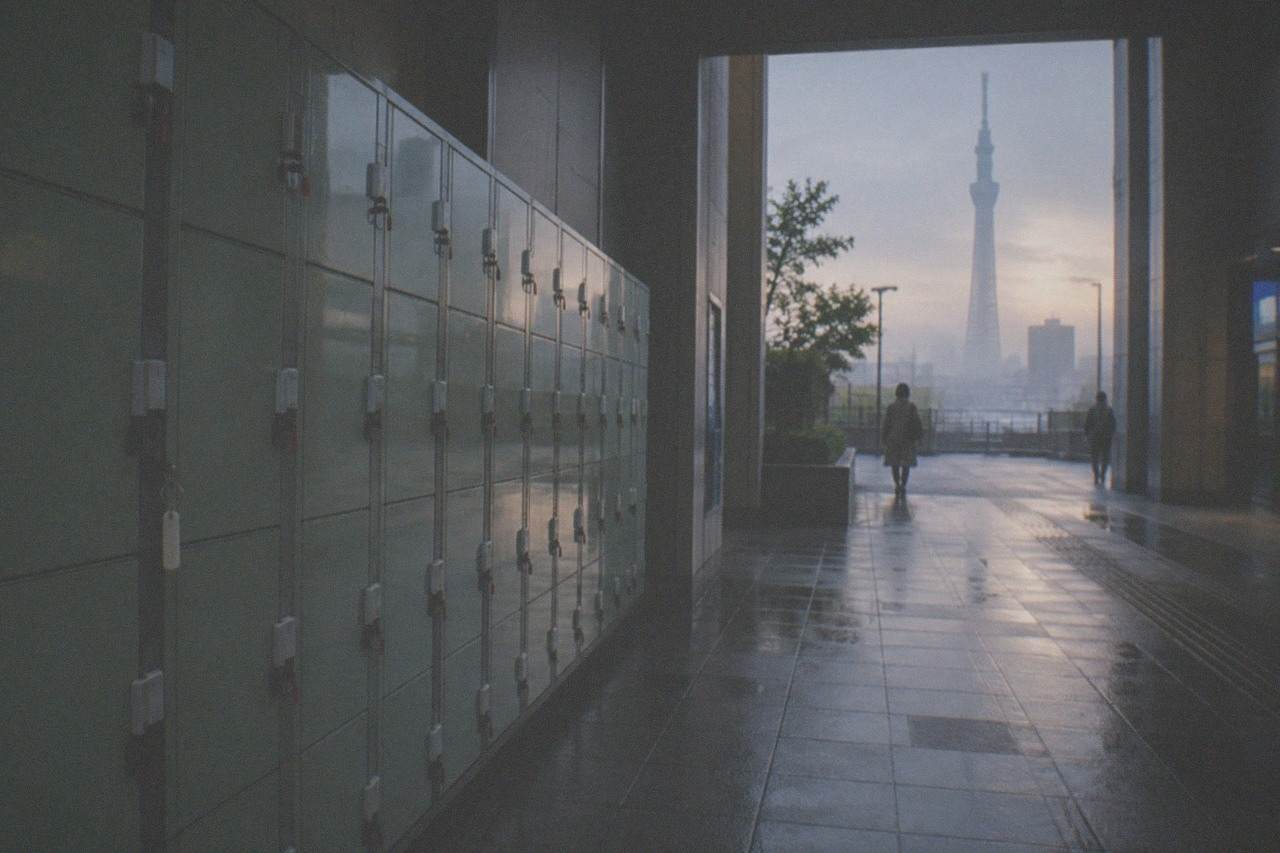
For a few hours in Tokyo you have four options: a staffed Radical Storage point at 850 yen per bag per day plus a 355 yen per-bag checkout fee, a coin locker at 300 to 1,000 yen for the day, an attended station baggage room at 500 to 2,000 yen per bag, or an airport counter between flights. None charges by the hour: a few hours is billed as one day.
Tokyo Metro's locker network alone runs to 4,830 doors across its stations, and on a busy morning the large ones near the Yamanote line are gone by mid-morning. That scarcity shapes the whole short-stop decision. A traveller who wants three free hours near Shinjuku or Shibuya is choosing between whatever locker doors are empty at that moment and a staffed point that will take the bag whenever it opens.
The staffed option on this site is the Radical Storage network. Every point listed on these pages is a real Radical Storage partner location, a shop or hotel front desk that holds bags for a fee; this site neither owns nor operates any of them and holds no bags itself. The like-for-like rate at 244 of the 249 Tokyo points on file is 850 yen per bag per day for a regular bag, plus a 355 yen per-bag fee charged once at checkout. One bag for one day is therefore 850 plus 355, which is 1,205 yen, arithmetic on Radical Storage's own published figures rather than a quoted checkout price.
Radical Storage advertises "from 490 yen per day", but that is a small-bag rate published at only 11 Tokyo points. A traveller with a normal suitcase should work from the 850 yen figure and expect the 355 yen checkout fee on top of it, whatever the card on the map happens to display.
For a three-hour museum visit, a dinner before a night flight or a last afternoon of shopping, any of the four options can work. The difference is price, size limits and what happens if plans slip, and the rest of this article takes those one at a time.
Is Anywhere In Tokyo Charged By The Hour?
No staffed storage network in Tokyo publishes an hourly tariff, and Radical Storage is no exception: three hours and eleven hours cost the same, one day at 850 yen for a regular bag plus a single 355 yen per-bag checkout fee. Coin lockers are also day-priced at 300 to 1,000 yen depending on operator and size. The one genuine hourly tariff sits at just two Narita Airport locations, unusable for anyone spending the day in the city.
The absence of an hourly rate surprises people who have used left luggage in Europe. In Tokyo the day is the billing unit everywhere on the ground. A Radical Storage point bills the full day whether the bag sits for forty minutes or ten hours, and a coin locker's price is a day price too, with the day defined by the operator's own clock rather than by midnight.
| Option | Price basis | What a few hours costs |
|---|---|---|
| Radical Storage staffed point | 850 yen per bag per day, plus 355 yen once per bag | 850 + 355 = 1,205 yen for one regular bag |
| Tokyo Metro coin locker | 300 to 1,000 yen per day, the same prices at every Metro station | The full day price, 300 to 1,000 yen by size |
| JR East coin locker | 300 to 1,100 yen per day, varying by station | The full day price at that station |
| Station baggage room | 500 to 2,000 yen per bag per day | The full day price by bag size |
| Airport attended counter | 500 to 2,000 yen per piece per day | The full day price by bag size |
The one exception is real but narrow. Narita Airport runs an hourly locker tariff at two locations only, Terminal 2 B1F and Terminal 3 2F, at 300, 500 or 600 yen for the first six hours. Nobody spending a few hours in central Tokyo can use it; it exists for people waiting out a layover inside the airport.
There is a second nuance worth knowing before the price comparison tempts anyone. A 750 yen figure on a staffed point's card is the small-bag rate those points display, not a cheaper version of the same service; automated lockers display the regular rate while both carry the same 750, 850 and 1,100 tiers underneath. Two cards should never be compared on their displayed prices, and the like-for-like figure for a regular suitcase is 850 yen.
Which Stations Have The Most Staffed Storage Points?
Shinjuku, Ueno and Ikebukuro are the deepest markets for staffed storage: Radical Storage lists 8 points near Shinjuku Station (4.75 across 384 reviews, nearest 187 m), 8 near Ueno (4.87 across 285 reviews), 10 near Ikebukuro and 9 near Akihabara. Shibuya carries 7 points at 4.75 from 163 reviews. Station areas matter more than the locker count, because staffed points take sizes lockers refuse.
Shinjuku deserves its place at the top of the list for one practical reason: the eight points include six staffed locations and two locker-type ones, with two of the eight listed open 24 hours. The nearest sits 187 m from the station, close enough that the walk is shorter than the queue at a popular locker bank on a weekend. Shinjuku Station itself is enormous, and its locker banks empty early, so a staffed point a couple of streets away is often the calmer choice for a large suitcase.
Ueno runs a close second and wins on rating, 4.87 across 285 reviews, with all eight points staffed and the nearest 171 m from the station. Akihabara's nine points are the tightest cluster in the roster, nearest point 31 m from the station, useful for anyone doing an electronics-and-cafe afternoon without dragging a case through the crowds. Ikebukuro lists ten points with the nearest at 227 m, two of them lockers, eight staffed.
Shibuya leans harder toward lockers than any other big station in the Radical Storage roster: of its seven points, five are locker-type and only two are staffed, with three of the seven listed open 24 hours. Tokyo Metro's own station page counts 146 locker doors at Shibuya, the largest single locker bank on its network, which explains the balance. For a regular bag that fits a locker, Shibuya is cheap and fast; for a wide or oddly shaped case, the two staffed points are the ones that matter.
If the few free hours fall near a landmark rather than a station, Asakusa lists 13 points at 4.85 across 268 reviews with the nearest just 193 m away, and the area around Tokyo Skytree carries 3 points at 4.77 from 132 reviews, the closest 85 m from the tower. Both clusters exist because those neighbourhoods are exactly where people want their hands free.
How Do Coin Lockers Work For A Few Hours?
A coin locker costs 300 to 1,000 yen for the day on Tokyo Metro (the same prices at every Metro station) and 300 to 1,100 yen on JR East, where prices genuinely vary by station. The size ladder, not the price, decides whether a suitcase fits: the 34 cm depth is the binding constraint, and only the JR East LW tier at 56 cm deep takes a wide checked case lying flat.
The two big locker operators price differently, and the difference is worth knowing before hunting for a door. Tokyo Metro's lockers, run by its Metro Commerce subsidiary, publish one price ladder network-wide: 300, 500, 600, 900 and 1,000 yen. Only the mix of door sizes varies between stations, a point Metro's own locker page makes across all of its station rows, and which contradicts a lot of English travel writing that describes Tokyo locker pricing as station-dependent across the board (Metro Commerce's published locker tariff).
JR East's lockers vary by station. Its published ranges run 300 to 400 yen for the smallest SS tier, 400 to 500 for S, 500 to 900 for M, 700 to 1,100 for L and 800 to 1,000 for LW, with a 500 yen flat addition for advance reservation on its Multi Ecube units. Tokyo and Shinjuku sit at the top of those bands; stations further out sit lower. JR East also adds a documented 100 to 200 yen surcharge on M and L lockers in peak season. The rest of the planning pages sit on Luggage Storage in Tokyo.
| Operator | Day price | Size notes | Maximum period |
|---|---|---|---|
| Tokyo Metro | 300 / 500 / 600 / 900 / 1,000 yen | Same ladder at every station; depth 342 mm on Toei's comparable tiers | 4 days including the start day |
| JR East Multi Ecube | 300 to 1,100 yen by tier and station | L is 86 x 34 x 65 cm; LW is 86 x 56 x 65 cm, the only tier that takes a wide case flat | 3 days, and paying more does not extend it |
| Narita Airport lockers | 400 / 600 / 800 yen per day | Hourly tariff at two locations only | 8 days |
| Haneda T1 and T2 | 400 to 1,500 yen per day | 7 days maximum, then moved to storage for 30 days | 7 days |
For a few hours specifically, the duration rules barely matter, but the day boundary does. Metro's terms state that the locker runs from first train to last train, that a day is added at 2 a.m., and that the first and last days each count as a whole day however briefly the locker was used. Leave a bag at 11 p.m. and collect at 9 a.m. and the rental has consumed two days.
Payment is another small trap. Metro's terms decline to enumerate payment methods and defer to whatever is displayed on the locker body itself. JR East's Ueno banks take cash and transit IC cards on most banks, with some banks that are transit-IC-only and two that take a wide menu including PayPay and Alipay. The safe habit for any locker is to carry coins and a charged Suica or PASMO card, glossed once: those are the rechargeable IC cards used on nearly all Tokyo trains.
One retrieval rule deserves a line of its own. On a JR East Multi Ecube locker, one open ends the rental: take the bag out and it cannot go back, and a multi-day reservation is forfeited with no refund, with only a 15-minute reopen grace. For a few hours that is irrelevant, but for anyone tempted to duck back mid-afternoon for a jacket, it is not.
Can You Store A Bag For A Few Hours At The Airports?
Yes, but not through this site's network inside any terminal: Radical Storage has no point inside a Narita or Haneda terminal, the nearest to Narita being about 6.0 km away in Tomisato, Chiba, and the nearest to Haneda about 3.4 km away in Kawasaki, Kanagawa. The airports' own attended counters are the real short-stop option, at 500 to 2,000 yen per piece per day.
Narita has eleven attended baggage-storage counters across Terminal 1 and Terminal 2, run by JAL ABC, Sagawa Express and the Narita Airport Promotion Foundation, and not one attended counter in Terminal 3. The airport itself publishes no prices; each operator sets its own. The Promotion Foundation desk in Terminal 2 is the least expensive, at 500 yen small, 700 yen medium and 1,100 yen large per piece per day. Sagawa charges 500, 700 and 1,150 yen. JAL ABC charges 800, 1,000 and 2,000 yen and bills by calendar day, not by the hour, so a part-day is a full day there too (Narita's official storage counter list).
Haneda publishes its own tariff, which is rarer than it sounds. Terminal 1 and Terminal 2 each run a desk on B1F from 08:00 to 19:30 at 800 yen for a bag under 120 cm, 1,000 yen for 120 to under 200 cm and 2,000 yen for 200 to 300 cm, with a 30 kg weight maximum. Terminal 3 has two desks, on the 2F arrivals and 3F departure levels, both open 24 hours and priced per 24 hours rather than per calendar day, the same 800, 1,000 and 2,000 yen figures on a different clock (Haneda's official baggage checkroom tariff).
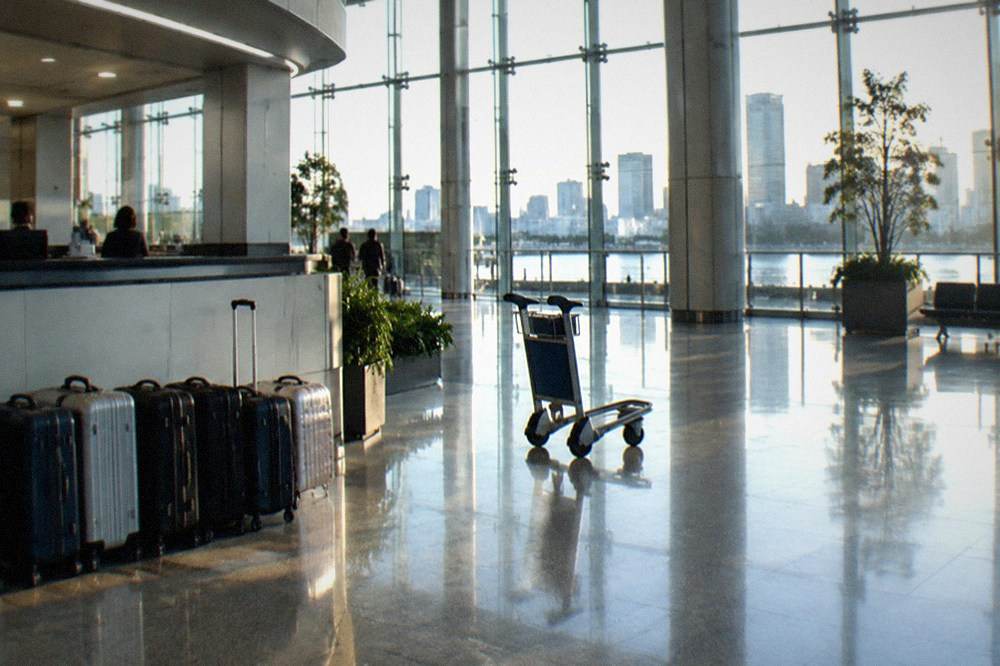
For a few hours between flights, Haneda is the smoother airport of the two: the Terminal 3 desks never close, and the train into the city takes half an hour. Narita's counters close between 18:30 and 22:00 depending on the operator, and the layover maths has to include the hour-long ride each way.
The Radical Storage clusters near the airports serve a different traveller, someone staying a night near the airport or moving between hotels, and the roster reflects that honestly: the four Haneda points are all locker-type locations listing 24-hour access with no rating yet, and the nearest sits about 3.4 km from the terminals, across the prefecture boundary in Kawasaki. Nobody should read an airport-area listing as a terminal drop-off.
Locker Or Staffed Point: How Do You Choose?
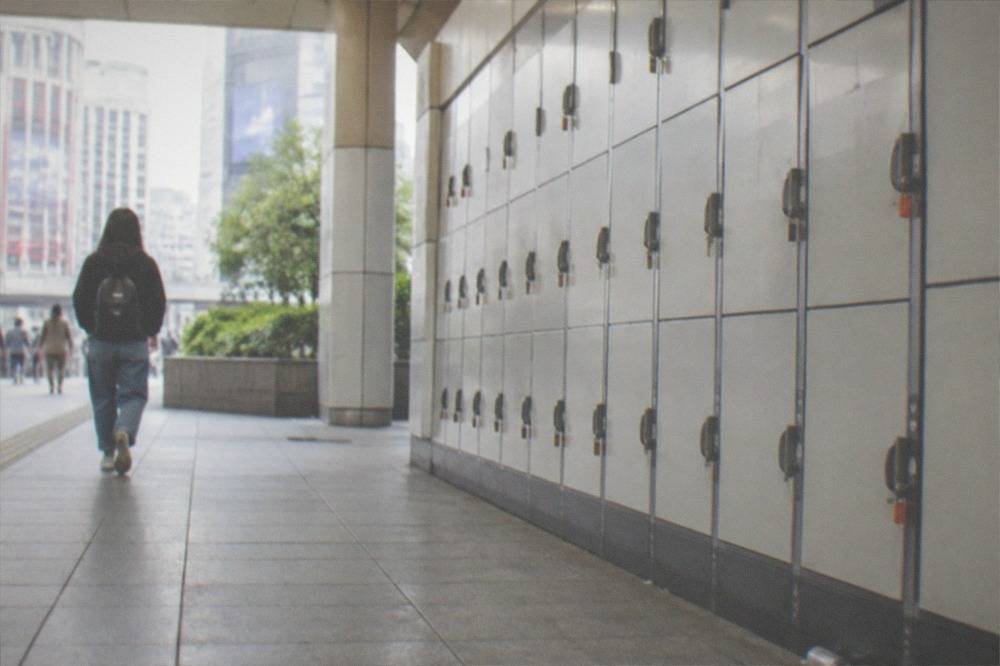
Choose a locker when the bag fits the box: it is cheaper, at 300 to 1,000 yen against 1,205 yen all-in at a staffed point. Choose a staffed point when the case is oversized, when the drop-off falls outside locker-friendly hours, or when you want a person to hand the bag back to.
The size maths is where most decisions are actually made. A hard-shell suitcase fails the standard locker tiers on height, not width, and the 34 cm depth shared by Toei and JR East boxes is the wall a wide spinner hits first. Only the JR East LW tier, 86 by 56 by 65 cm, swallows a wide checked case lying flat. A staffed point takes a regular bag without measuring, which is the whole attraction for anyone travelling with anything other than a cabin case.
Liability is the quieter difference. Four Tokyo locker operators, Metro Commerce, JR East Smart Logistics, Tokyu and Keio, publish an identical 30,000 yen cap on compensation for lost or damaged contents, a contract term rather than a legal limit. The terms also prohibit storing valuables, cash, cameras and anything worth 30,000 yen or more, and say that where the stored item was prohibited, nothing is paid even if the operator was at fault. A laptop was never an allowed item in a locker.
The Radical Storage side is a different structure. The Radical Storage Guarantee is not insurance, and Radical Storage's own terms say so in clause 9.2.2 and reserve the right to withdraw it at any time under clause 9.2.1; payouts are capped at EUR 3,000 per claim under clause 9.4. The honest summary for a reader is that neither option makes you whole for an expensive item, and the right move for a laptop is to carry it.
Hours tilt the choice as much as size. Of the 249 Radical Storage points on file in Tokyo, 146 are not open 24 hours, so a late-evening drop or an early collection has to be checked per point, never assumed from the area name. In the other direction, a staffed point that is open when needed beats a full locker bank every time, and the reason Tokyo coin lockers fill so early is covered in its own guide on this site.
For size questions specifically, the full coin locker size guide with every published tier has the internal dimensions, and the guide to storing a bag for a few hours works the same question with the full structured comparison. For anything that must not be carried at all, an oversized case between hotels, the oversized luggage storage guide is the one to read.
Where Can You Definitely Not Leave A Bag In Tokyo?
Several famous venues refuse large bags outright: Tokyo Skytree prohibits any item with a side over 60 cm and enforces it with bag inspection, teamLab Borderless refuses items over 50 cm, Tokyo National Museum refuses suitcases from the grounds themselves, and Nippon Budokan has no lockers at all. The Asakusa visitor centre storage ended on 31 March 2026, so any guide still pointing there is out of date.
The venue rules matter for a few-hours plan because they force the storage decision before you arrive, not after. Tokyo Skytree's own guest page bans any item with any side over 60 cm, a threshold a 55 cm cabin bag passes and every checked case fails, and the page itself names the two paid alternatives inside Skytree Town: the coin lockers and the Sagawa counter at 800 to 1,300 yen by size. The Radical Storage cluster near the tower, three points at 4.77 across 132 reviews with the nearest 85 m away, is the third option.
teamLab Borderless at Azabudai refuses items over 50 cm in any dimension and provides free lockers, but publishes no maximum locker size. teamLab Planets in Toyosu goes further: nothing may be carried into the artwork spaces at all, the free lockers measure 23 by 34 by 37 cm, and suitcases exceeding that are wire-locked in an open stroller area, custody that is materially weaker than a locker and worth saying plainly before anyone trusts a good bag to it.
The museums split down the middle. The National Art Center and the Tokyo Metropolitan Art Museum both run cloakrooms or free lockers that take oversize bags, while the Nature and Science Museum puts large suitcases on its prohibited list, and Mori Art Museum at Roppongi Hills has no cloakroom at all, only 52 free lockers in two sizes, with large bags banned and offenders asked to leave. Nippon Budokan's own question-and-answer page gives the flattest denial in the city: asked whether it has lockers, it answers that it has none.
Asakusa deserves a final caution because the closure is recent and widely unreported in English. The Asakusa Culture Tourist Information Center's storage service ended on 31 March 2026, and Taito City's own page both dates and explains the decision, citing suitcase volumes as one cause of street congestion. The good news is that Asakusa is the deepest staffed cluster in the Radical Storage roster, 13 points at 4.85 across 268 reviews, so the neighbourhood lost a free service and kept a paid one within 193 m of the station.
Common Questions About Storing Luggage In Tokyo For A Few Hours
Where can I store my luggage in Tokyo for a few hours?
A staffed Radical Storage point at 850 yen per bag per day plus a 355 yen per-bag checkout fee, a coin locker at 300 to 1,000 yen for the day, an attended station baggage room at 500 to 2,000 yen per bag, or an airport counter between flights. All four bill a few hours as one full day.
Is there hourly luggage storage in Tokyo?
No staffed network publishes an hourly tariff. Radical Storage, station baggage rooms and airport counters all charge per day, and coin lockers are day-priced too. The only hourly tariff is at two Narita Airport locker locations, Terminal 2 B1F and Terminal 3 2F, at 300 to 600 yen for the first six hours.
Which Tokyo station is easiest for short-term bag storage?
Shinjuku, Ueno and Ikebukuro have the deepest coverage: 8, 8 and 10 Radical Storage points respectively, with Akihabara's 9 points the tightest cluster at 31 m from the station. Asakusa has the most of any district at 13 points.
Can I leave my bag at a station baggage room for a few hours?
Yes, where one exists. Tokyo Station has seven attended options, Ueno has one inside the Park Gate at 500 to 2,000 yen per bag per day, and Shinjuku has a Sagawa counter at Busta 3F from 06:30 to 21:00 at 800 to 1,500 yen. Shibuya and Ikebukuro have no attended baggage room of their own.
Are coin lockers a good option for a few hours in Tokyo?
For a bag that fits, yes: 300 to 1,000 yen on Tokyo Metro, where the same price ladder applies at every station, and 300 to 1,100 yen on JR East. The catch is size, since the 34 cm locker depth rules out wide suitcases, and popular banks empty by mid-morning.
Is luggage storage near the airports open late?
Radical Storage has no point inside any Narita or Haneda terminal, and the nearest points sit about 6.0 km and 3.4 km away. Inside the airports, Haneda Terminal 3's attended desks are open 24 hours and priced per 24 hours, while Narita's counters close between 18:30 and 22:00 depending on the operator.